
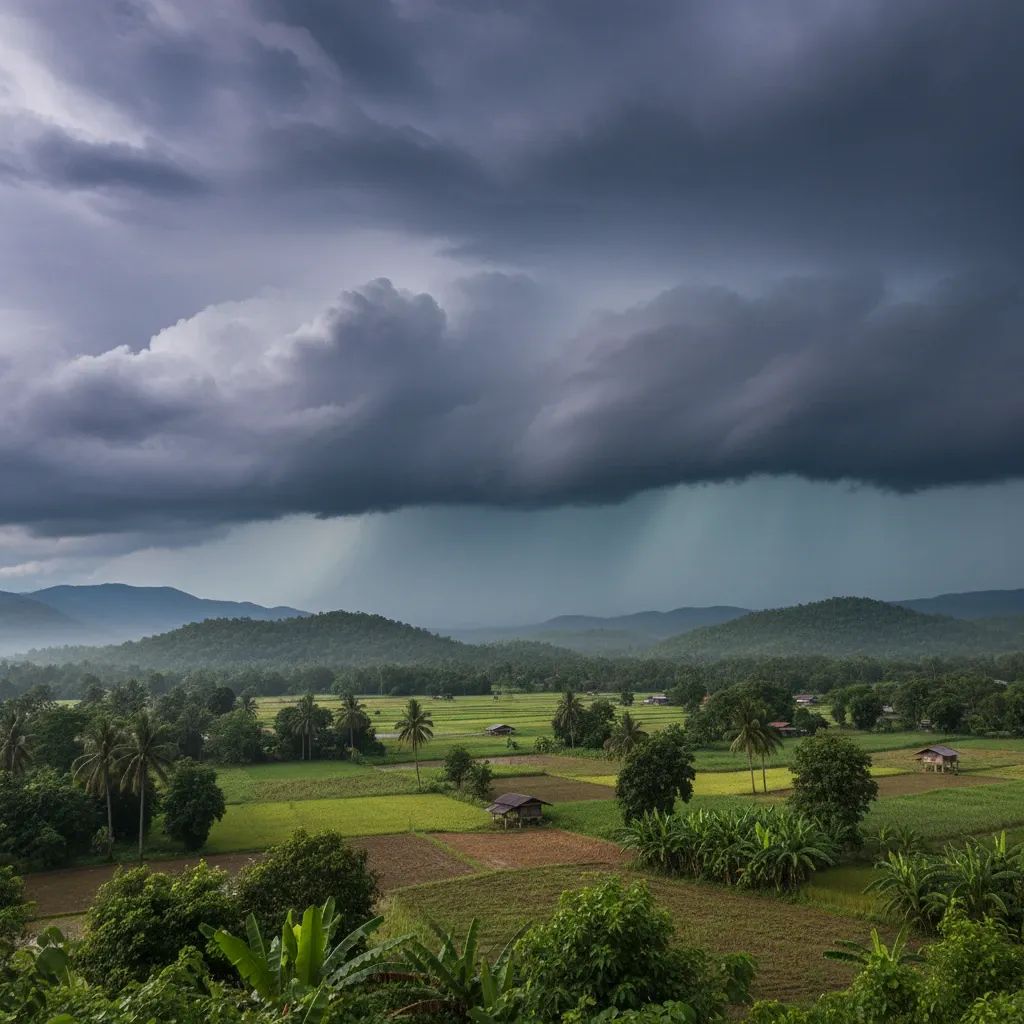
The Thai Meteorological Department has issued its first major monsoon warning of the season, forecasting heavy to very heavy rainfall across multiple regions starting Thursday, May 14, through Monday, May 18. The alert, designated Warning No. 1 (61/2569), signals the arrival of conditions that could disrupt daily life, damage property, and create hazardous travel conditions both on land and at sea.
Action Checklist for Residents
Next 24-48 Hours - Do This Now:
• Identify your risk zone: Check if your province appears in the northern, central, eastern, or southern region lists below
• Clear drains and gutters: Remove debris from roof gutters, downspouts, and property drainage channels immediately
• Stock emergency supplies: Non-perishable food, drinking water (1 liter per person per day), flashlights, batteries, first-aid kits, medications
• Secure outdoor items: Bring in or tie down anything that could become a projectile in strong winds
• Plan your commute: Identify alternative routes and avoid low-lying roads and underpasses during peak rainfall
• Monitor real-time updates:
• Thai Meteorological Department (English): www.tmd.go.th
• Download disaster alert apps: Line Alert, Sanook Weather
• Subscribe to BMA emergency updates (for Bangkok residents): BMA Emergency Call 1198
Emergency Contacts:
• Thai Disaster Hotline: 1311
• Bangkok Metropolitan Administration: 1198
• Tourist Police: 1155
Why This Matters:
• Flash flood risk: Foothill areas, low-lying zones, and communities near waterways face the highest danger from accumulated rainfall and mountain runoff
• Marine travel suspended: Small boats in the Andaman Sea should remain ashore through May 18, with waves reaching 3+ meters in storm areas
• Property damage precedent: Over 650 houses were already damaged in early May storms, with Phetchabun province particularly hard-hit
• Agriculture at risk: Farmers must secure fruit trees and livestock ahead of the weather system
The Weather System Driving the Deluge
A strong low-pressure cell moving into the upper Bay of Bengal is combining with an intensifying southwest monsoon to pump moisture across the Andaman Sea, the Gulf of Thailand, and inland regions. This confluence creates ideal conditions for sustained, heavy precipitation—the kind that saturates soil, overwhelms drainage systems, and triggers rapid water accumulation.
Thailand's 2026 monsoon season officially begins between May 15-17, slightly later than the traditional early-May start but arriving with significant force. While early-season rains typically manifest as short, intense downpours lasting one to two hours, this week's system promises more sustained precipitation. Meteorologists note that such patterns often evolve into the heavier, more consistent rainfall that peaks in August and September.
Geographic Risk Profile: Which Provinces Face the Worst Conditions
Northern Region (Highest Risk - Very Heavy Rain Expected):Mae Hong Son, Chiang Mai, Lamphun, Lampang, Chiang Rai, Phayao, Nan, Phrae, Sukhothai, Tak, Phichit, Kamphaeng Phet, Uttaradit, and Phetchabun are all flagged for thunderstorms with very heavy rain potential. Western provinces face the direct path of the heaviest rainfall.
Central Region (Widespread Impact):Nakhon Sawan, Uthai Thani, Chai Nat, Sing Buri, Ang Thong, Lop Buri, Saraburi, Ayutthaya, Suphan Buri, Kanchanaburi, Ratchaburi, Nakhon Pathom, Samut Sakhon, and Samut Songkhram—including Bangkok and surrounding provinces—will experience widespread thunderstorms with strong winds and isolated heavy rain.
Bangkok-Specific Guidance:Bangkok residents should prepare for localized flooding in historically vulnerable districts. The most flood-prone areas include:
• Flood-prone districts: Thawi Watthana, Saphan Sung, Min Buri, and northern Chatuchak areas near canals
• Monitor BMA updates: Bangkok Metropolitan Administration (1198) will issue district-specific warnings
• Public transport contingency: BTS, MRT services may experience delays; allow extra 30-45 minutes for commutes
• Avoid during peak storms: Don't attempt to cross underpasses (Rama I, Wireless, etc.) during heavy rainfall—water accumulates within minutes
Eastern Region:Scattered thundershowers with certain areas vulnerable to heavy downpours.
Southern Region:Especially along the Andaman Sea coast, will see increased rainfall driven by strengthened southwesterly winds.
What This Means for Residents
For Urban Dwellers: Bangkok and other cities with aging drainage infrastructure should anticipate localized flooding, particularly in historically vulnerable neighborhoods. Commuters should allow extra travel time and monitor real-time traffic updates, as underpasses and low-lying roads often become impassable within minutes during heavy rain.
For Rural Communities: Those living near waterways, particularly in foothill zones, face the dual threat of flash floods and mountain runoff. Water levels can rise with alarming speed when heavy rain saturates hillside soil. The ADINet disaster network has already documented over 2,600 affected individuals and approximately 650 damaged homes from storms between May 9-10, demonstrating the destructive potential of this weather pattern.
For Farmers: Agricultural producers must act immediately to protect crops and livestock. Strengthening fruit trees, securing loose equipment, and ensuring livestock have access to higher ground are essential precautions. Thailand's agricultural sector already faces a "dual water crisis" in 2026, with water shortages predicted from May through August followed by potentially excessive rainfall later in the year—a pattern intensified by global warming amplifying El Niño effects.
For Marine Operators: Sea conditions will deteriorate significantly. The Andaman Sea will experience waves of 2-3 meters, exceeding 3 meters in thunderstorm zones. The upper Gulf of Thailand will see waves around 2 meters, rising higher during storms. Commercial vessels should navigate with extreme caution and avoid thunderstorm areas entirely. Small craft operators in the Andaman Sea face a direct advisory: stay ashore from May 14-18.
For Expats and Foreign Residents:
• Monitor your embassy's weather alerts and travel advisories
• Ensure you have your embassy's emergency contact information
• Keep passport and important documents in a waterproof container
• Maintain adequate travel insurance that covers weather-related disruptions
Infrastructure and Economic Implications
Thailand's infrastructure faces a severe test during the monsoon onset. Transportation networks—roads, railways, and ports—experience disruption when rainfall intensity overwhelms drainage capacity. The May 9-10 storms that damaged hundreds of homes in Phetchabun province serve as a recent reminder of how quickly strong winds and thunderstorms can compromise structures.
The economic impact extends beyond immediate property damage. Agricultural disruption during planting and early growth seasons can affect yields months later. Transportation delays ripple through supply chains, affecting everything from perishable goods to manufactured products. Tourism, a cornerstone of Thailand's economy, often experiences temporary declines during heavy rain periods as visitors postpone outdoor activities and beach destinations become less appealing.
Historical Context and Climate Patterns
Thailand's monsoon season traditionally brings relief from the hot season's oppressive heat, but it also introduces hazards. Temperatures in May typically hover between 34°C and 35°C (93-95°F) with high humidity, creating uncomfortable conditions even before rain arrives. The transition into the rainy season often produces the most dangerous weather events, as atmospheric systems establish new circulation patterns.
The convergence of a Bay of Bengal low-pressure system with an intensifying monsoon represents a well-understood meteorological pattern, but one that remains difficult to predict with precision beyond a few days. The intensity and exact timing of heavy rainfall can vary significantly across relatively short distances, meaning some communities may experience extreme conditions while nearby areas see only moderate rain.
Preparedness Measures
The Thailand Meteorological Department recommends that residents in affected areas take several precautions. Secure loose outdoor items that could become projectiles in strong winds. Clear drainage channels around properties to facilitate water flow. Stock emergency supplies including non-perishable food, drinking water, flashlights, and battery-powered communication devices.
Those planning travel should monitor weather updates continuously and be prepared to alter plans. Road travel during heavy rain significantly increases accident risk, particularly on highways where visibility drops and hydroplaning becomes a danger. Urban commuters should identify alternative routes and consider delaying non-essential travel during peak storm hours.
The five-day warning period from May 14-18 represents the most acute risk window, but residents should remain vigilant beyond Monday as monsoon patterns can shift and extend. Weather systems during the season's onset often behave unpredictably, with conditions changing rapidly as atmospheric dynamics evolve.
Thailand's meteorological infrastructure continues improving its forecasting capabilities, but the fundamental challenge remains: translating regional predictions into specific, actionable guidance for individual communities. Residents bear responsibility for understanding their local flood history, drainage patterns, and vulnerability to specific weather threats. The coming days will test both institutional preparedness and individual awareness as the 2026 monsoon season announces its arrival with force.


