
Tropical Pressure Shifts Bring May's Unsettled Pattern to Thailand
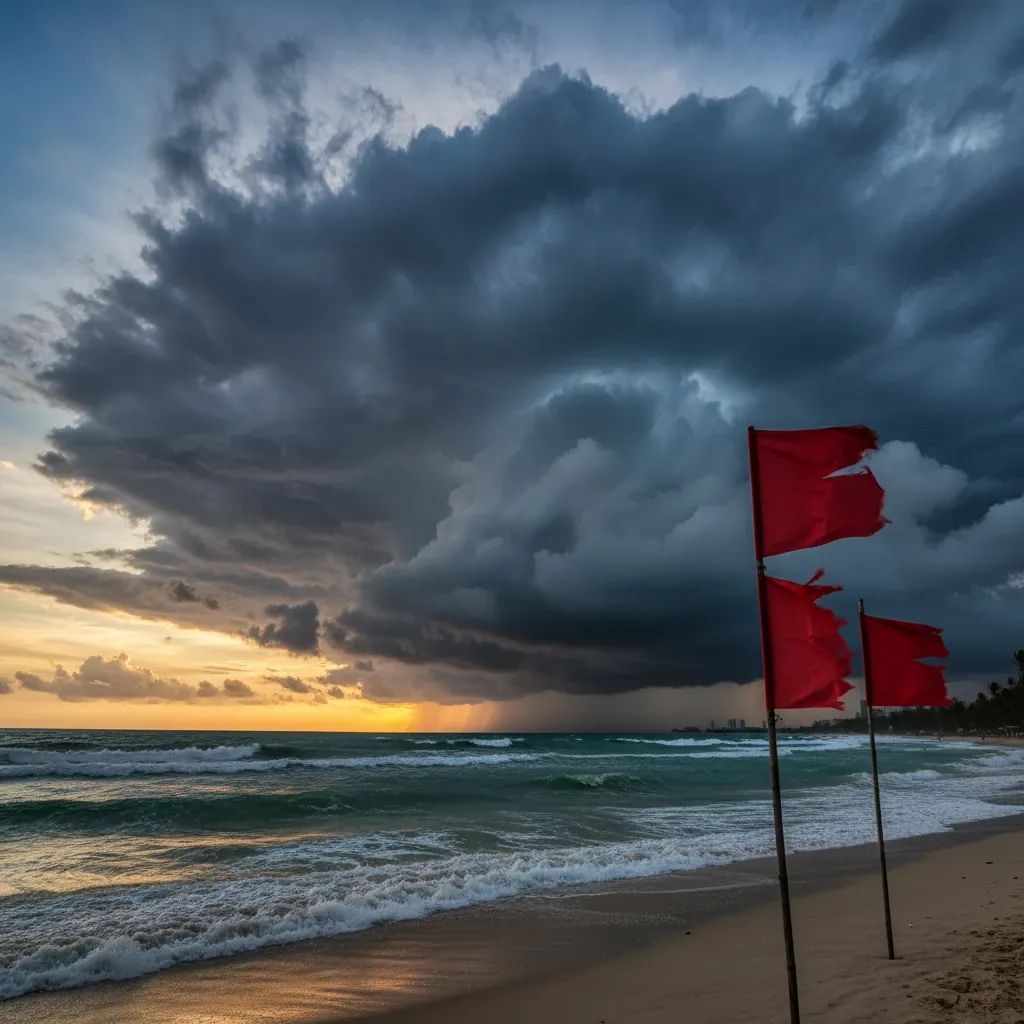
Thailand's seasonal rhythm is about to shift. The Thailand Meteorological Department signals that mid-May (around the 15th–17th) marks the formal monsoon threshold—the point when the southwest wind system takes firm hold and transforms daily weather patterns across the nation. But getting there requires navigating a volatile week ahead. From early May through the middle of the month, the country sits in a liminal zone where tropical heat systems and early monsoon winds collide, creating a patchwork of extreme daytime temperatures in the north and center, combined with escalating thunderstorm activity and mounting sea swells in the southern peninsula.
Why This Matters
• Monsoon lockdown window: The southwest monsoon officially establishes dominance around May 15–17, redefining rainfall patterns, agricultural strategy, and maritime operations for the following five months across the tropical region.
• Southern maritime alert: Between May 6–8, wave heights in both the Andaman Sea and Gulf of Thailand are forecast to exceed 2 meters in storm zones, forcing a temporary suspension of ferry services, fishing expeditions, and recreational boat operations.
• Northern heat stress persists: Daytime peaks of 38–41°C through early May require workplace adjustments, health precautions, and scheduled work modifications to mitigate heat-related illness among outdoor laborers.
• Variable precipitation ahead: Multiple weather systems stacking atop one another—thermal instability, easterly wind troughs, and emerging monsoon moisture—mean afternoon thunderstorm risk escalates through mid-May, disrupting construction projects, outdoor commerce, and transportation networks.
Upper Thailand Locked in Final Heat Siege
A stubborn thermal low-pressure dome continues to grip the northern and central plains, pinning daytime temperatures to dangerous highs. Provinces including Nakhon Sawan, Chiang Mai, and Tak are recording peaks of 38–41°C—a threshold that triggers public health alerts and work-suspension protocols. Outdoor laborers, construction crews, and agricultural workers in these zones face real physiological risk during midday hours.
The heat, however, is not delivered in isolation. Simultaneous flows of moisture from the southwest and southeast are funneling into upper Thailand, creating atmospheric instability. Where the thermal mass meets these moist winds, isolated but powerful thunderstorms detonate in the afternoon—phenomena bearing gusty downbursts, flash flooding in low-lying catchments, and localized wind damage. Provinces like Phetchabun, Uthai Thani, and Saraburi have experienced these violent convective surges, which can topple structures and disrupt power lines despite affecting only small geographic areas.
The Thailand Ministry of Public Health has reiterated guidance: minimize outdoor exertion between 11 AM and 4 PM, maintain continuous hydration, and monitor elderly and chronically ill individuals for heat-stress symptoms. Rural workers and informal-sector laborers—particularly those without access to air-conditioned rest areas—remain most vulnerable. Heat stroke and severe dehydration spike during this transition week, yet compliance with work-shift adjustments remains inconsistent in agriculture-heavy provinces and informal construction sites.
One counterintuitive benefit: earlier rainfall has scrubbed haze and dust from the air column. Atmospheric clarity has improved markedly in the north and center, with air quality indices settling into "good-to-moderate" zones. The respiratory relief arrives as a temporary reprieve before monsoon humidity intensifies, trapping moisture and creating oppressive but less hazardous conditions.
Andaman and Gulf Coasts Enter Danger Window
The southern peninsula faces a sharper, more immediate weather threat. An easterly trough—a ribbon of low pressure arcing eastward across the lower peninsula—will steer a concentrated band of moisture and instability into the deep south and Andaman coast between May 6 and May 8. The Thailand Meteorological Department has flagged 44 provinces nationwide, but the acute risk corridor spans Phang Nga, Phuket, Krabi, and Satun on the west coast, and Surat Thani, Nakhon Si Thammarat, and Yala on the gulf side.
Rainfall probability climbs from current scattered cells to 40–70% coverage by Wednesday morning, with localized heavy rain events concentrated in specific municipalities. The Songkhla Fisheries Association has already advised members to seek protected anchorage or remain docked. Dive operators, speedboat charter companies, and inter-island ferry services are implementing contingency rebooking protocols and preparing for operational disruption.
Sea state deterioration will be the defining operational constraint. The Gulf of Thailand typically sees 1-meter baseline swells, but thunderstorm zones will spike to 2–3 meters. The Andaman Sea, often calmer during early monsoon transitions, will exhibit similar violent oscillations in storm-affected corridors. For merchant marine captains, sport fishermen, and passenger vessel operators, this forecast translates into hard cancellations, insurance implications, and liability exposure if operations proceed into flagged danger zones.
Coastal tourism operators—island resort managers, kayak rental shops, snorkel guides—are already fielding cancellation inquiries and negotiating rebooking penalties. The May 6–8 window has effectively become a quarantined period for sea-based activity in the south.
Implications for Residents and Workers
For transportation networks: Road freight operators moving cargo through southern corridors—particularly the Surat Thani corridor—should expedite shipments before May 8 or accept potential multi-day delays. Logistics premiums for time-sensitive delivery may rise as demand for reliable, weather-resistant routing spikes. Public transit agencies are pre-positioning additional bus capacity on northern routes to accommodate passengers redirected from flooded southern highways.
For construction and field operations: Excavation, material staging, and scaffolding projects in the south must implement enhanced drainage preparation and equipment relocation protocols. Concrete pours and foundation work should conclude before heavy rain onset; restart schedules typically slip 48–72 hours post-storm as groundwater saturation complicates compaction and curing. Northern sites will continue experiencing productivity loss as construction supervisors mandate afternoon work suspensions due to heat risk. Labor force scheduling becomes a strategic priority—early-morning shifts and extended evening work hours become standard practice.
For agricultural planning: Farmers relying on rain-fed irrigation should view May's scattered showers as a preparation window, not a full-season replacement. Seedbed preparation, mulching, and water-catchment infrastructure installation must accelerate. However, El Niño forecasting models suggest a potential late-May or early-June phase transition that could suppress overall monsoon intensity through July and August. Strategic water harvesting and storage capacity becomes essential insurance against mid-season drought. Cooperatives should review seasonal crop selection with this uncertainty in mind—drought-tolerant varieties gain strategic value.
For household flood-prone residents: Families living in low-lying Bangkok neighborhoods like Lat Phrao, Bang Khae, and Thonburi—areas with notoriously poor drainage—should prepare defensive measures now. Clear gutters and downspout systems, sandbag entryways, confirm basement pump functionality, and identify evacuation routes to elevated ground. The Bangkok Metropolitan Administration pre-stages pumping equipment and sandbag stockpiles in vulnerable districts by May 5. Renter insurance and property owner coverage should be reviewed; claims surge during heavy-rain events and insurers often impose retroactive policy exclusions for maintenance negligence.
For electrical grid operators: Early-season rainfall bolsters hydroelectric reservoir levels upstream in the Mekong Basin, reducing thermal generation dependency and easing summer peak-demand pressure. However, El Niño uncertainty tempers optimism. The Thailand Electricity Generating Authority is closely tracking upstream rainfall volumes and adjusting supply scheduling and reserve margins accordingly. Grid reliability remains stable through May, but supply planners are hedging against potential late-June scarcity.
The Monsoon Handoff: Mid-May Transition
By approximately May 15–17, the weather system transforms fundamentally. The southwest monsoon—driven by the differential heating of the Indian Ocean and Asian landmass—establishes firm dominance. Moisture transport shifts from intermittent thermal convection to sustained, organized flow. Early-May scattered thunderstorms give way to systematic rainfall patterns that deliver 30–50 millimeters in a single afternoon across broad regional zones.
The southern peninsula undergoes the most dramatic shift. Currently experiencing 40% thunderstorm odds, the Andaman coast transitions to 60–80% daily precipitation likelihood by late May. The Gulf coast stabilizes at moderate but persistent odds. Both coasts experience wave conditions that normalize to 1–2 meters under typical conditions, though localized squalls can still produce temporary spike events.
Northern and central Thailand experiences visible cooling. Daytime highs decline from current 38–41°C toward more moderate 28–33°C by early June as cloud cover increases and convective systems replace thermal stagnation. Humidity rises uniformly—creating an oppressive, sticky atmosphere rather than the searing dryness of late April and early May. Air quality deteriorates slightly as moisture traps particulates, but heat-stress risk plummets.
Tourism and Commerce: The Green-Season Pivot
The monsoon's full arrival reshapes tourism economics. Heavy-rain periods traditionally bring discounted room rates and reduced crowds—a "green season" window when landscapes turn verdant and budget travelers flood market sectors. However, the May 6–8 disruption window will generate cancellations, rebookings, and operational friction across the hospitality and transportation sectors.
Hotel operators are already adjusting package offerings. Beachfront resorts emphasize indoor attractions—spa services, culinary events, fitness facilities—to offset reduced water-sports activity. Phuket and Krabi resort managers are bundling rainy-day guarantees (price reductions for guests affected by weather-related activity closures) to stabilize booking demand. By late May, once patterns stabilize, the green-season marketing machine engages fully.
F&B operators pivot tactics. Open-air dining venues and rooftop restaurants prepare for rain interruptions; heated indoor seating areas and covered pavilions gain strategic prominence. High-end establishments are marketing "cozy rainy-day dining experiences" to frame weather as atmospheric enhancement rather than operational liability.
Supply chain operators face distinct challenges. Retail and e-commerce fulfillment centers experience a counter-seasonal surge in demand—consumers shift purchasing to delivery channels to avoid outdoor travel during heavy rain. Same-day delivery services expand fleet capacity and adjust routing to account for water-logged roads. Conversely, brick-and-mortar shopping foot traffic declines as consumers postpone non-essential shopping trips.
Sector-Specific Preparation Checklist
Maritime and fishing sectors: Monitor Thailand Meteorological Department forecasts hourly from May 5 onward. Confirm vessel insurance coverage explicitly includes storm-related incidents. Secure all floating equipment in protected harbors. Review crew safety protocols and evacuation procedures. The Songkhla Fisheries Association has issued mandatory safety briefings; compliance should be verified. Radio communication equipment must be operational and backup power systems tested.
Business continuity management: Review weather-related work interruption insurance. Confirm backup power systems (generators, UPS units for critical infrastructure) are operational and fuel supplies adequate. Adjust staffing schedules to accommodate potential transportation delays and work-from-home policies for commuting staff. Communicate flexible arrangements to minimize traffic congestion during heavy-rain periods.
Property and household management: Stock emergency supplies—bottled water, medicines, non-perishable food items—by May 5. Identify and communicate evacuation routes to all household members. For pet owners, prepare carriers, portable supplies, and veterinary contact information. Confirm mobile device charge capacity and emergency contact programming.
Transportation: Reduce highway speeds during rain-slicked conditions and increase following distances. Avoid driving through flooded underpasses—the leading cause of vehicle loss and injury during monsoon transitions. Check tire tread depth and brake functionality before heavy-rain onset. For long-distance travel, consider departing before May 6 or delaying until after May 8.
The Seasonal Threshold
May 2026 encapsulates the friction between two climate regimes. The tail end of the dry-season heat—with its characteristic thermal extremes and atmospheric instability—collides with the first organized flows of monsoon moisture. Historically, these transitions exhibit considerable year-to-year variability. Some seasons see explosive monsoon onset by mid-month; others linger in borderline conditions through the third week.
The Thailand Meteorological Department has settled on May 15–17 as the statistical threshold, though residents should anticipate variability. By late May and early June, the pattern becomes consistent and predictable. Afternoon thunderstorms transition from isolated convective cells to organized daily systems. Haze vanishes entirely. Humidity becomes the dominant weather characteristic.
Practical strategy: remain flexible with plans, monitor forecasts continuously, and build contingencies into critical operations. May is neither the dry season nor the established monsoon—it is a meteorological no-man's-land where competing systems create volatility. Preparing for that ambiguity is the prudent approach.


