
Northern Thailand Expands Anti-Smuggling Operations as Criminal Networks Adapt
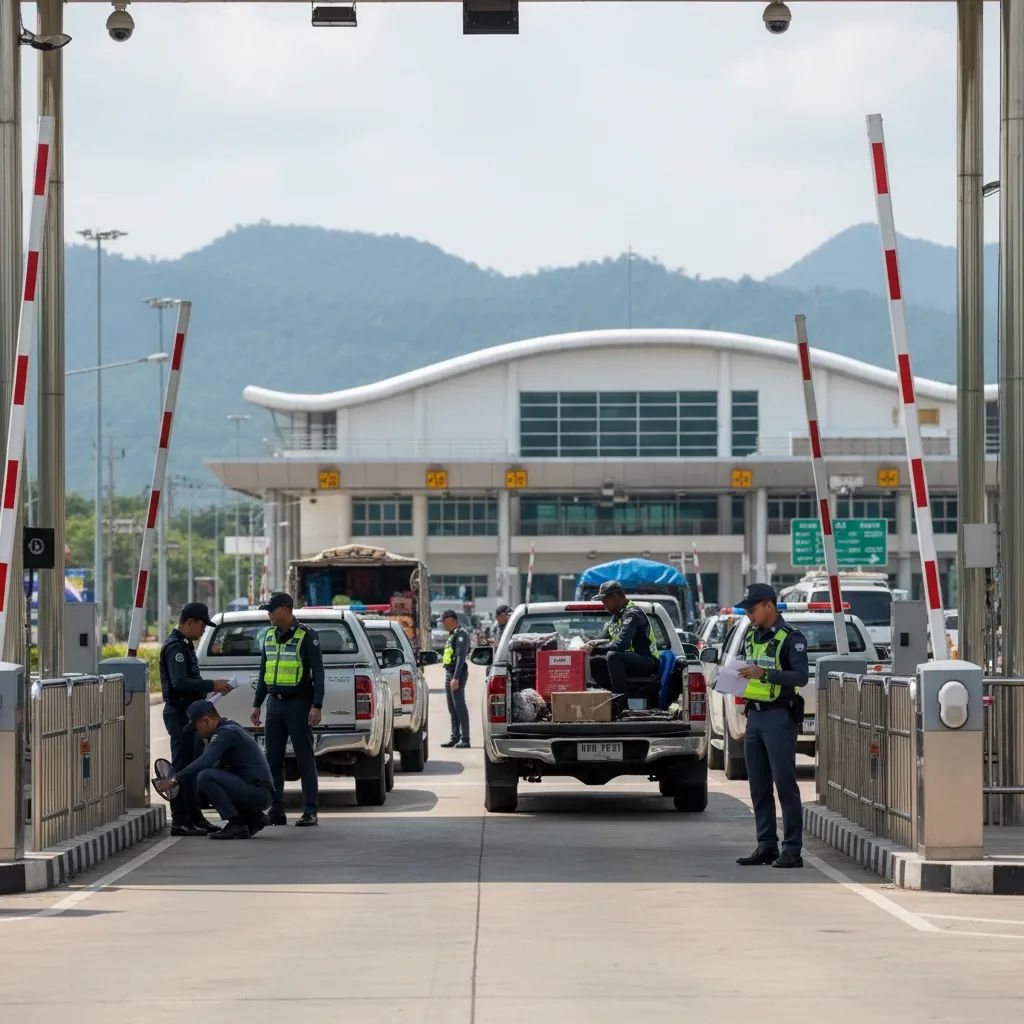
The Thailand Police Bureau and its allied enforcement agencies have embarked on one of the most coordinated multi-sector crackdowns in recent memory, targeting vehicle theft rings, narcotics distribution, and fuel diversion schemes operating across the northern border. What distinguishes this effort from past enforcement pushes is its deliberate refusal to treat these crimes as isolated incidents—officials now treat them as interconnected criminal ecosystems that feed the same underground networks.
Why This Matters
• Travel delays expected: Northbound routes through Chiang Rai, Chiang Mai, and Tak provinces now face intensive checkpoint screening. Carry complete vehicle documentation and ID to avoid extended questioning.
• Used vehicle purchases risky: Vehicles priced 20-30% below market rates warrant immediate skepticism. Verify ownership history using the Department of Land Transport online system before committing to purchase.
• Broader security shifts: Enforcement intensity has genuine staying power through at least 2026, meaning the operating environment for cross-border activity has shifted permanently—at least for now.
Key Takeaways for Buyers & Travelers
• Never purchase vehicles advertised significantly below market value
• Always verify vehicle registration history through Department of Land Transport online system
• Expect longer checkpoint delays in northern provinces through 2026
• Carry complete documentation and valid ID when traveling through border regions
• Legitimate businesses should use expedited customs processing for pre-registered commercial vehicles
The Mechanics of Modern Smuggling Networks
Vehicle trafficking across the Thailand-Laos border follows a ruthlessly efficient pipeline. Organized groups acquire trucks—predominantly Japanese pickups and SUVs—through theft from residential areas, fraudulent financing schemes exploiting documentation vulnerabilities at lending institutions, or systematic targeting of hire-purchase buyers whose paperwork remains malleable.
Once seized, vehicles reach staging areas near Wiang Kaen or other border towns within 6-12 hours, where mechanics install counterfeit registration plates and fabricate ownership documents. The economics are compelling: Japanese-manufactured trucks fetch prices nearly double their domestic value across the border, where legitimate imports face prohibitive tariffs and protracted customs procedures. This arbitrage creates perpetual regeneration of smuggling operations despite regular enforcement sweeps.
The Thailand Central Investigation Bureau (CIB), partnering with the Highway Patrol Command, dismantled a significant theft network in October 2025 after arresting 11 individuals connected to smuggling routes toward Myanmar. That operation traced dozens of stolen vehicles through jungle trails and informal river crossing points into regions where central government authority barely functions. Yet the disruption was temporary—criminal networks simply relocated operations, adjusted routes, or rebranded under new operatives.
Social media functions as the distribution mechanism. Smugglers advertise vehicles at steep discounts to cash buyers, generating urgency and bypassing traditional dealership verification processes. Interested buyers receive minimal paperwork and vague delivery instructions; vehicles vanish within days, reappearing weeks later in regions where vehicle registration enforcement remains dormant.
The Mekong Corridor and Water Crossings
The Mekong Riverine Unit (MRU), commanded by Rear Admiral Narong Emdee, has documented multiple informal crossing points where submersible or partially submerged ferries transfer vehicles across the border during darkness. The 200-kilometer waterway separating Thailand from Laos contains dozens of undocumented transit zones, rendering continuous surveillance impossible despite heightened patrol activity.
In May 2026, a coordinated operation led by Police Major General Manop Senakul, Commander of the Chiang Rai Provincial Police, and officers from the MRU Chiang Khong Division, successfully intercepted 11 pickup trucks staged for illegal export near Wiang Kaen district. Yet enforcement officials candidly acknowledge that each successful interdiction represents merely a temporary disruption—the underlying economic incentives and operational vulnerabilities persist.
Navy Captain Phakorn Maniam, commanding the MRU's Chiang Khong Division, emphasized that the sheer volume of potential crossing points, combined with limited personnel and aging surveillance equipment, means enforcement can disrupt but never entirely eliminate smuggling flows. The river corridor remains fundamentally porous regardless of enforcement intensity.
Corruption: The Structural Constraint
The United Nations Office on Drugs and Crime (UNODC) has repeatedly documented how corruption among border officials—on both Thai and neighboring sides—fundamentally enables rather than obstructs smuggling. Some checkpoints function as de facto tollbooths, where criminal networks pay negotiated fees for passage rather than executing evasive tactics.
This corruption operates bidirectionally. Laos possesses minimal capacity to police vehicles once they cross into its territory, while Myanmar's fragmented political situation means border regions operate outside meaningful government jurisdiction. Vehicles smuggled into Myanmar frequently disappear into territories controlled by armed ethnic minorities or criminal syndicates with no incentive to cooperate with law enforcement from neighboring countries.
The Thailand Ministry of Interior has issued urgent directives mandating enhanced security protocols across 31 border provinces, but resource allocation remains uneven. Mobile checkpoints in remote areas frequently operate with inadequate communication infrastructure. The Thailand Border Patrol currently lacks real-time information-sharing systems that would allow officers to instantly verify vehicle registration status against national databases—meaning thorough background checks occur only at fixed checkpoints, not mobile units.
Integration With Broader Criminal Activities
Vehicle smuggling networks overlap substantially with labor trafficking and fuel diversion schemes, revealing how criminal enterprises exploit regulatory gaps across multiple sectors simultaneously. In February 2026, a raid in Chiang Rai uncovered 36 undocumented migrant workers housed in facilities near known smuggling routes. The same operatives coordinating vehicle movements frequently arrange transportation for trafficked persons using identical infrastructure and border crossing points.
Similarly, the Thailand Ministry of Energy conducted a comprehensive raid on a major fuel depot in May 2026, discovering evidence that the facility had falsified transport documents 171 times and systematically inflated fuel volumes to divert subsidized diesel to unauthorized buyers, many of whom smuggle fuel across borders where it commands substantially higher prices. While seemingly unrelated to vehicle theft, this enforcement action demonstrates how criminal networks exploit regulatory weaknesses across sectors.
Motorcycle modification shops operating throughout Chiang Rai were simultaneously targeted for producing and distributing illegally altered exhaust systems violating noise pollution standards. Though peripheral to vehicle smuggling at first glance, these operations represent essential infrastructure—mechanics willing to modify documentation or alter vehicles for payment become recruitment targets for larger smuggling networks.
Practical Guidance for Vehicle Buyers and Travelers
Vehicle ownership in northern Thailand carries elevated risk in the current environment. Buyers should verify registration history using the Department of Land Transport's online verification system, which allows checking ownership transfer history, outstanding liens, and any flags indicating fraud or criminal association. Vehicles advertised substantially below market rates warrant skepticism—this pricing pattern frequently correlates with problematic histories or stolen status.
Residents and travelers moving northbound through Chiang Rai, Chiang Mai, or Tak provinces should anticipate extended checkpoint encounters, particularly along routes approaching river crossings and designated border crossing points. Complete vehicle registration documents, valid personal identification, and proof of legitimate vehicle ownership or authorized rental agreements will substantially reduce inspection duration.
Commercial drivers should maintain current insurance documentation and ensure vehicles comply with emissions standards. For businesses engaged in cross-border trade, the Thailand Customs Department has established expedited processing lanes for pre-registered commercial vehicles at major crossings—a meaningful mitigation for legitimate traders facing increased scrutiny.
Regional Cooperation: Realistic Constraints
The Thailand Cabinet recently approved expanded bilateral coordination with Cambodia targeting transnational crime, including trafficking, online fraud, and contraband smuggling. These agreements theoretically provide frameworks for information sharing and coordinated enforcement, but implementation remains inconsistent and capability gaps persist.
The Palermo Convention, ratified by Thailand, establishes legal mechanisms for cross-border cooperation and mutual legal assistance. However, gaps between formal commitments and operational capacity remain substantial. Thai authorities can request assistance from neighboring governments in vehicle tracking and asset recovery, but response times prove unpredictable and priority varies based on each country's domestic security concerns.
UNODC has provided technical support to Thailand in enhancing border security capabilities and developing inter-agency coordination protocols. Nevertheless, the volume of illicit movement—vehicles, narcotics, persons, fuel—continues to overwhelm available enforcement resources across the entire region.
What 2026 Means for the Operating Environment
Police Major General Manop Senakul has publicly committed to sustained enforcement throughout 2026, positioning vehicle smuggling as a strategic priority rather than secondary property crime. The government's integrated approach—combining border security upgrades, enhanced document verification, inter-agency coordination, and prosecution of criminal networks—represents a genuine shift in operational intensity compared to previous years.
Yet realistic assessment acknowledges enduring constraints: corruption vulnerabilities remain structural, limited capacity among neighboring governments to police their borders persists, and economic incentives driving smuggling networks remain fundamentally unresolved. Dismantling established routes creates temporary disruption but rarely eliminates criminal activity entirely—networks recalibrate, exploit alternative crossing points, or modify operational tactics.
The current campaign does demonstrate that Thailand's security apparatus possesses genuine capacity for sustained, multi-sector action when priorities align. Whether this intensity persists beyond 2026—or whether resource constraints and political shifts redirect attention elsewhere—will ultimately determine whether these efforts produce lasting disruption or merely temporary setbacks for smuggling enterprises.
Residents and business operators operating in northern Thailand should recognize that the operating environment has objectively shifted. Checkpoints have multiplied, vehicle seizures have accelerated, and criminal networks face measurable pressure. The practical implication is straightforward: those with legitimate vehicle ownership or cross-border business interests should ensure documentation remains impeccable and travel plans account for potential delays. Those considering purchases of suspiciously inexpensive vehicles should proceed with extreme caution—the savings rarely compensate for the legal and financial complications that frequently accompany such transactions.


