
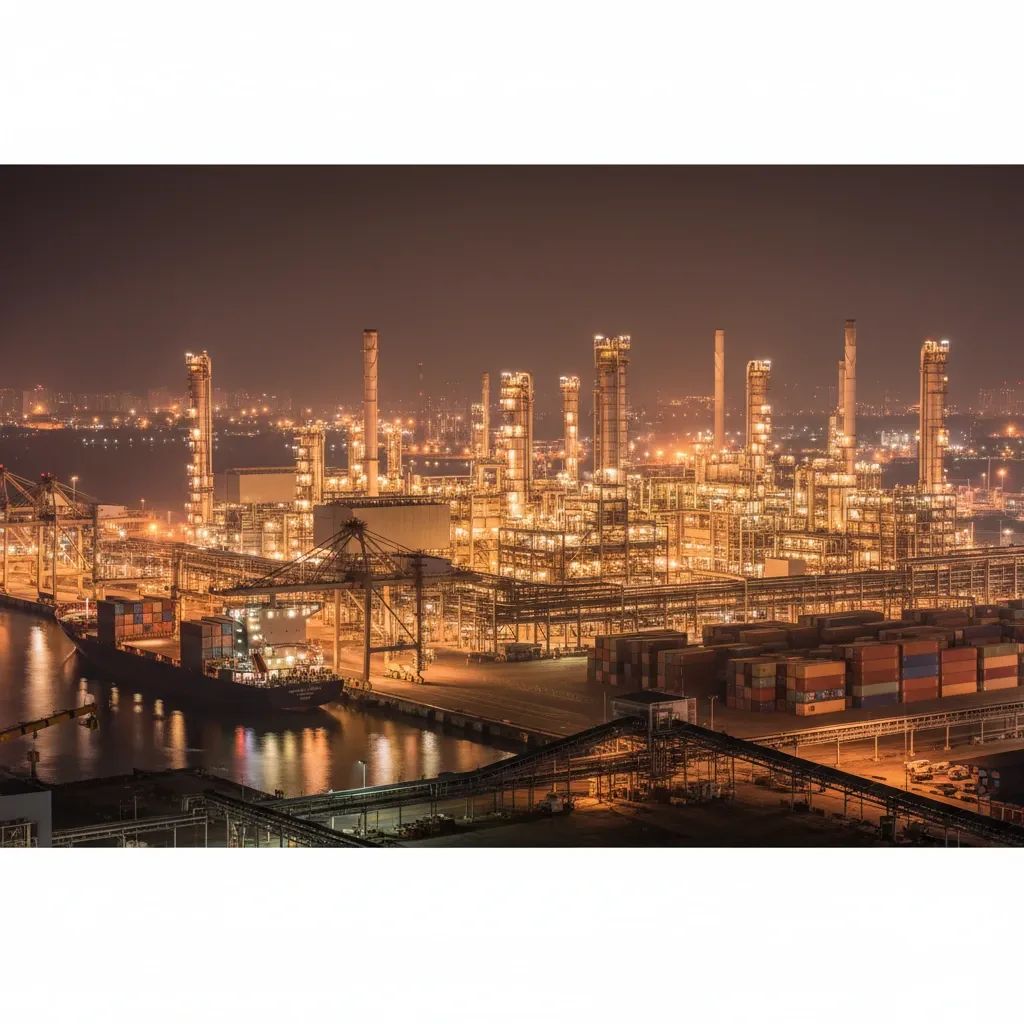
Thailand enacted an emergency borrowing decree on May 9, 2026. Prime Minister Anutin Charnvirakul announced a state-approved emergency loan of 400 billion baht (roughly $12.2 billion USD)—money the Thailand Ministry of Finance can now deploy to cushion households, farms, and factories against energy price shocks rippling from Middle East geopolitical instability, while simultaneously funding a structural pivot toward renewable electricity. For anyone living in Thailand, this means your light bill has a temporary stabilization mechanism, but only if government bureaucracy moves faster than it historically does.
Why This Matters
• Immediate relief lands in real accounts, not promises: Vulnerable households, farmers, and SMEs will receive direct cash or credit transfers through existing government welfare infrastructure starting mid-2026—no loan shark intermediaries or agricultural middlemen taking cuts.
• Your energy dependency risks drop, but timing is everything: The decree dedicates half the fund to renewable energy projects, but success requires solar installations, wind capacity, and battery storage to be built and operational to genuinely reduce Thailand's exposure to future import shocks.
• Constitutional Court could reset the rulebook: Opposition parties have flagged the decree as potentially circumventing parliamentary authority, with formal debate scheduled for May 14. If the court sides with critics, future emergency spending becomes harder, not this decree itself.
The Crisis Behind the Cure
Thailand's energy vulnerability stems from significant import dependence. The country imports substantial volumes of crude oil and liquefied natural gas through international maritime routes, supply corridors that Middle East tensions have effectively tightened. When geopolitical friction constricts those chokepoints, diesel lines grow, electricity tariffs climb, and small traders watch their margins evaporate. Unlike energy-rich neighbors like Vietnam or Malaysia, Thailand has no domestic oil wells to fall back on.
By early May, energy supply pressures had strained existing government stabilization mechanisms to the point where officials faced an uncomfortable reality: continuing to cap fuel prices would push the country toward fiscal constraints. Those constraints meant the government needed alternative financial authority to respond without compromising other fiscal priorities.
The emergency decree sidesteps traditional budget channels by creating a separate, legally segregated borrowing authority explicitly tied to crisis response and energy transition. It's a technical maneuver with real fiscal consequence: it frees up the government's regular borrowing capacity for other priorities—schools, roads, hospitals—while still adding to total national debt obligations. The Thailand Public Debt Management Office will handle the actual fundraising, either tapping domestic markets or seeking international loans.
Two Parallel Investments: Immediate Pain Relief and Structural Transformation
The architecture splits into equal halves: 200 billion baht for immediate relief, 200 billion baht for long-term energy infrastructure.
The Relief Portion: Stopping Immediate Bleeding
This 200 billion baht tranche acknowledges a hard truth: theory doesn't fill diesel tanks or pay fertilizer invoices. Three groups get priority access:
Low- and middle-income households receive targeted energy cost assistance routed through existing digital welfare payment systems. The Thailand Ministry of Finance has committed to avoiding leakage—a promise backed by a permanent secretary-led oversight committee that reviews disbursement before money leaves government accounts. Applications will route through the same channels as monthly poverty assistance programs, so most eligible residents already have registered accounts.
Agricultural producers get input subsidies explicitly targeting fertilizers, pesticides, and diesel for farm machinery—all items whose prices track energy markets directly. The Thailand Ministry of Agriculture and Cooperatives will distribute these through rural credit unions and agricultural cooperatives, institutions with existing relationships and trust in farming communities. Expect rollout to accelerate as planting season approaches.
Small and medium enterprises across manufacturing, hospitality, retail, and services receive operational support to absorb fuel surcharges without triggering immediate layoffs or price hikes that ripple through supply chains. The Office of SMEs Promotion and regional branches of the Thailand Small Business Credit Guarantee Corporation will process grant applications. Timeline: applications likely open in mid-2026 for deployment by end of third quarter.
The Transition Portion: Building Energy Independence
This tranche maps directly to Thailand's Power Development Plan 2026–2050, which targets increased renewable energy capacity by 2037 and beyond. The goal is to shrink fossil fuel imports and create a grid less vulnerable to supply shocks.
Utility-scale renewable capacity receives priority: solar photovoltaic farms (both conventional ground-mounted and floating arrays on reservoirs), onshore and offshore wind installations, and grid-scale battery storage systems. These assets reduce LNG import volumes and insulate electricity prices from global commodity fluctuations. The Energy Regulatory Commission will coordinate project approvals and feed-in tariff arrangements.
Electric vehicle infrastructure and incentives accelerate the shift away from petroleum-fueled transport. Tax breaks for EV purchases, public and private charging station networks, and support for localized battery manufacturing aim to displace gasoline and diesel consumption. The government also targets household solar installations and industrial co-generation systems, allowing factories and large buildings to generate power internally rather than drawing from utility grids constrained by fuel costs.
Carbon credit projects and environmental initiatives—reforestation programs, biogas systems at waste sites, methane capture from livestock operations—create tradable carbon assets while cutting emissions. Workforce retraining programs funded by the decree equip workers with photovoltaic installation skills, wind turbine maintenance competency, and grid-management expertise. The premise: the transition creates employment if workers displaced from fossil fuel industries gain marketable skills in renewable sectors.
Oversight: Accountability on Paper, Execution in Practice
A screening committee chaired by the Ministry of Finance permanent secretary reviews specific spending plans before the Public Debt Management Office disburses funds. The committee must sign off on renewable projects, relief distribution amounts, and workforce training curricula. Quarterly Cabinet reports are mandatory, creating a paper trail that creates accountability but historically encounters bureaucratic friction in Thai implementation.
The decree explicitly prohibits fund diversion to unrelated purposes—a legal prohibition with symbolic weight that relies on audit discipline to enforce. The borrowing window closes September 30, 2027—a deadline that forces urgent action but also creates a completion risk if procurement stalls midway through the cycle.
The Legal Challenge and What Actually Hangs on It
The Thailand Democrat Party has announced a Constitutional Court petition arguing the decree's scale and speed bypass legislative budgetary authority. The People's Party echoes concerns that the 200 billion baht energy transition allocation lacks sufficient spending criteria and should undergo normal fiscal budget review. Parliament is scheduled to debate formally on May 14.
Prime Minister Anutin dismissed legal objections by citing the decree's royal signature and royal gazette publication, which confer full legal force under emergency conditions. The government coalition appears to hold enough parliamentary votes to survive any no-confidence motion, though a Constitutional Court ruling against the decree would set constraining precedent for future emergency borrowing.
The practical political reality often obscures what's genuinely at stake. If the court invalidates the decree, relief already distributed would remain in recipient accounts—reversals are rare in Thai governance. The prospective consequence would be tighter constraints on future emergency decrees and mandatory submission of energy transition projects to standard budget scrutiny. That would slow renewable rollout but wouldn't reverse immediate cash transfers to vulnerable populations.
What matters for residents: expect the court process to stretch into mid-June before any preliminary ruling emerges. Until then, proceed assuming the decree remains in force.
Three Practical Outcomes You'll Actually See
Energy cost stabilization begins now: Relief tranche disbursement should help stabilize household energy costs through mid-2027, assuming the Ministry of Finance raises debt capital on schedule and payment committees approve distributions within weeks rather than months. Watch for official announcements from the Office of SMEs Promotion and provincial Ministry of Agriculture branches—these typically materialize within two weeks of budget execution decisions. Application processes will mirror prior subsidies: document verification through cooperatives or credit unions, then direct bank transfer.
EV adoption and solar expansion accelerate: Expanded tax incentives for electric vehicle purchases and enhanced grants for rooftop solar installations will make both options more economically attractive as detailed rules emerge. Timeline for detailed rules: expect announcements in coming months. The shift encourages private capital deployment in renewable sectors alongside government investments.
Energy security depends on execution, not just intent: Reducing import dependence genuinely lowers exposure to future price shocks—but only if grid upgrades happen, renewable capacity comes online on schedule, and energy transition projects remain prioritized. Delays in any of those components compress the security benefit and push Thailand's vulnerability reduction further into the future. This is the decree's real test: not approval in May, but functioning infrastructure by 2028.


