
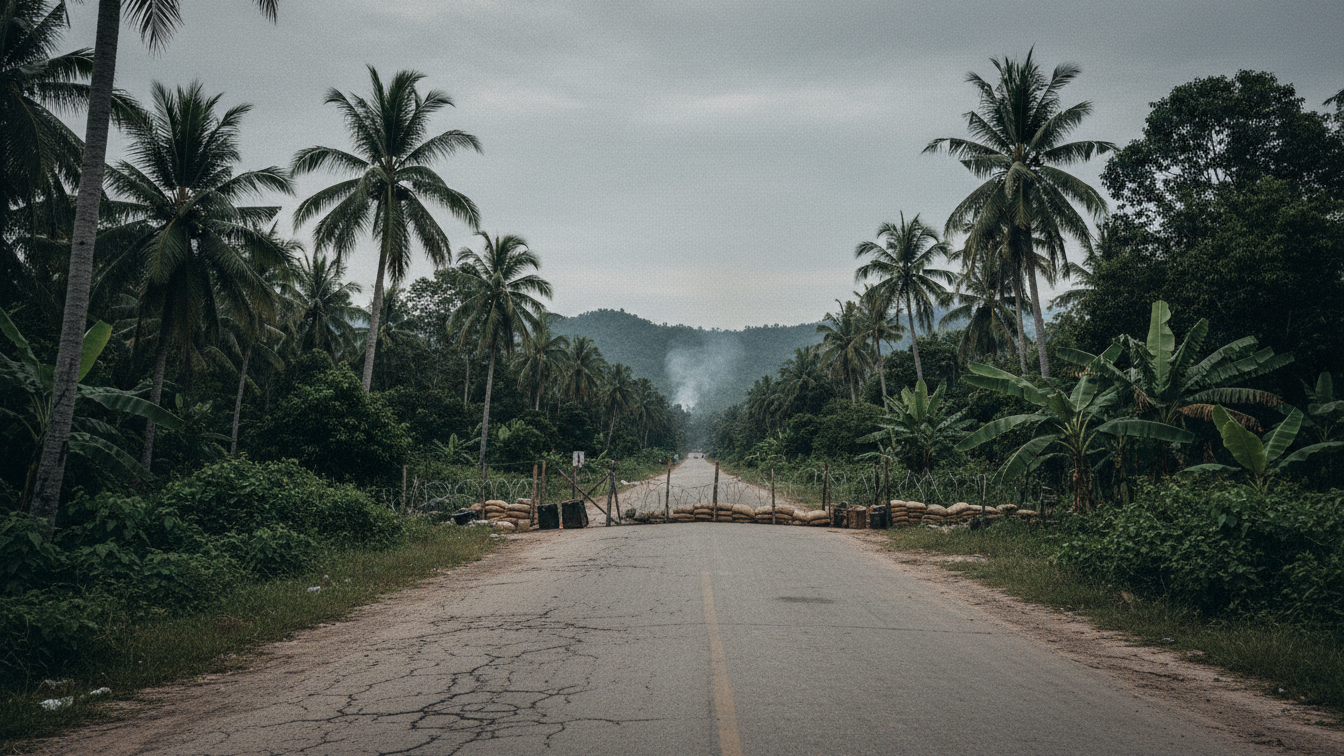
If you’re searching “how to be safe in Thailand right now” or “Thailand war safety”, you’re not alone. The key thing to know is this: Thailand is operating normally in most places, but there are specific “do-not-go” zones — mainly near the Cambodia border — and a few non-war risks that matter far more for day-to-day safety.
This is a practical guide for January 2026: what to avoid, what to do, and how to reduce risk without overreacting.
The 2-minute checklist before you fly
Do these 10 things and you’ll be ahead of 95% of travellers:
- Build your itinerary away from the border. (More on “safe zones” below.)
- If Cambodia was part of your plan, don’t rely on overland crossings right now — they can be closed or disrupted.
- Save emergency numbers in Thailand: 191 (police), 1155 (tourist police), 1669 (medical).
- Screenshot your passport photo page + visa/entry stamp and store offline.
- Buy travel insurance that covers disruption and emergency medical care (and check conflict exclusions).
- Set up embassy alerts (so you’re not guessing based on social media).
- If you ride scooters: plan on helmet + proper licence/IDP (many policies won’t cover you otherwise).
- Keep a small “grab kit”: power bank, basic meds, cash, and a copy of key documents.
- Don’t book “border temples” or frontier viewpoints this month — swap them for central/northern attractions.
- Decide now: If an area gets flagged, you reroute — you don’t debate it.
Where Thailand is safe and normal
For January 2026, most popular destinations are functioning normally — airports are open, domestic travel is running, and tourism continues in major hubs.
These areas are not part of the border conflict zone:
- Bangkok and surrounding provinces
- Chiang Mai and most northern city centres
- Phuket, Krabi, Koh Samui, Phang Nga, Hua Hin
- Major airports and most intercity routes
Where you should not go right now
The Cambodia border “no-go” zone
Multiple travel advisories now align on the same core guidance: avoid areas within roughly 50 km of the Thai–Cambodian land border, due to armed clashes and landmine/unexploded ordnance risk.
Provinces repeatedly flagged in official guidance include:
- Sa Kaeo, Buriram, Si Saket, Surin, Ubon Ratchathani, Chanthaburi, and mainland Trat
Practical implications in January:
- You may see checkpoints, curfews, restricted roads, and disrupted rail/bus endpoints near the frontier.
- If your trip includes border temples or frontier viewpoints, skip them until restrictions lift.
Thailand’s deep south: a separate risk
Unrelated to Cambodia, some guidance warns of ongoing insurgent/terrorism risks in Thailand’s far southern provinces (near Malaysia). If you don’t need to go, reconsider.
Is Thailand safe for residents and travellers?
Yes — if you avoid the border zones.
According to the Tourism Authority of Thailand (TAT), travel across most of the country, including major destinations (Bangkok, Chiang Mai, Phuket, Krabi, Samui, Pattaya and Ayutthaya), continues normally and safely, with only localized measures near the Cambodia border.
Border provinces with restrictions
- Sa Kaeo
- Ubon Ratchathani
- Si Sa Ket
- Surin
- Buri Ram
- Chanthaburi
- Trat (some districts under martial law or curfew)
In these areas, travel may be restricted due to check-points, curfews and security operations.
How can I be safe if I live in Thailand?
For most residents, staying safe means staying informed, not panicking.
Practical Safety Tips — Residents & Expats
These are the real-world steps you should take if you live here:
Follow official updates, not rumours
- Check Ministry of Interior and provincial announcements daily
- Sign up for embassy alerts (e.g., STEP for US citizens)
Avoid high-risk zones
- Do not travel near the border unless essential
- Respect do not travel advisories published by governments
Prepare contingency essentials
- Keep ID, emergency cash, phone charger and medicines ready
- Know safe evacuation routes in your area
Transport and movement
- Be prepared for sudden road closures or checkpoints
- Understand that some train and bus routes near the border may be altered
Local conduct matters
- Follow all instructions from local authorities
- Avoid discussion of security topics in sensitive areas — even well-intended posts can spread misinformation
Practical Safety Tips — Travellers
If you’re planning a trip now or in early 2026:
Before you go
- Check official travel advisories
- Get travel insurance that covers security incidents and evacuation
During your trip
- Avoid border regions entirely
- Travel plans elsewhere in Thailand (cities, beaches, islands) are not affected
- Monitor local news and official resources
Is travel infrastructure working?
Yes — flights, trains, buses and ferries operate normally nationwide
Only overland border crossings to Cambodia remain suspended or dangerous due to conflict and landmine risks.
What about tourism sites near the border?
Popular sites near the frontier — including the temples of Preah Vihear, Ta Muen Thom, Ta Krabey and related border attractions — are closed or unsafe due to fighting and landmine hazards.
If your trip doesn’t include these areas, there’s no evidence of risk to your itinerary.
Why are other countries involved — and does that affect safety?
Regional and international diplomacy is active because stability matters to Southeast Asia as a whole. Neighbouring countries and major partners are encouraging de-escalation and dialogue.
For residents and travellers, this is reassuring:
- The situation is being monitored closely
- There is pressure to calm tensions, not expand them
- No indicators point to a wider regional conflict
Diplomacy is part of why the situation remains contained.
What if I am already in Thailand near the border?
Just because you are in Thailand doesn’t mean you are in danger. But if you are inside an affected province:
• Stay updated via provincial authorities
• Follow safety instructions and curfews
• Prepare basic essentials and a personal evacuation plan
• Use embassy/consular support if your area deteriorates
This is precautionary action, not panic.
What should you watch over the coming weeks?
Pay attention to:
- Official travel or evacuation notices
- Announcements about border reopening or closures
- Sustained pauses in fighting
Avoid reacting to:
- Sensational headlines
- Viral videos without context
- Claims of nationwide instability
Bottom line
If you are looking for the simplest, most honest answer:
- Thailand is safe for most residents and travellers
- Avoid border areas
- Stay informed through reliable sources
- Prepare calmly, don’t panic
January 2026 remains a safe time to live in or visit Thailand — as long as you understand the situation and act accordingly.
Because conditions near the border can change quickly, we will continue to monitor developments on the ground, track official announcements, and explain what they mean in practical terms for people living in or travelling to Thailand.
If you want clear updates without alarmism — and guidance that focuses on what actually affects daily life — keep following our coverage. Staying informed is one of the simplest and most effective ways to stay safe.


