
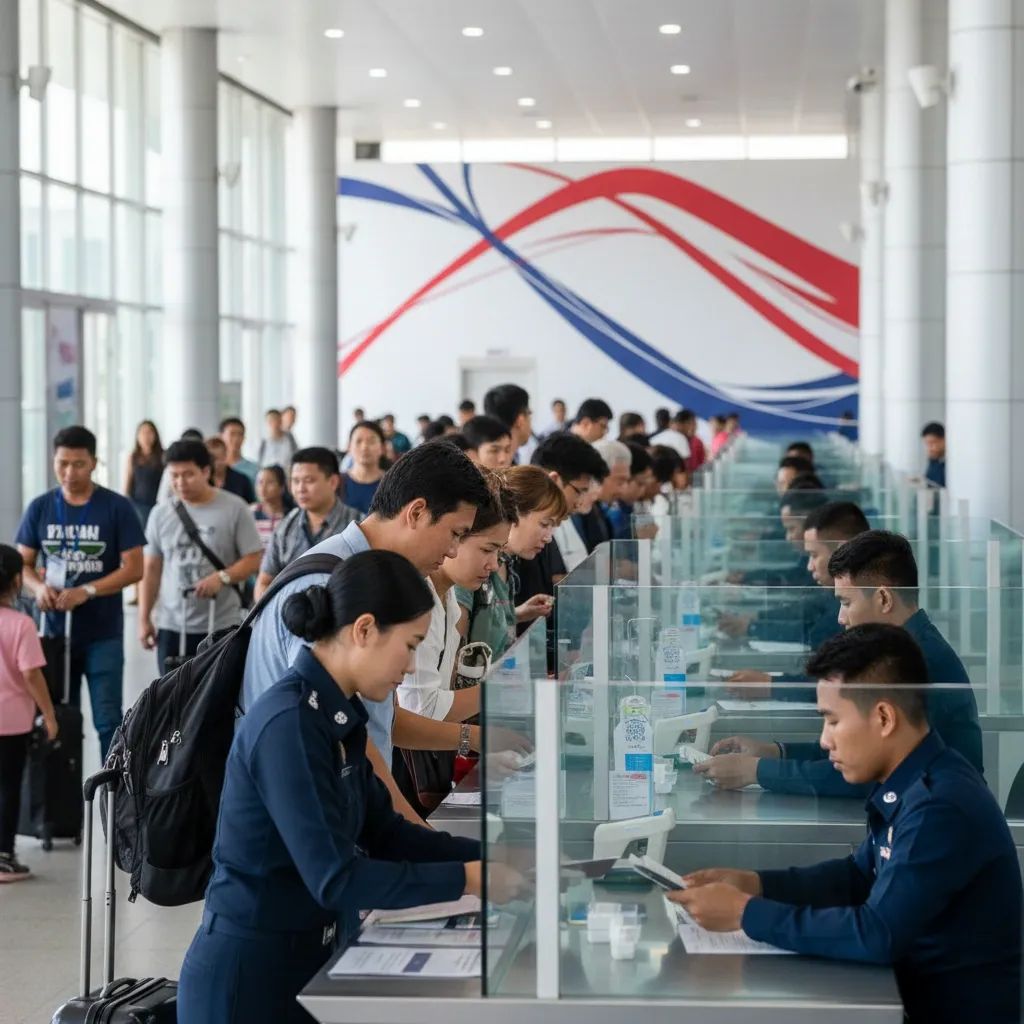
The Royal Thai Police has launched an aggressive three-month enforcement blitz targeting foreign criminal networks, a move that will reshape how expatriates, long-term residents, and even frequent tourists navigate immigration and business ownership rules across the country. Simultaneously, the Thailand Ministry of Interior is revisiting visa-free entry periods, potentially slashing the current 60-day allowance back to 30 days to curb unauthorized activities.
Why This Matters
• Visa-free stay may drop: The 60-day visa exemption could revert to 30 days, complicating plans for casual visitors and digital nomads.
• Nominee business scrutiny intensifies: Foreigners using Thai proxies to own land or operate hotels, restaurants, and clinics face investigation, with 34 companies on Koh Samui and Koh Phangan already under review.
• Repeat "visa run" travelers flagged: Immigration now denies entry to those with more than two visa-exempt entries via land borders without clear justification.
• Enhanced border checks: Proof of onward travel, accommodation, and ฿20,000 in cash per person (฿40,000 per family) now routinely demanded at checkpoints.
The Three-Phase Police Operation
National police chief Pol Gen Kittharath Punpetch has ordered all units to inspect foreigners within their jurisdictions, compile databases, and identify individuals tied to drug trafficking, cybercrime, human trafficking, economic offenses, and violent crime. The strategy unfolds across three distinct timelines.
In the immediate phase, running for three months, officers conduct intensified inspections nationwide and propose amendments to close legal loopholes. The medium-term phase, spanning six to nine months, tasks the Immigration Bureau with auditing visa extensions, foreign business registrations, and supporting documents, while detectives pursue associated criminal networks using an "uproot and eradicate" mandate. Over the long term (one to two years), authorities will integrate foreigner records into the RTP's OnePolice system, enabling real-time verification at all levels, and expand cross-border data sharing to support blacklists, advance passenger screening, and arrest warrants.
A proposed joint task force would bring together the Ministries of Commerce and Finance, the Anti-Money Laundering Office, the Bank of Thailand, the Customs Department, the Excise Department, and the Department of Land to coordinate operations at policy and provincial levels. The police have pledged strict legal and disciplinary action against any state officials found complicit in facilitating foreign crime.
Nominee Networks in the Crosshairs
Authorities have identified nominee businesses—where foreigners illegally acquire land, real estate, and commercial ventures through Thai proxies—as an urgent problem capable of spawning influential criminal syndicates. The Department of Special Investigation is already probing 34 companies on Koh Samui and Koh Phangan suspected of fronting for foreign investors, with plans to extend audits to Phuket and Pattaya. Investigators are linking these arrangements to money laundering, hidden foreign asset ownership, tax evasion, and organized crime.
Targeted sectors include hotels, hospitals, and restaurants, where nominee structures allow foreign nationals to bypass restrictions on land ownership and majority shareholding. Authorities are increasing inter-agency data sharing to flag suspicious corporate structures, cross-referencing company filings with immigration records and financial flows.
Recent Enforcement Milestones
On May 12, 2026, Thai authorities detained 18 Thai nationals repatriated from Cambodia who were linked to online scam networks and mule bank accounts involved in more than 60 fraud cases. The same week, Thai police arrested Mingchen Sun, a Chinese-Cambodian suspect apprehended in Pattaya with a cache of military-grade weapons. Evidence suggests the arsenal was intended for conflicts between rival scam gangs operating in Cambodia, not for attacks within Thailand. The case has triggered a review of immigration screening protocols and the privileges attached to elite visa categories.
Earlier in the month on May 7, 2026, police dismantled Thailand's largest ivory smuggling operation in a decade, arresting nine suspects across seven provinces who attempted to sell roughly 250 kg of African elephant ivory via Facebook. The crackdown also builds on previous successes: Thailand has already dismantled a major call-center network on the Cambodian border and rescued over 10,000 forced-labor victims deceived into working for scam operations.
What This Means for Residents
For expatriates and long-term residents, the campaign introduces a higher burden of proof at every touchpoint with the state. Those holding long-term visas—whether retirement, marriage, investment, or education permits—should ensure all business interests, property contracts, and company shareholdings comply strictly with Foreign Business Act and Land Code restrictions. Nominee arrangements, even those structured years ago, now carry the risk of investigation, asset seizure, and potential deportation.
Digital nomads and remote workers relying on the Destination Thailand Visa (DTV) — a specialized visa for remote workers and digital nomads seeking to live and work in Thailand for up to 180 days — or repeated visa-exempt entries face heightened scrutiny. Immigration officers are conducting more thorough checks, and repeat "visa run" behavior—particularly via land borders—can trigger entry denial. Travelers should be prepared to demonstrate proof of onward travel, booked accommodation, and sufficient funds at every entry point.
Business owners operating in sectors flagged by authorities—hospitality, real estate, healthcare—should audit corporate structures immediately. Any shareholding arrangement that relies on Thai nominees to circumvent majority-foreign-ownership limits is now considered a priority target for the DSI and the Anti-Money Laundering Office.
Visa Policy Under Review
The Thailand Ministry of Interior is weighing whether to roll back the 60-day visa-free stay introduced for many nationalities, reverting to the previous 30-day standard. Some official Ministry of Foreign Affairs documents have already begun reflecting the shorter period. The change stems from concerns that individuals misuse extended visa-exempt stays for unauthorized work, illegal business operations, and transnational crime.
Extensions for visa-exempt travelers are also becoming more restrictive. Reports indicate that immigration may limit extensions to twice per calendar year—a 30-day extension followed by a 7-day extension—forcing those seeking longer stays to apply for appropriate long-term visas. The government aims to shift toward "quality" tourism, prioritizing visitors and residents who contribute economically and comply with visa regulations.
Regional and International Cooperation
Thailand is deepening enforcement ties with regional and global partners. The government will soon launch a new SHIELD information-sharing system with neighboring countries to track criminal movements and coordinate cross-border arrests. The Royal Thai Police has also expanded cooperation with the United States to combat scam gangs and human trafficking, seeking to elevate Thailand's status in international human-trafficking assessments.
Enhanced data sharing with foreign governments will support immigration denial measures, advance passenger screening, and blacklist systems, making it harder for individuals with criminal records or suspicious travel patterns to enter the country.
Long-Term Resident Visa as an Alternative
For those seeking stability amid tightening enforcement, the Long-Term Resident (LTR) Visa offers a more predictable path. Introduced in 2022, the LTR visa has undergone recent refinements to enhance its appeal. It now grants a 10-year renewable stay, reduces reporting requirements from 90 days to once per year, and includes fast-track services at international airports. Recent adjustments have removed work experience requirements for some categories, lowered employer revenue thresholds, recognized same-sex spouses as dependents, and simplified criteria for wealthy individuals.
The Non-Immigrant ED Plus visa category, catering to those combining education and work, provides another avenue for legitimate long-term residence. Both visa classes require thorough documentation and background checks, but they insulate holders from the uncertainty surrounding visa-exempt travel and nominee-business crackdowns.
The Compliance Imperative
Thailand's enforcement pivot reflects a broader regional trend toward stricter immigration controls and heightened scrutiny of foreign-owned business interests. The message from authorities is unambiguous: tolerance for legal ambiguity has ended. Whether you are a tourist, a digital nomad, a retiree, or a business owner, compliance with Thai law—particularly regarding visa status, business ownership, and property rights—is no longer negotiable.
Those who have relied on nominee structures or repeated short-term entries to maintain residence should consult qualified legal counsel immediately. The three-phase police operation, combined with inter-agency task forces and expanded data sharing, creates an enforcement environment where past arrangements are no longer invisible—and where the cost of non-compliance can include asset forfeiture, legal prosecution, and permanent exclusion from the country.


