
BANGKOK, Sunday, May 10, 2026 — Former Prime Minister Thaksin Shinawatra will be released on parole Monday morning after serving eight months of his sentence, marking a significant moment in Thai politics as his informal counsel could reshape coalition dynamics while his daughter Paetongtarn confirmed the family would collect him personally.
What Residents Need to Know
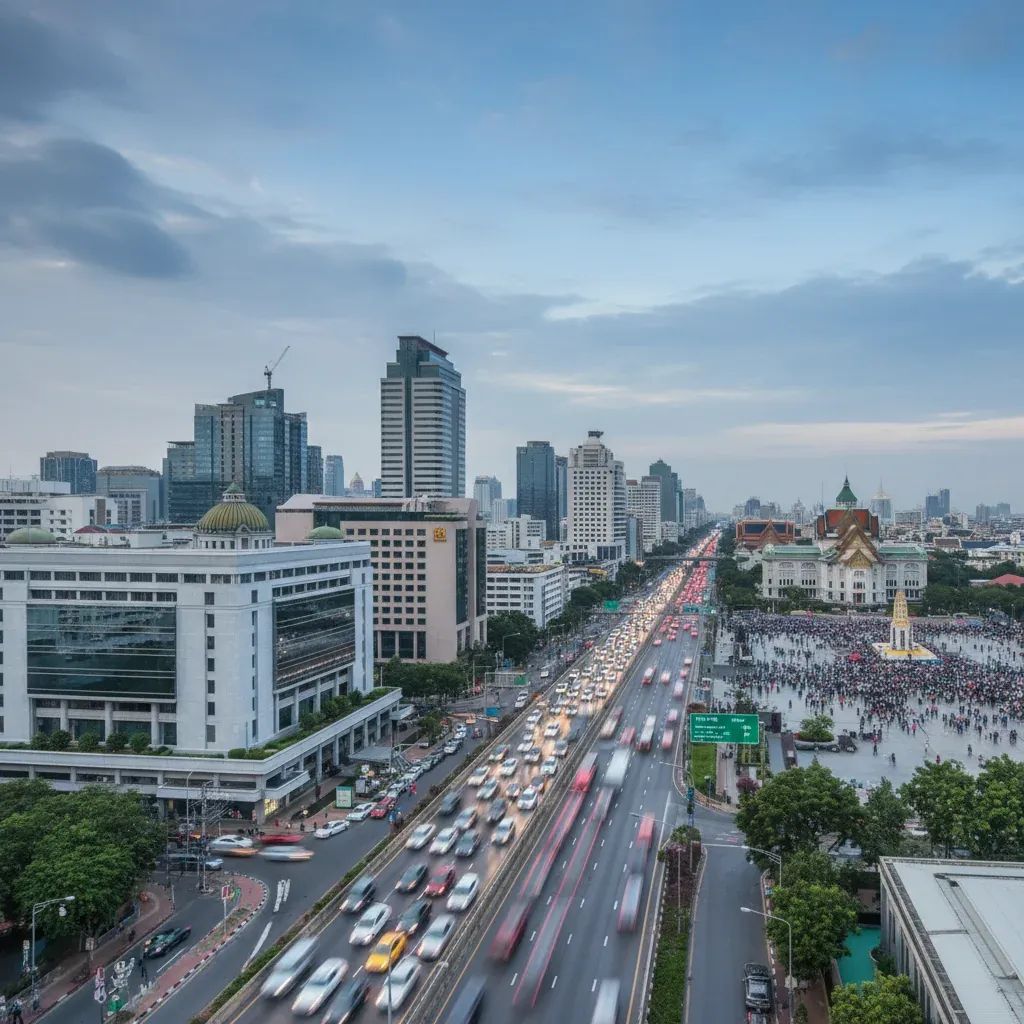
Travel Alert: Expect major traffic disruptions on Ngamwongwan Road's outbound lanes from Monday morning through noon. More than 1,000 supporters gathered at Klong Prem Central Prison over the weekend, with organizers coordinating buses from provincial towns and overnight accommodations. Public transport detours are active. Plan alternative routes or shift commute times if you work in northern districts.
Probation Terms: Thaksin faces four months of court-ordered confinement at his registered Bangkok residence with mandatory weekly check-ins with the Department of Corrections. While physically restricted, he retains ability to communicate privately and advise informally.
Political Impact: With Pheu Thai reduced to junior coalition partner status after winning 86 parliamentary seats in the February election, Thaksin's presence could influence budget allocation decisions and policy priorities toward rural constituencies that historically supported him.
Background: Grassroots Organization and Legal Challenges
The weekend gathering outside the detention facility reflected the organizational capacity of the United Front for Democracy Against Dictatorship (UDD), the Red Shirt movement historically aligned with Shinawatra politics. Worachai Hema, a former Pheu Thai MP now active with the UDD, coordinated the encampment with structured programming including communal meals at 5:30 PM Sunday and live acoustic performances—activities carefully labeled as "political forums" to comply with Thai regulations governing assemblies.
The parole qualified for approval under the Corrections Act of 2017: Thaksin completed two-thirds of his one-year sentence with no disciplinary violations. However, the People's Democratic Reform Committee (PDRC) filed formal petitions to the Thailand Ministry of Justice claiming the release violated legal precedent. Their argument centered on a prior Supreme Court ruling that deemed his transfer to Police General Hospital as unlawful; they contended that hospital time should not count toward sentence completion, rendering him technically ineligible. The Department of Corrections rejected this challenge, confirming the parole complied with statutory requirements.
Why This Matters Politically
Thaksin's earlier administrations invested significantly in rural development, healthcare schemes, and agricultural support programs—benefits felt tangibly by voters in the agricultural northeast and northern regions. These constituencies form the foundation of Shinawatra political support and drove the Red Shirt movement's emergence as a grassroots defense mechanism after the 2006 military coup eliminated their preferred political representation.
Pheu Thai Party leader Julapun Amornvivat declared Thaksin's release a "private family matter," explicitly denying he would assume formal party positions. This creates political distance while allowing the party to leverage his symbolic significance with a demoralized rural base. His daughter Paetongtarn, who was forced to resign from the prime ministerial position in 2025 following ethical violations, visited him on May 7 confirming family arrangements for his release.
The timing coincides with critical coalition budget deliberations extending through September 2026. If Thaksin's informal counsel influences Pheu Thai decision-making during expenditure negotiations, it could shift resources toward rural constituencies. Conversely, if renewed polarization escalates, it could inject legislative volatility.
The Immediate Practical Picture
The road closures Monday morning represent the most direct impact on daily life for Bangkok commuters. Organizers have coordinated efficiently: buses from provincial towns, hotel reservations, and coordinated arrival times demonstrate sustained organizational structure despite Pheu Thai's parliamentary decline.
For investors and business professionals, the implications depend on whether Thaksin's advisory role remains confined to economic and coalition management or expands into sensitive policy areas. For years, his vocal advocacy for constitutional amendments and monarchy-related reform contributions drove opposition backlash and political instability—factors currently absent from public commentary.
Whether that restraint continues as a lasting arrangement remains to be seen. For now, the core political dynamic centers on whether Pheu Thai can use Thaksin's rehabilitated presence to restore connection with rural voters essential for rebuilding parliamentary dominance while avoiding the polarization that historically destabilized Thai politics during his earlier presidencies.


