
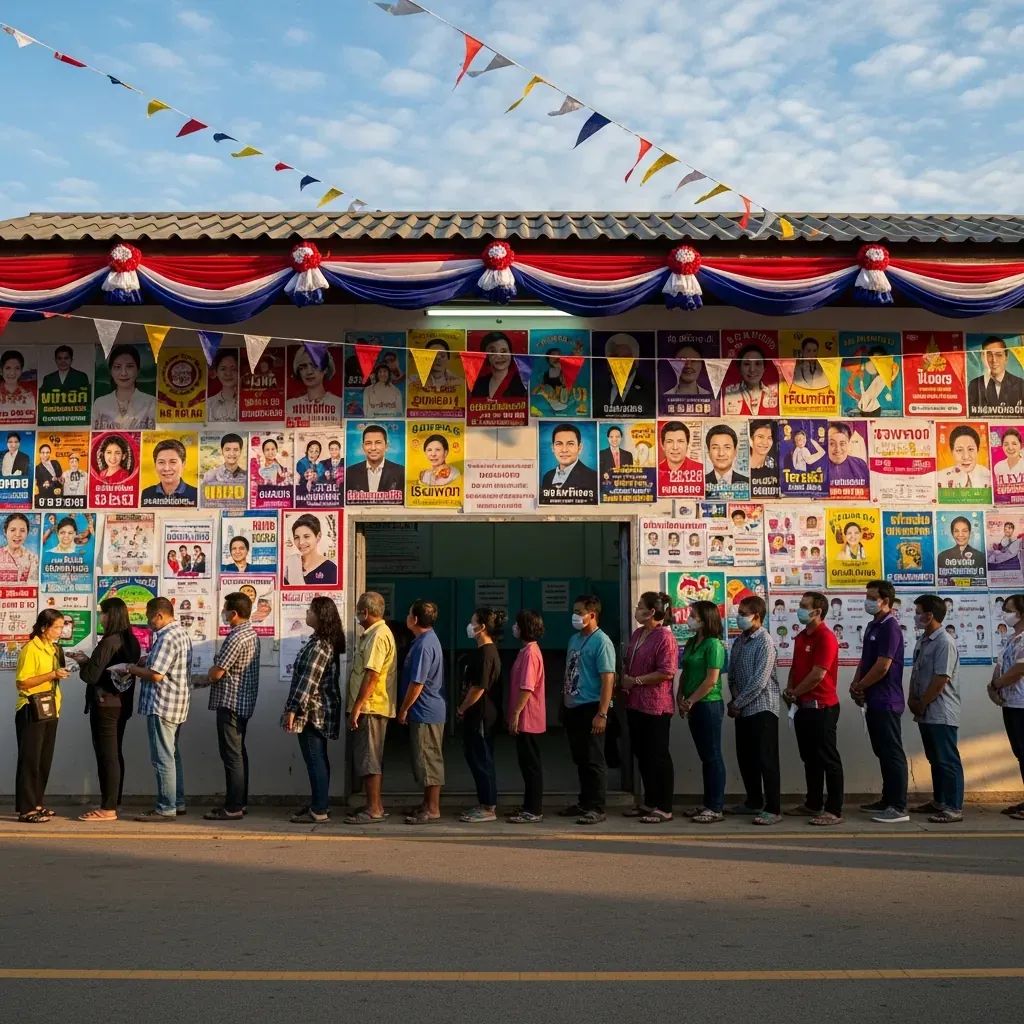
Southeast Asia's regional bloc faces mounting pressure to reform its decision-making processes as global multilateral institutions struggle with superpower rivalry. Asean's ten member nations must now decide whether to accelerate crisis response mechanisms—for energy security, climate pressures, and border stability—or risk losing relevance as the world's attention shifts to more agile regional actors.
Why This Matters
• Energy exposure: Disruptions in Middle Eastern supply chains create immediate ripple effects through Thailand's fuel costs, electricity prices, and food inflation within weeks of any crisis.
• Decision-making bottleneck: Asean's consensus requirement—once a unifying principle—now functions as a brake on urgent action when speed determines outcomes.
• Thailand's leadership window: As Asean's current sustainability coordinator, Thailand bears responsibility for either catalyzing regional momentum or presiding over missed opportunity.
• Border spillover: Domestic problems in neighboring countries—environmental collapse, energy scarcity, refugee displacement—no longer remain isolated; they cross borders in days.
Energy Vulnerability Exposed
The Middle East's latest turbulence has sharpened focus on a long-unresolved question: how vulnerable is Southeast Asia to petroleum supply disruption? Thailand imports roughly 85% of its crude oil and 100% of its natural gas. When tankers face delays or rerouting, Thai consumers experience visible consequences within 2–3 weeks—petrol queues at pumps, shipping surcharges that ripple through supermarket shelves, power generation strain during peak demand.
Within the Asean bloc, three nations—Indonesia, Malaysia, and Brunei—hold substantial petroleum reserves and production capacity. On paper, intra-regional coordination could buffer the entire alliance against external shocks. In practice, each country treats its hydrocarbon wealth as a national asset to be sold to the highest bidder on international markets, not as shared insurance against regional vulnerability.
Thailand's Foreign Ministry policy discussions during the 5th annual Sustainability Week Asia uncovered an uncomfortable reality: Asean has designed energy security frameworks—technical documents outlining cooperation mechanisms—but converted almost none into operational infrastructure. No coordinated regional reserve system exists. No shared emergency pricing protocols govern how member states would allocate limited supplies during genuine shortage. According to Foreign Ministry officials involved in these discussions, the frameworks remain theoretical while enforcement mechanisms are absent.
For residents and businesses in Thailand, this gap means exposure to pricing volatility they cannot influence. When Houthi forces strike shipping in the Red Sea or OPEC members adjust production, Thai fuel prices move within days. The national government has limited tools to insulate households or manufacturers from these external shocks when regional cooperation remains theoretical.
The Multilateral Void and Thailand's Opening
The United Nations Security Council remains hostage to veto-wielding permanent members. The World Trade Organization struggles with consensus-based decision-making. The World Health Organization lacked enforcement power during pandemic crises. Into this vacuum step middle-power nations—countries with genuine regional influence but no pretense to global hegemony. Thailand, Indonesia, Vietnam, and their peers now occupy unusual diplomatic space because larger rivals exhaust themselves in direct confrontation.
Foreign Minister Sihasak Phuangketkeow frames this as both opportunity and responsibility. Thailand currently serves as Asean coordinator on sustainability—a position requiring the nation to broker compromises between oil-producing members (who fear rushed green transitions threaten revenue) and aspiring climate leaders (who want aggressive emissions targets). The role demands real leverage, not ceremonial authority.
The concrete expression of this leadership is Thailand's net zero legislation moving through parliament. If the policy framework succeeds and generates measurable emissions reductions, it establishes a template other Asean members might emulate. If it stalls or remains unenforced, it signals that sustainability commitments within the region remain performative—words without consequence.
Neighboring countries watch closely. Vietnam weighs coal plant expansion against renewable investment. Indonesia faces pressure to monetize palm oil expansion or preserve forest carbon sinks. Philippines policymakers negotiate between energy-hungry manufacturing and climate pledges. Each delay by one nation affects regional credibility and the collective willingness to accept binding targets.
When Consensus Becomes Paralysis
Asean's founding principle—decision-making through consensus, never over-ruling dissenting members—produced stability during the Cold War when geopolitical fracture threatened to splinter the region. Consensus prevented Thailand from becoming a proxy battlefield and allowed smaller nations to retain voice in deliberations with regional powers.
That structural logic no longer fits current circumstances. When a natural disaster strikes Thailand, Asean takes weeks to coordinate relief because consensus-seeking requires approval from ten national governments. When energy prices spike, the bloc cannot act decisively because Malaysia prioritizes oil revenue while Vietnam prioritizes electricity access.
When environmental disaster spreads across borders—Indonesian peatland fires blanketing Bangkok with hazardous haze for weeks, Laos dam projects altering Mekong water flows that affect Thailand's agriculture and power generation—each nation invokes the principle of non-interference in internal affairs rather than acknowledging that ecological collapse in one country becomes a crisis for all neighbors.
Foreign Minister Sihasak offered unusually frank diagnosis: consensus often produces "the lowest common denominator"—agreements that satisfy all parties because they commit no one to genuine action. Environmental protocols get signed but not implemented. Energy coordination frameworks exist on paper. Disaster response procedures languish in bureaucratic drafting cycles.
The underlying political barrier remains real. Smaller Asean members fear that majority voting or tiered commitment structures would subordinate them to Thailand, Indonesia, and Vietnam—the region's economic heavyweights. Yet the current alternative—near-total paralysis dressed up as diplomatic principle—may prove equally damaging if it prevents the bloc from capturing a historical moment when superpower preoccupation creates space for regional actors to lead.
What Accelerated Asean Means for Thailand's Future
If the bloc can overcome its structural constraints and respond with agility to energy and climate crises, Thailand benefits directly. Coordinated renewable energy trading—hydropower from Laos, solar generation from Thailand and Vietnam feeding into shared grids—would lower electricity costs across the region. Joint investment in offshore wind farms or electric vehicle manufacturing hubs would create jobs and reduce import dependence. Synchronized emissions standards would give Thai companies scale advantages across ten markets instead of fragmenting their operations across ten separate regulatory regimes.
Conversely, continued inaction leaves Thailand exposed to compounding vulnerabilities. Businesses face unpredictable operating environments across Asean because each nation pursues independent energy and climate policy. Investors in renewable infrastructure hesitate to commit capital when regional coordination remains uncertain. Consumers absorb fuel price shocks individually because no collective mechanism buffers against external disruption.
The non-interference principle—sacred to Asean since its 1967 founding—frays under modern reality. The fiction that these remain purely internal matters collapses when cross-border refugee flows, environmental degradation, and disease outbreaks refuse to respect diplomatic protocol. Sihasak directly challenged Asean to reckon with this evolution. The principle that once preserved sovereignty now sometimes protects negligence, allowing member states to externalize costs onto neighbors while avoiding accountability.
The Strategic Choice Before Thailand
Thailand's position as Asean sustainability coordinator is not ceremonial. The role carries leverage precisely because the broader world is watching to see whether a regional bloc of 650 million people can coordinate coherent responses to energy and climate challenges. Success would demonstrate that multilateralism remains functional when properly designed. Failure would accelerate the shift toward bilateral partnerships and ad hoc coalitions that bypass Asean entirely.
For companies operating across Thailand and neighboring markets, the distinction matters enormously. A coordinated Asean energy policy creates predictable business environments and scale opportunities. Fragmented national policies create friction, require compliance expertise in ten separate jurisdictions, and force difficult decisions about which markets to prioritize.
For residents, the stakes involve tangible outcomes: reliable electricity access at stable prices, protection from fuel price volatility, environmental protection that cross-border cooperation alone makes possible. These are not abstractions—they determine living costs and quality of life.
The Tension Between Urgency and Tradition
The global crisis confronting Asean is not temporary. Middle Eastern instability, accelerating climate disruption, superpower competition for regional influence—these are structural conditions that will persist. Solutions requiring perfect consensus on all details will not arrive in time to address them effectively.
The question now is whether Thailand and its regional partners can redesign Asean's decision-making mechanisms—not abandoning consensus entirely, but making it more flexible, allowing coalitions of willing members to move ahead on shared commitments while leaving others latitude to catch up gradually. That is not rejection of Asean's founding principles; it is their evolution.
The window for demonstrating that middle powers can deliver results when major powers cannot is open but narrowing. Thailand's leadership during this Asean sustainability coordination period will determine whether that opportunity becomes concrete achievement or another missed chance.


