
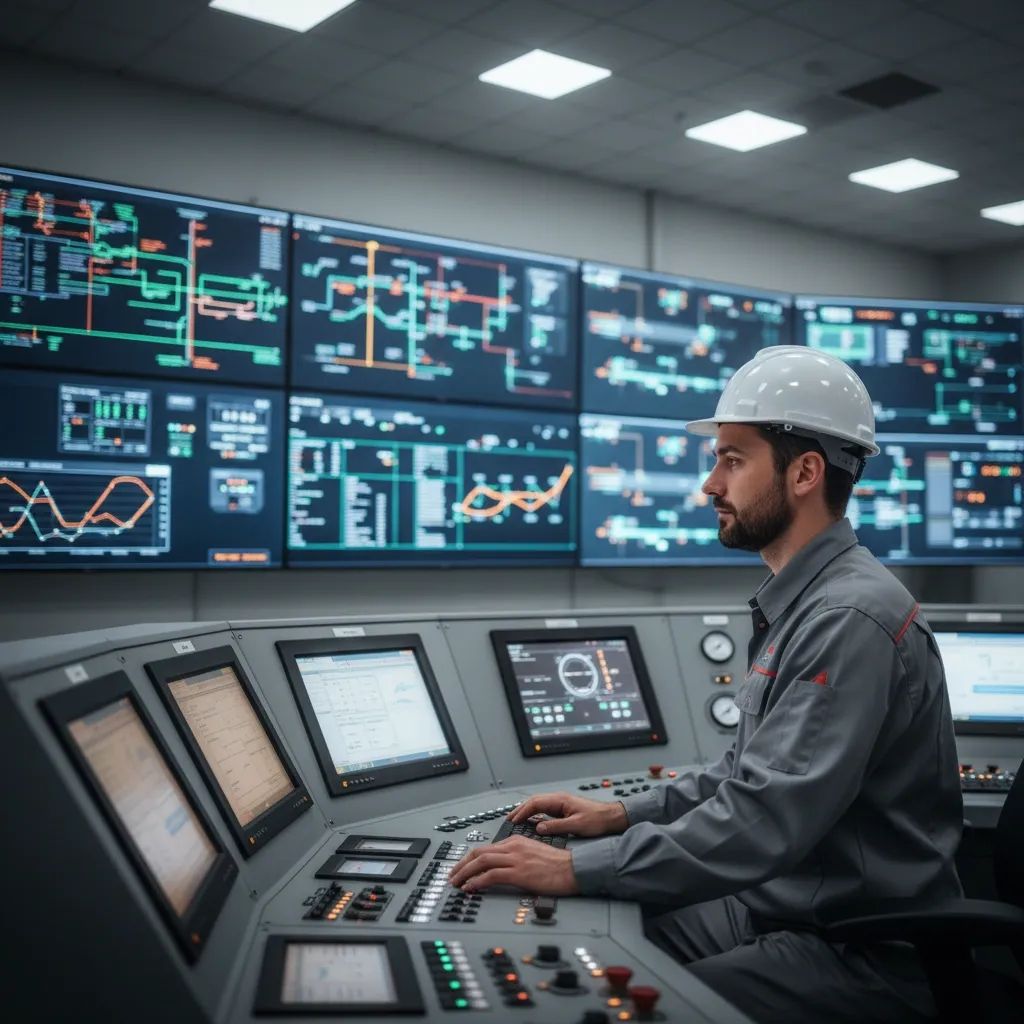
Walk into any energy policy meeting in Southeast Asia today and you'll hear a familiar tension: officials celebrating record-breaking solar installations while simultaneously approving new coal plants. According to recent analysis from HSBC Bank, the Asia-Pacific region now hosts roughly two-thirds of the world's solar generation capacity, yet remains the only major economic zone actively constructing fresh coal infrastructure—a contradiction that fundamentally shapes energy security, electricity costs, and climate viability across the continent.
Why This Matters
• 64% of global solar capacity sits in Asia-Pacific, but the region is uniquely expanding coal power simultaneously
• Thailand's electricity grid will experience pricing pressure and availability swings as this regional split deepens over the coming decade
• Grid stability and industrial competitiveness depend entirely on which energy source dominates the next phase of infrastructure development
The Uncomfortable Reality on the Ground
Utility planners across Southeast Asia speak earnestly about meeting renewable targets while also discussing coal plant efficiency upgrades and new transmission lines built to accommodate fossil fuel generation. Both conversations happen simultaneously within regional ministries; both receive funding and policy support.
The underlying economics tell part of the story. Vietnam's manufacturing sector and Indonesia's resource-extraction industries demand constant, dependable electricity supplies—the kind coal plants have historically provided. Neither country can immediately replace decades of coal infrastructure with solar without risking industrial disruption. Thailand finds itself similarly positioned: the country imports coal from Indonesia, operates coal-fired capacity built 10 to 15 years ago with another 25-30 years of operational runway remaining, and faces pressure to keep that generation active rather than absorb the financial loss of early retirement.
Yet the cost-benefit calculation is shifting rapidly. Utility-scale solar installations across Southeast Asia now cost substantially less per megawatt-hour than newly constructed coal plants. A decade ago, this comparison would have heavily favored coal. Today, the math has flipped entirely, creating a genuine puzzle: why build expensive coal when cheaper solar already works?
The Capital Trap
The answer lies in the stubborn economics of existing infrastructure combined with financing constraints. Asia-Pacific energy companies have sunk billions into coal assets that continue generating revenue. Writing off those plants early represents an enormous balance-sheet hit. Simultaneously, international investors, particularly European and North American pension funds, have begun systematically divesting from coal projects regardless of location. This creates a financing gap that governments increasingly fill directly, effectively taking on the risk of stranded assets.
Energy infrastructure investment decisions made in the coming years will largely determine whether coal capacity eventually declines or persists as a significant energy source.
Thailand's Precarious Position
For residents and businesses in Thailand, this regional paradox translates into immediate, tangible complications. Thai energy authorities operate under conflicting mandates: expand renewable energy to meet international climate commitments while simultaneously maintaining grid reliability and avoiding electricity price spikes that trigger economic disruption or public backlash.
Current reality involves an awkward balance. Thailand's energy mix combines aging coal plants, liquefied natural gas imports, expanding solar farms, and hydroelectric generation from Laos. During high-demand periods or monsoon seasons when hydro output fluctuates, the system relies on dispatch flexibility that coal plants provide. Yet every ton of coal burned contradicts stated climate objectives and exposes the kingdom to future carbon regulation risks.
Electricity consumers will likely experience pricing volatility during this transition—some periods potentially showing cost increases as renewable capacity expands but older plants remain operational simultaneously.
What This Means for Households and Business Operators
Families budgeting for monthly electricity bills should expect continued unpredictability, particularly during peak summer months when air conditioning demand peaks and coal plants often run at maximum capacity. Commercial operators, especially manufacturing facilities with large consumption profiles, face their own calculation: invest in on-site solar generation and corporate power purchase agreements that lock in stable electricity rates, or accept exposure to spot market pricing that could increase as coal plants close and grid costs shift.
Foreign investors and expatriate business owners operating in Thailand should recognize that energy costs and grid reliability remain significant competitive factors. Companies capable of managing their own electricity generation or securing long-term renewable contracts may gain advantages against competitors reliant on standard grid supply. Similarly, any industry dependent on energy-intensive processes—data centers, semiconductor manufacturing, petrochemicals—faces material risks if coal retirements accelerate without proportional renewable capacity additions.
Regional Interconnection Creates Cross-Border Complications
Thailand doesn't operate in isolation. The kingdom imports coal from Indonesia, exports electricity to Laos and Myanmar, and participates in regional energy trading arrangements across ASEAN. A decision made in Bangkok about coal plant decommissioning ripples through these supply chains. Conversely, energy choices made by neighboring countries directly affect Thailand's energy security and costs.
Vietnam's continued coal expansion, for instance, affects regional electricity prices and investment capital availability. If major regional emitters maintain large coal fleets through coming decades, pressure will mount for international carbon tariffs or border adjustment mechanisms that could make electricity and related goods more expensive across the entire region. Thailand's position as both a coal consumer and regional electricity exporter means the kingdom simultaneously bears risks from coal-dependent policies while profiting from electricity sales.
The Financial Motive for Change
One factor genuinely favors acceleration toward renewables: the cost trajectory remains relentless downward. Battery storage technology continues improving, grid software and forecasting become more sophisticated annually, and deployment learning curves push installation costs lower. Utilities installing solar today pay substantially less than the same capacity cost just 5 years prior.
This creates genuine pressure even on governments committed to coal as a transitional fuel. Each year of delay in coal retirement means accepting higher-cost electricity than investing in renewables would provide.
What Happens Next
The region faces a critical decision point. Either renewable deployment accelerates dramatically in the coming years as financing patterns shift and technology costs drop further, or energy demand growth outpaces clean capacity additions and locks in coal dependency for decades. The outcome remains genuinely undetermined; both scenarios remain feasible depending on policy choices, investment patterns, and technological progress.
For Thailand, the decision-making timeline is significant. Coal plants approved or extended in the coming years will operate for decades, effectively determining the kingdom's emissions trajectory through the mid-century. Conversely, aggressive renewable deployment now positions Thailand as a regional clean energy player and potentially lowers electricity costs as construction and technology learning curves continue improving.
The abstract global climate debate ultimately boils down to concrete local questions: whether Bangkok's air quality improves or degrades, whether electricity becomes more or less affordable for average families, whether Thailand's industrial sector remains globally competitive. Those outcomes depend almost entirely on which energy infrastructure dominates over the next decade, and the decisions being made right now in policy meetings and development discussions.


