
Border Enforcement Exposes Sprawling Tax Evasion Network Worth Hundreds of Millions
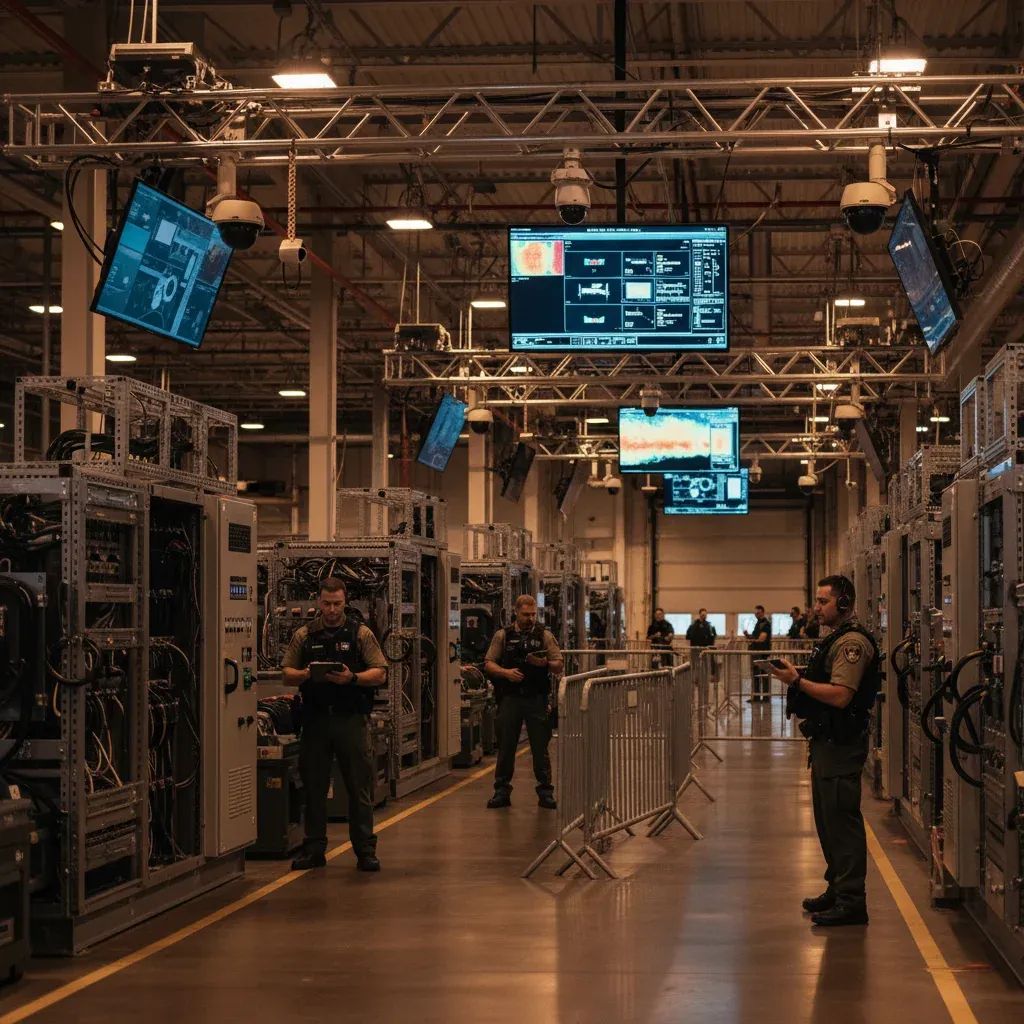
Thailand faces an escalating contraband crisis that extends far beyond a single warehouse. On May 9, authorities in Ranong province discovered industrial-scale electrical equipment—generators for factories, air conditioning units, and power systems—stockpiled in a facility operated by a Myanmar national. The cache, valued at 50 million baht, represents just one seizure in a much larger pattern of smuggled goods systematically bypassing customs across the kingdom's borders.
Why This Matters:
• Tax revenue leak: Contraband seized in the past seven months totals 409 million baht, with more discovered daily at checkpoints nationwide
• Consumer safety risk: Counterfeit and substandard appliances lack safety certifications and can cause electrical fires or equipment failure
• Immediate policy change: As of January 1, 2026, all imported goods face duties from baht one—no exemptions for items under 1,500 baht—directly targeting online platforms and reshaping e-commerce pricing
The Warehouse That Prompted PM Scrutiny
Intelligence tip-offs led authorities to an unmarked facility in Muang District, Ranong, where the scale of violations became immediately apparent. The goods themselves—large-capacity generators, industrial air conditioners, and high-voltage distribution equipment—suggested supply chains for hotels, factories, and retail operations. These were not consumer impulse purchases but inventory destined for commercial use across Thailand.
The operator had exploited a legal loophole: goods imported as "transit cargo" legally remain in Thailand for 30 days before re-export. Officials determined this consignment had sat far beyond that window, effectively becoming state property under forfeiture regulations. No customs documentation existed. No import duty had been paid. The operator held no license to store electrical equipment commercially.
By May 10, Prime Minister Anutin Charnvirakul, who also heads the Interior Ministry, cut short his Phuket schedule to personally inspect the warehouse. His appearance underscored the government's aggressive stance on smuggling, but also hinted at something deeper: the scale of the problem demands executive attention because local enforcement, working alone, cannot contain it.
Myanmar's Collapse Fuels the Trade
The shipment's Myanmar origin is no accident. Myanmar remains the world's largest opium-producing nation and continues as a primary source for synthetic drugs flooding Southeast Asia. But the smuggling goes beyond narcotics. Economic collapse in Myanmar—currency devaluation, banking system failure, civil war disrupting supply chains—creates perverse incentives for illicit trade.
Smugglers exploit this instability by moving goods through porous checkpoints across five border districts in Tak province and similar vulnerable corridors in Chiang Mai, Chiang Rai, and Mae Hong Son. The routes are well-established. Intelligence reports indicate caches holding over 90 million methamphetamine tablets and two tonnes of crystal methamphetamine staged at border points opposite Chiang Mai and Chiang Rai, awaiting transport into Thailand.
Beyond drugs, migrants also use these routes. The Mekong River serves as another transit corridor, with cargo vessels originating in Shan State moving through Laos before reaching Thai waters. Traffickers charge migrants substantial broker fees—sometimes equivalent to three months' Thai wages—to navigate these dangerous passages.
The Broader Enforcement Campaign
The Ranong bust is one data point in a seven-month enforcement blitz. From October 2025 through May 2026, Thai authorities confiscated 409 million baht in contraband, including:
• 71 million baht in counterfeit e-cigarettes and vaping devices
• Illegal cigarettes totaling millions of sticks
• Etomidate, a synthetic sedative increasingly trafficked for recreational use
• Nitrous oxide canisters and other inhalants popular among younger users
In the northeast, parallel operations during the same period seized 55 million baht in counterfeit and substandard goods from warehouses and retail outlets across Surin and neighboring provinces. The merchandise included fake electronics, knockoff branded appliances, and deteriorated stock masquerading as new inventory.
Electronic waste disposal rings also drew enforcement attention. The Thailand Customs Department, working with the Department of Special Investigation (DSI) and international partners including UNODC and the Basel Action Network, inspected 714 shipping containers suspected of containing illegal e-waste between April 2025 and March 2026. Developing nations like Thailand increasingly serve as dumping grounds for wealthy countries' obsolete electronics, creating environmental and health hazards while violating international agreements.
Four-Pillar Border Strategy Now in Place
Responding to the surge, the Interior Ministry deployed a unified four-point enforcement framework across 31 border provinces beginning in May 2026:
Surveillance and intelligence ops target high-risk zones and natural corridors known for smuggling activity. Mobile X-ray scanners now operate at checkpoints nationwide, enabling officers to detect contraband hidden in vehicle compartments, cargo holds, and parcel shipments without opening every container.
Legal enforcement has intensified significantly. The Thailand Royal Police and Customs Department now maintain integrated databases, allowing proactive operations before suspects move goods into urban markets. Mobile interception teams patrol key transit areas continuously.
Public awareness campaigns encourage civilian informants to report suspicious warehouses, unusual commercial activity near borders, or deliveries of uncertified electrical goods. The Customs Department at Chong Jom in the lower northeast distributed advisories bluntly stating: "Genuine quality goods at rock-bottom prices do not exist anywhere in the world"—a direct warning against counterfeit appliances sold through informal channels.
Diplomatic engagement with neighboring governments and international bodies aims to dismantle trafficking networks operating across the Golden Triangle. However, Myanmar's ongoing civil conflict severely limits cooperation; the junta controls only portions of territory, and warlord-aligned armed groups operate independently, complicating enforcement across borders.
What This Means for Residents
The enforcement campaign translates into several concrete changes affecting daily life and commerce:
Pricing adjustments online: The January 1, 2026 policy eliminating duty-free exemptions for goods under 1,500 baht fundamentally reshapes e-commerce. Platforms including Lazada, Shopee, TikTok, SHEIN, and TEMU must now collect import duties and VAT on all shipments, directly increasing consumer prices. The government estimates this generates an additional 3 billion baht annually while leveling the competitive field between international retailers and domestic businesses previously undercut by tax-free imports.
Consumer protection hazards: Seized appliances frequently lacked safety certifications, warranty protections, and proper labeling. Electrical fires traced to counterfeit equipment have caused property damage and injury. Authorities warn that purchasing suspiciously cheap televisions, air conditioners, or kitchen appliances from informal vendors—rather than authorized retailers—carries genuine safety risks. Seized inventory will not reach shelves; destroyed goods remove them from circulation entirely.
Business compliance obligations: Companies importing goods must maintain complete customs declarations and product certifications. Non-compliance triggers asset seizure, blacklisting, and criminal prosecution. During the first half of fiscal 2026 (October 2025 to March 2026), authorities documented 332 intellectual property violation cases, seizing 1.3 million counterfeit items valued at 2.3 billion baht. An additional 237 million baht in knockoff merchandise was confiscated through joint operations with the Thai Industrial Standards Institute and the Department of Intellectual Property.
Supply chain disruptions: Border closures—such as the abrupt shutdown of the Mae Sot-Myawaddy crossing in Tak in May—create logistics friction. Traders and logistics firms should anticipate heightened inspections, extended processing times, and potential delays. Myanmar's instability means crossing schedules remain unpredictable.
Employment screening: Businesses employing undocumented migrants face escalated risk. Proposed legislative amendments would impose harsher fines and asset confiscation for employers hiring foreign workers without proper documentation. The crackdown reflects both enforcement capacity improvements and political pressure to reduce irregular migration.
Long-Term Instability Complicates Solutions
Addressing smuggling requires tackling root causes, but Myanmar's trajectory suggests worsening conditions ahead. Economic indicators in 2026 remain bleak: currency collapse, hyperinflation, banking system dysfunction, and displacement crises continue. Military factions and armed ethnic organizations control significant territory, each generating revenue through informal taxation and smuggling networks. International sanctions limit legitimate trade options.
Thailand cannot eliminate smuggling through enforcement alone. Border infrastructure improvements—fixed and mobile scanning equipment, expanded personnel—raise costs for traffickers but do not eliminate incentives. Only genuine economic stabilization in Myanmar would reduce the desperation driving migration and contraband flows.
For now, residents should expect continued vigilance at border checkpoints, stricter compliance requirements for imported goods, and gradual disappearance of suspiciously inexpensive uncertified appliances from informal retail channels. The Ranong warehouse seizure signals that Thai authorities are evolving from reactive enforcement toward systematic, technology-enabled operations anchored in unified databases and international coordination. That shift will make Thailand less permissive for smugglers—but not immediately or completely.


