
Why This Matters
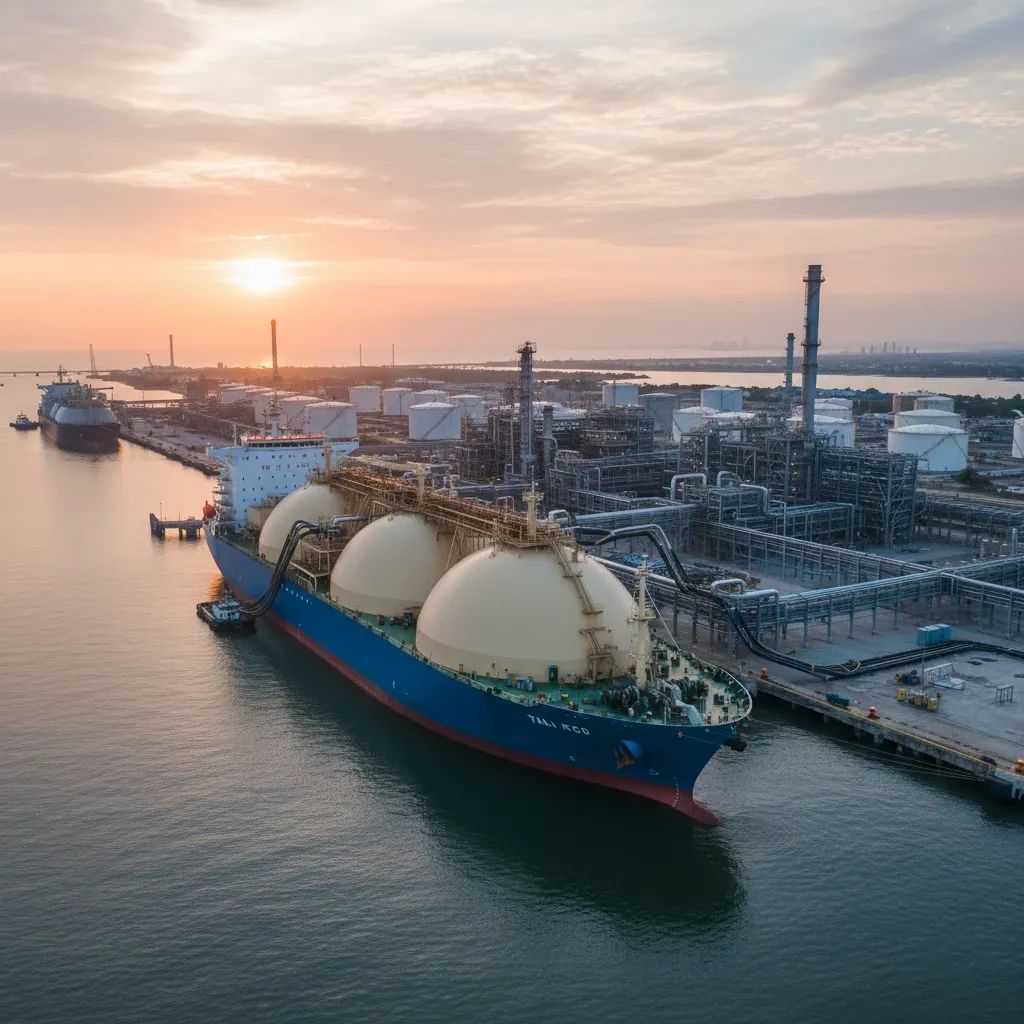
• Energy independence deteriorates: With the overlapping maritime zone development frozen indefinitely, Thailand must rely on imported liquefied natural gas (LNG) for a significant portion of its supply, according to industry estimates, exposing households and factories to volatile international prices.
• Foreign capital is redirecting elsewhere: International energy corporations and development banks are reallocating investment to Vietnam and Indonesia, where regulatory frameworks offer greater certainty—a shift that threatens long-term job creation and tax revenues in Thailand's energy sector.
• A compulsory arbitration process now looms: Cambodia has signaled its intent to invoke binding international arbitration under UNCLOS, introducing unpredictable legal outcomes and the possibility that an international panel could redefine maritime boundaries in ways unfavorable to Thailand.
What This Means for Residents
The practical ripple effects of MoU 44's termination touch nearly every economic sector in Thailand, from energy costs to job availability to inflation.
Energy costs and household budgets
Thailand's domestic natural gas production has declined steadily for a decade. Older onshore fields in the Gulf and southern Thailand are depleting. Shallow-water offshore platforms, once the sector's workhorse, are aging and less productive. Without access to the overlapping zone's reserves, Thailand must import LNG—liquefied natural gas—on international markets, where spot prices fluctuate with global supply shocks, geopolitical tensions, and seasonal demand.
This import dependence translates directly into electricity bills. The Electricity Generating Authority of Thailand (EGAT) sources a significant portion of its fuel from domestic natural gas. When import prices spike—as they did in 2021–2022, when global LNG demand surged—Thai utilities absorb the cost and pass it to consumers. Residential electricity rates have risen in recent years, partly due to LNG price volatility. Without access to the disputed zone, this pressure will persist.
For industrial consumers—petrochemical manufacturers, steel mills, fertilizer producers—higher fuel costs erode profit margins. These industries employ tens of thousands of Thais and anchor regional export competitiveness. Rising input costs may force some facilities to relocate to Vietnam or Indonesia, where energy supplies are more reliable.
Employment and career prospects
The energy sector has historically been a major employer in Thailand. Offshore drilling operations, platform maintenance, supply-chain logistics, engineering services—these fields supported middle-class employment across Bangkok, Rayong, and Songkhla provinces. As offshore development stalled under MoU 44, thousands of jobs evaporated.
International oil majors like Shell, TotalEnergies, and regional players including PTTEP maintain skeletal operations in Bangkok. Corporate consolidation, reduced exploration budgets, and depressed commodity prices have all contributed to workforce reductions. A prolonged UNCLOS arbitration process—potentially stretching 5–10 years before any resolution—means few new opportunities in exploration, development, or infrastructure projects.
For younger Thais considering engineering or petroleum-related careers, the sector offers diminishing returns relative to technology, finance, or services. This represents a cumulative loss of skill development and economic mobility.
Financial stability and lending risks
Thailand's development finance institutions and commercial banks are reassessing capital allocation. Foreign lenders—multilateral development banks, project finance funds, private equity—require regulatory certainty before committing to energy projects. UNCLOS arbitration introduces sovereign risk: the possibility that an international panel's ruling could render an investment uneconomical or contractually disputed.
Capital that might have flowed into Thai offshore energy is being redeployed to Vietnam's Mekong Delta fields, Indonesia's Sulawesi blocks, or even Myanmar—jurisdictions with less legal ambiguity. This capital flight is quiet and cumulative, compounding over years into reduced investment, foregone tax revenue, and depressed employment.
Inflation and fiscal pressures
The government derives meaningful revenue from energy taxation, licensing fees, and dividends from the Petroleum Authority of Thailand (PTT) and PTTEP, both state-owned enterprises. Delayed offshore development means deferred tax collection. For a government already managing high debt levels and infrastructure spending commitments, this revenue shortfall creates pressure to either raise other taxes or reduce social services.
Inflation pressures build indirectly. Higher energy import bills worsen Thailand's current account deficit, weakening the Thai baht against the dollar. A weaker baht raises the cost of imports across the board—machinery, electronics, refined petroleum products—which filters through to consumer prices for food, transportation, and manufactured goods.
The Thailand Cabinet's decision on May 5 to terminate the 25-year maritime cooperation accord with Cambodia represents a significant shift in how Bangkok is addressing a long-standing resource dispute. By acting unilaterally to dissolve the arrangement—formally known as MoU 44—Thailand has moved from bilateral negotiations to the framework of international law, with consequences for energy prices, employment, and investor confidence throughout Southeast Asia.
On the surface, the move was bureaucratic: cancellation of a memorandum that, after two decades, had delivered neither boundary agreement nor resource development. Beneath the procedural language, however, lies a strategic decision with far-reaching economic implications.
The Dead Zone: Why a Quarter-Century Framework Stalled
When officials from Thailand and Cambodia signed MoU 44 in 2001, both governments framed the accord as a pragmatic solution to overlapping continental shelf claims. The agreement acknowledged a 26,000-square-kilometer area where sovereignty remained disputed, and rather than risk military confrontation, both capitals agreed to a temporary joint development framework.
For 25 years, technical committees convened regularly, producing meetings and reports. However, no significant development occurred. Meanwhile, the overlapping zone remained untouched—neither country could realistically exploit its estimated reserves without risking the other's military response or legal challenge. The accord locked away resources valued at approximately $300 billion while guaranteeing access to none of it.
Prime Minister Anutin Charnvirakul presented the termination as a rational exit from a non-functioning arrangement. During the ASEAN summit in Manila (May 7–9), Anutin briefed his Cambodian counterpart Hun Manet directly, framing the cancellation not as confrontation but as structural recalibration. Thailand's messaging emphasized that UNCLOS—the United Nations Convention on the Law of the Sea—offered a clearer, more standardized legal framework than the ad hoc bilateral text.
But Cambodia's response was swift and sharp. Phnom Penh's Ministry of Foreign Affairs denounced the decision as unilateral and premature. Rather than negotiate a graceful transition, Hun Manet signaled Cambodia's intention to invoke compulsory conciliation, a binding dispute mechanism within UNCLOS that establishes an international panel to evaluate maritime claims. The situation had escalated.
The UNCLOS Arbitration Process: What Happens Next
Understanding Cambodia's reaction requires grasping the basic framework of how UNCLOS handles maritime disputes. Under UNCLOS rules, when bilateral negotiations fail, countries can pursue compulsory conciliation, where an international panel of maritime law experts reviews both nations' claims and issues recommendations for resolution.
For Cambodia, this mechanism offers an alternative to historical Thai claims. Cambodia ratified UNCLOS recently, and international panels typically apply established principles like equidistance (drawing boundaries as a midline between the two coasts) and proportionality (considering each nation's coastline length). Phnom Penh can argue that these neutral principles should replace Thai historical claims based on colonial-era administrative control.
For Thailand, this represents legal uncertainty. The outcome depends on how the panel weighs historical usage against geographic equidistance principles. Some panels emphasize historical claims; others prioritize neutral geographic boundaries. Bangkok cannot reliably predict the outcome.
This conciliation process typically takes 18–36 months for panels to examine evidence and issue non-binding recommendations. Both countries retain the option to reject findings or use them as a basis for new negotiations.
The Structural Challenge for Thailand's Position
By accepting the joint development framework in 2001—before formally delimiting maritime boundaries—Thailand implicitly acknowledged that clear boundaries did not exist. This created a legal vulnerability.
Experts on maritime disputes note that once boundaries are contested within an international forum, outcomes are unpredictable. Thailand's historical claim lines, based on administrative control from the late 1800s and continuous resource development since the 1970s, provide some basis for claiming territory. But Cambodia's argument under UNCLOS principles is equally defensible.
An international panel will weigh both arguments carefully, applying established law. Neither country can guarantee the outcome.
The Investment Freeze: Duration and Real-World Impact
The immediate effect of MoU 44's termination is a de facto freeze on new investment in the overlapping zone. Energy companies require legal certainty before capital commitment. The uncertainty over which country can issue licenses, whether existing concessions remain valid, and how an international panel might allocate territory makes new projects too risky financially.
This freeze is not uniform in duration. Near-term (2–5 years), international investors will avoid the zone entirely. Medium-term (5–10 years), outcomes depend on Cambodia's willingness to negotiate after conciliation concludes. If Bangkok and Phnom Penh reach a negotiated boundary agreement based on international panel findings, development could restart.
But if talks stall, the overlapping zone could remain frozen for 10–15 years, by which time technological changes and geopolitical shifts may render offshore development economically obsolete. Some analysts argue this waiting period is strategically beneficial—investors will eventually have clearer legal baseline for planning once conciliation concludes. Others counter that every year of delay pushes capital permanently to competing jurisdictions.
Regional Capital Flows and the Competitive Disadvantage
The most immediate economic cost is regional. Foreign investment capital, particularly in energy and infrastructure, follows jurisdictions with clearer regulatory frameworks. Vietnam, Indonesia, and Malaysia all offer established offshore development procedures and lower political risk.
Shell and TotalEnergies have both consolidated regional operations, reducing exploration footprints. PTTEP, Thailand's major player, is shifting focus to international upstream assets in Africa and the Middle East. This is portfolio rationalization—investors cannot sustain operations where the legal foundation is contestable.
Thailand's offshore energy sector, once rivaling Vietnam's in regional significance, has steadily ceded market share. The overlapping zone—theoretically Thailand's great energy reserve—has become a symbol of squandered opportunity.
Cambodia's Strategic Position
Hun Manet's government has limited choices politically. Appearing weak on maritime sovereignty carries domestic costs. Cambodia faces pressure from nationalist constituencies to defend territorial claims. Internationally, pursuing conciliation allows Cambodia to present the action as rule-of-law compliance rather than aggressive confrontation.
Cambodia's recent UNCLOS ratification, combined with Thailand's early accession and reservations limiting its exposure to compulsory mechanisms, gives Phnom Penh tactical advantage. Cambodia can potentially invoke conciliation on disputes predating its membership, arguing that historical claims do not fall within Thailand's reservation framework.
For Cambodia's negotiators, an international panel applying equidistance principles offers an alternative to Thai historical claims. Equidistance could award Cambodia substantial reserves it could not claim bilaterally.
Pathways Forward
Both governments understand the economic stakes and costs of prolonged conflict. Thailand and Cambodia border each other, share ASEAN membership, and have mutual economic interests in regional stability. Neither government wants a decade-long arbitration process.
Several resolution pathways exist: direct negotiation resumption based on UNCLOS principles and panel recommendations; a revised joint development arrangement where boundary delimitation is deferred but resource extraction proceeds under profit-sharing; or regional mediation through ASEAN mechanisms.
The most probable outcome is a compromise where neither party fully accepts panel recommendations but both use them as reference points for re-negotiation. Investors will interpret this outcome as providing enough clarity to resume planning, though with elevated risk premiums and longer approval timelines.
Why Thailand Acted in May 2026
Observers have speculated about the timing of Thailand's Cabinet decision. Several factors suggest strategic calculation.
First, Cambodia's recent UNCLOS ratification likely prompted Thai strategists to act preemptively. By canceling MoU 44 before Cambodia could formally invoke conciliation, Thailand controlled the narrative. Had Cambodia acted first, Phnom Penh could have framed Thailand as the obstructionist party.
Second, regional great-power competition is intensifying. The United States, China, and Japan have increased focus on Southeast Asian maritime disputes. Thailand and Cambodia both prefer managing bilateral matters through international law rather than great-power involvement.
Third, Thailand's economic growth is slowing. The government is under pressure to unlock growth drivers. Terminating a dysfunctional 25-year framework signals economic management to voters and international observers.
Looking Ahead
International energy companies are monitoring the situation with cautious skepticism. Most are adopting a "wait and see" posture, preparing contingency plans for both resolution and continued stalemate.
For Thailand's energy security, the implications are significant. Without access to the overlapping zone's reserves, Thai LNG imports remain elevated. Without offshore development, domestic exploration expertise and supply chain industries atrophy. Thailand's energy sector, once anchoring export-led manufacturing competitiveness, risks becoming dependent on imported fuel and expertise.
For residents of Thailand, the practical reality is direct: energy costs will remain under upward pressure, employment opportunities in the energy sector will remain limited, and the nation's energy independence will remain uncertain. Whether UNCLOS proceedings accelerate resolution or entrench positions will determine whether the overlapping zone becomes an unlocked resource or remains suspended in uncertainty.
Until then, Thailand's energy future remains on indefinite hold—no longer frozen by bilateral agreement, but uncertain pending international proceedings that could stretch for years.


