
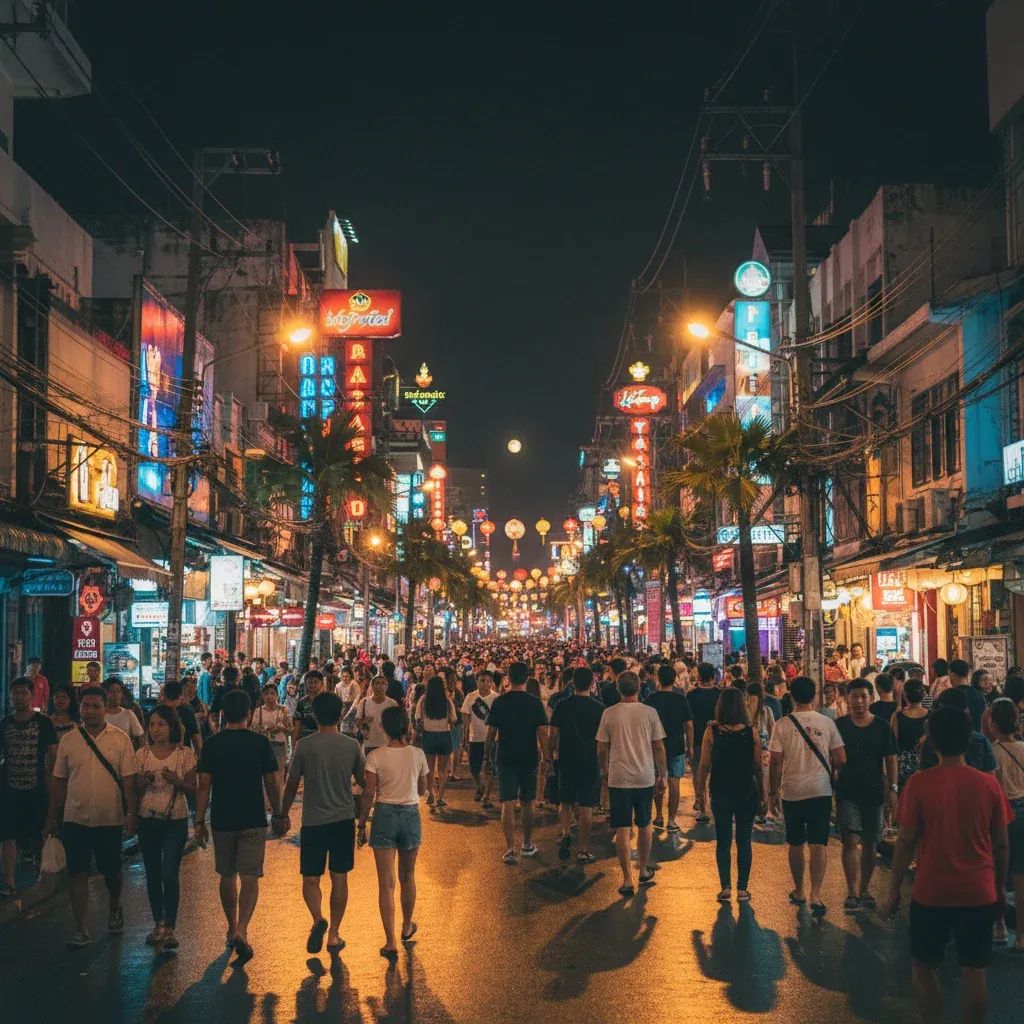
When alcohol, unfamiliar billing systems, and physical resistance collide in Pattaya's nightlife district, the outcome often hinges on a few seconds of misunderstanding. The Thailand Tourist Police concluded their investigation into a 55-year-old Australian visitor's head injuries on March 23 by confirming that venue security did not deliberately harm him—he fell during a confrontation over an unpaid bill—yet the incident underscores a recurring tension between tourists seeking an evening out and entertainment venues operating with inconsistent safety protocols.
Why This Matters
• CCTV footage resolved the case within 24 hours, confirming Mr. Scott lost his footing while resisting staff instructions over a 1,070 baht charge (roughly a day's room rental in mid-range accommodations).
• Multiple head wounds initially triggered assault suspicion, but video evidence showed the injuries stemmed from impact with a decorative glass panel during the fall.
• Pattaya has recorded multiple documented incidents across entertainment zones, involving tourists from various nationalities, highlighting recurring patterns in nightlife safety challenges.
The Sequence of Events
The incident unfolded around 11:00 p.m. on March 23 inside an entertainment establishment on Walking Street, Pattaya's densest concentration of bars and clubs. Mr. Scott had arrived with his adult son and consumed multiple alcoholic drinks over several hours. Staff observed him becoming increasingly intoxicated and disruptive—a behavioral escalation familiar to nightlife workers across the city.
When employees requested payment and instructed him to leave, Mr. Scott refused both demands. The situation deteriorated as he verbally resisted, eventually prompting managers to involve security personnel. What happened next involved physicality. According to the CCTV footage reviewed by authorities, Mr. Scott initiated physical resistance against the guards escorting him toward the exit. During the struggle, his balance failed. He collided with a glass architectural element—likely a panel or partition—sustaining multiple lacerations across his forehead and scalp. Blood loss was substantial enough to warrant immediate hospital transport.
Initial police skepticism was justified. The injury pattern suggested possible deliberate harm rather than a single accidental contact. The multiple wounds, their distribution, and the force required to produce them raised reasonable questions. Officers arriving at the scene encountered locked doors and security staff claiming technical malfunctions had rendered CCTV systems inoperable—details that further amplified suspicion of a cover-up.
Why the Resolution Happened So Quickly
Venue managers reversed course the following morning. By March 24, they provided unedited surveillance footage showing the complete sequence. The video corroborated staff accounts precisely: a man resisting removal, losing his footing, and striking his head on glass. No strikes. No pile-on from multiple guards. No deliberate impact designed to injure.
The Thailand Tourist Police declared the matter resolved, emphasizing that entertainment venue operators had cooperated fully once formal requests for video evidence were pressed. Police also noted that the rapid clarification reflected improved protocols—both venues and authorities now maintain clearer procedures for evidence preservation and timely disclosure.
However, this single incident operates against a broader context that troubles both residents and visitors tracking Pattaya's safety trajectory.
A Series of Incidents in Entertainment Zones
Police and tourism authorities have documented reports of multiple violent episodes concentrated in nightlife precincts. These incidents share patterns worth noting: alcohol consumption, disputed billing practices, language barriers, and physical confrontation between intoxicated tourists and local security or other patrons.
Some travelers have reported witnessing billing disputes where amounts presented to tourists bore little resemblance to what was ordered, and when tourists protested, physical intimidation or isolation by multiple staff members created pressure to pay. While such reports are scattered, they suggest a potential vulnerability when pricing transparency is absent and tourists lack ready recourse.
Legal Framework: What Assault Actually Costs in Thailand
Understanding Thailand's legal classification of assault matters because the consequences escalate sharply. The Thai Penal Code categorizes violence by harm severity, and penalties are mandatory—not discretionary—once guilt is established.
Simple assault under Section 295—acts causing visible bodily or mental injury such as punches or kicks resulting in significant bruising or lacerations—carries prison terms up to two years and fines capped at 40,000 baht. If the victim is a parent, a government official on duty, or the assault was premeditated, Section 296 escalates penalties to three years and 60,000 baht.
Grievous bodily harm under Sections 297 and 296 involves permanent disfigurement, broken bones, loss of sensory function, or injuries rendering a person incapacitated for more than 20 days. Imprisonment ranges from six months to 10 years, with fines spanning 20,000 to 200,000 baht. Group assaults—defined as attacks involving two or more individuals—fall under Section 299, which allows sentences from one to 10 years depending on severity.
Foreign nationals convicted of assault face automatic deportation after sentence completion. During legal proceedings, courts routinely confiscate passports to prevent flight. Bail for foreigners is less readily granted than in Western jurisdictions, and pretrial detention can last weeks or months while cases move through the system.
Victims retain the right to pursue civil claims independently of criminal proceedings, seeking compensation for medical expenses, lost wages during recovery, and damages for pain and suffering. These civil suits can generate awards substantially exceeding fines imposed in criminal cases.
Since November 2025, Thailand's revised alcohol law imposes fines up to 10,000 baht on patrons caught drinking in pubs during restricted hours—midnight to 11:00 a.m. and 2:00 p.m. to 5:00 p.m. This regulatory tightening aims to reduce alcohol-fueled incidents by restricting availability during traditional problem hours.
How Thailand's Tourist Police Manage Assault Cases
The Thailand Tourist Police, a specialized unit within the national force, operates the 1155 hotline staffed with English-speaking operators. For any tourist experiencing assault or witnessing violent crime, this is the immediate contact point.
Upon filing a report, police initiate a structured investigation. Initial assessment includes medical documentation—officers encourage victims to seek treatment immediately so hospitals create records documenting injuries, which serve as critical evidence. Witness statements are gathered at the scene and follow-up interviews conducted with all parties.
Evidence collection has accelerated since Pattaya deployed its "24/7 Safe City" initiative, which positions over 2,500 AI-enabled CCTV cameras with facial recognition capabilities throughout the city. This technology has reduced suspect identification time from days to hours in some cases, and has proven instrumental in closing investigations as the Mr. Scott case demonstrates.
Police detention authority is limited to 48 hours without formal charges. Beyond that window, the prosecutor's office must decide whether to file charges or release the suspect. Venue managers and security staff are routinely brought to police stations for questioning, and their statements are recorded formally.
Foreign tourists are advised to secure legal representation immediately upon arrest or as soon as accusation is formalized. The Thai legal system, while functioning, operates under civil law traditions unfamiliar to common law nationals. Criminal procedure, evidentiary rules, and court conduct differ substantially from Western systems. English-speaking lawyers specializing in criminal defense or personal injury are available in Pattaya, though costs vary significantly by firm reputation and case complexity.
Major public hospitals in Pattaya operate One Stop Crisis Support Services (OSCSS), which coordinate medical care, legal counseling, police reporting assistance, and temporary shelter referrals for assault victims. Embassies and consulates provide lawyer referrals, liaison with police, and guidance on visa implications should criminal proceedings extend beyond a tourist's planned departure date.
Safety Navigation: Practical Considerations for Residents and Visitors
Those regularly navigating Pattaya's entertainment districts employ several protective measures refined through observation and occasional close calls. None eliminate risk, but collectively they reduce exposure substantially.
Billing transparency matters. Requesting an itemized menu and clarifying per-drink pricing, entertainment charges, and service fees before consuming anything prevents disputes that escalate into physical confrontation. If a bill appears inflated, calmly request a detailed breakdown rather than becoming confrontational. Settling disputed amounts and reporting concerns to Tourist Police afterward is far safer than standing firm in the moment.
Walking Street after 10:00 p.m. concentrates risk—pickpocketing, scams, and alcohol-related incidents surge during those hours. Traveling in groups substantially reduces likelihood of being targeted for theft or provocation. Solo navigation of Walking Street between midnight and dawn is high-risk behavior.
Transportation choices matter operationally. Unlicensed tuk-tuks charge unpredictably and sometimes route passengers to unfamiliar areas, creating vulnerability. Ride-hailing applications like Grab provide transparent pricing, GPS tracking, and driver accountability. Hotel-arranged transport offers similar protections and is often only marginally more expensive.
Alcohol consumption demands deliberation. Responsible drinking—limiting quantity, pacing intake, eating food—preserves judgment when disputes arise. Never leaving beverages unattended prevents spiking, though Thailand reports this incident category infrequently. Drinking with known companions rather than newly met individuals reduces exposure to scenarios that escalate unpredictably.
Spatial awareness is preventive. Well-lit, high-traffic areas have more witness presence and faster emergency response. Dark alleys and isolated sois invite opportunistic crime. Valuables should be carried discreetly; crowded Walking Street zones are prime pickpocket territory because stolen items disappear into crowds before victims notice. Keeping mobile phones, wallets, and passports secure requires conscious attention, not mere assumption.
Confrontation de-escalation is a learned skill. If a billing dispute arises, requesting management intervention rather than arguing with staff prevents pride from escalating into physical engagement. If threatened, creating distance and calling 1155 immediately is preferable to standing ground or attempting negotiation with an aggressive individual.
The Structural Reality
Pattaya's nightlife economy generates substantial employment and tourism revenue, yet operates in regulatory space where incentives for safety occasionally misalign with profit optimization. Venue operators managing high-volume businesses face pressure to maximize table turnover, streamline staffing, and minimize friction that disrupts service flow. Security personnel, often locally hired and trained inconsistently, receive minimal guidance on conflict de-escalation and instead operate under directives to remove disruptive patrons quickly.
Intoxicated tourists, culturally unfamiliar with Thai interaction norms and language limitations, often misinterpret directiveness as hostility. Billing disputes generate frustration that, under alcohol's disinhibiting effect, can intensify situations. The friction point can become physical rapidly.
The Thailand Tourist Police have publicly committed to increasing drone surveillance during high-traffic periods and pledged accountability for venue operators who fail to implement adequate conflict management. However, some visitors perceive inconsistent law enforcement presence during late-night hours—precisely when risk concentrates—leaving them managing situations alone.
The Australian tourist's case, though concluded as accidental injury rather than assault, illustrates how quickly misunderstanding in an alcohol-saturated environment can produce medical emergency. For anyone living in or frequenting Pattaya, vigilance in nightlife districts is not paranoia but practical self-protection operating within a known risk environment.
In Case of Emergency: Tourist Police (1155), General Emergency (191), Medical Emergency (1669). English-speaking operators are available 24/7.


