
Hantavirus Outbreak Aboard Atlantic Cruise Triggers Thailand's Biosecurity Protocol
The World Health Organization raised a public health alert on May 4 after discovering a dangerous pathogen spreading among passengers aboard the MV Hondius, a Dutch-operated cruise liner. The vessel reached Tenerife in Spain's Canary Islands on May 7, and passengers disembarked on May 10 under containment protocols. By that time, authorities had confirmed at least 7 to 10 cases of Andes hantavirus infection, with 3 deaths reported and others in recovery. That same week, Thailand's government moved swiftly to activate border screening procedures and hospital surveillance systems—a response revealing both the country's strengthened disease readiness and the realistic vulnerability of any nation to maritime-borne outbreaks.
Why This Matters
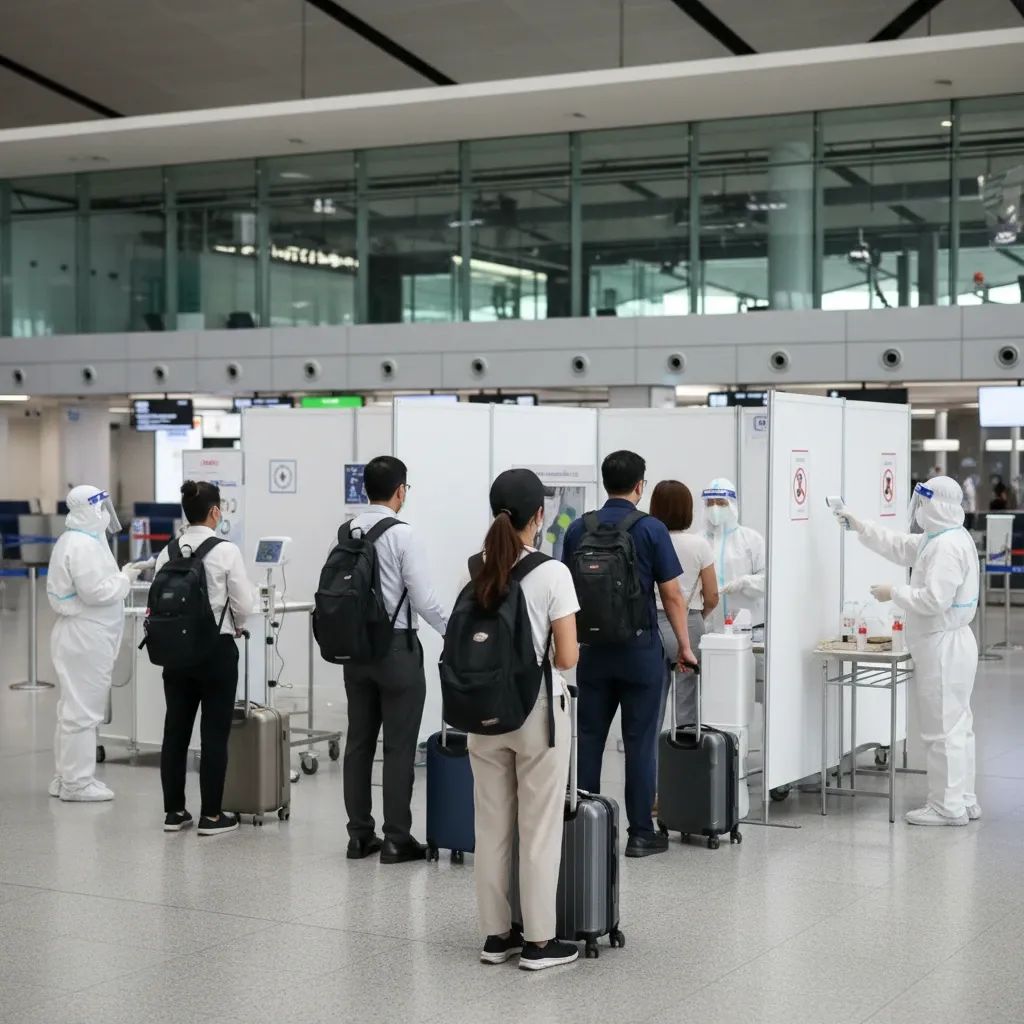
• Border checks tightened: Major Thai entry points now flag travelers from South America and recent cruise passengers for mandatory health screening, with coordination between airlines, port authorities, and immigration officials.
• Hospital readiness: Nationwide medical facilities have been instructed to recognize hantavirus symptoms and escalate diagnostic testing for patients with fever, severe muscle pain, or respiratory distress, particularly those with rodent exposure history.
• For Thailand residents: The hantavirus types already present in Thailand cause milder illness and don't spread between people. The dangerous Andes strain from this cruise has never been detected here, so immediate local risk remains very low.
How the Crisis Unfolded
Epidemiologists tracing the MV Hondius infection pattern determined the outbreak likely began during shore excursions in Argentina and Chile in late April. Travelers disembarked at various ports—including Cape Verde—where some became symptomatic. The virus's deceptive timeline proved critical: the incubation period stretches 1 to 8 weeks, meaning infected passengers appeared healthy when boarding the ship and only developed recognizable illness days into the voyage.
When Spanish health authorities received confirmation of the hantavirus outbreak from the WHO and European Centre for Disease Prevention and Control, the vessel was already at sea. Spanish officials coordinated an international evacuation operation with military precision. All 122 passengers disembarked at Tenerife on May 10 under containment protocols involving sealed transport vehicles, cordoned airport routes, and zero public contact. Repatriation flights were arranged for Spanish, French, British, American, Canadian, and Dutch nationals, with luggage remaining aboard for decontamination. The remaining patients continue recovery under medical supervision, either in Spanish hospitals or through 42-day monitoring protocols in their home countries.
The Virus Itself
Unlike most hantaviruses, which transmit solely through inhaling aerosolized rodent urine or feces, the Andes strain carries a sinister distinction: it spreads between humans via respiratory droplets. This human-to-human capability, though requiring sustained close contact over hours, elevated the cruise incident from a routine rodent-borne exposure event to a genuine contagion concern. The virus is carried by the long-tailed pygmy rice rat, native to Patagonian South America, where it circulates silently in rodent populations.
Clinical progression mirrors seasonal flu initially. Early-stage symptoms include fatigue, fever, and severe muscle aches concentrated in large muscle groups—thighs, hips, back, shoulders. Headache, nausea, vomiting, and abdominal pain follow. Within days, the infection can escalate to Hantavirus Pulmonary Syndrome (HPS), characterized by cough, shortness of breath, chest tightness, and fluid accumulation in the lungs. At that stage, survival depends entirely on mechanical ventilation and intensive care. No antiviral medication exists, and no vaccine is available. Treatment remains purely supportive.
Laboratory tests confirmed the virus came from Argentina's Patagonia region, matching the passengers' travel route and the suspected origin during land tours before boarding.
Thailand's Response and Context
Deputy Government Spokesperson Lalida Persvivatana publicly confirmed that Thailand had detected zero hantavirus cases in connection with the cruise outbreak. Nevertheless, the Thailand Department of Disease Control (DDC) activated enhanced surveillance protocols in consultation with the National Communicable Disease Committee.
The practical measures include immediate deployment of rapid screening at airports and seaports, particularly targeting travelers flagged as having visited South America or embarked on cruise voyages in the Atlantic. Hospital laboratories in Bangkok, Chiang Mai, and Songkhla received alerts to prepare diagnostic capacity for hantavirus PCR and serological testing, though routine demand remains negligible.
Critically, Thailand's epidemiological profile differs significantly from the Americas. Local hantavirus circulation in Thailand involves Seoul and Thailand viruses—separate genetic lineages discovered in rodent populations and human populations decades ago. These endemic strains produce milder hemorrhagic fever with renal complications rather than the devastating pulmonary syndrome associated with the Andes variant. Historical serosurveys showed low-level antibody prevalence in rural farmers with high rodent contact, but clinical cases of severe hantavirus disease remain extraordinarily uncommon.
The Thailand Department of Medical Sciences, via the National Institute of Health, has long monitored zoonotic pathogens as part of routine surveillance. That institutional knowledge formed the foundation for Thailand's measured response: serious but not alarmist, acknowledging the unlikely-but-possible scenario without inflaming public anxiety.
Rodent Safety for Urban and Rural Residents
The Thailand Ministry of Public Health emphasizes that general population risk remains very low. However, residents in high-risk environments—particularly rural areas with active rodent populations, warehouses, or poorly sealed buildings—should implement straightforward precautions.
Elimination begins with denial. Seal entry points in homes and workplaces using caulk, steel wool, or hardware cloth. Store food in rodent-proof containers and dispose of garbage promptly to remove food incentives. These basic steps eliminate 80% of rodent access.
Cleaning procedures demand care. Never sweep or vacuum dry areas containing rodent feces, as this aerosolizes viral particles. Instead, spray the contaminated surface generously with disinfectant—diluted bleach (1:10 ratio mixed with water) works effectively, as do commercial disinfectants. Allow the liquid to soak for several minutes, then wipe thoroughly using disposable towels. Wear disposable gloves and an N95 mask during this process. Wash hands thoroughly afterward with soap and water. This approach applies whether handling visible feces or suspected contamination in attics, basements, or storage areas.
Direct contact with rodent carcasses or fresh feces should be avoided entirely; professional pest control services handle such situations more safely than untrained individuals.
International Coordination and Risk Assessment
The WHO Director-General explicitly distanced the hantavirus situation from the COVID-19 pandemic, emphasizing that the outbreak does not constitute a global health emergency. Person-to-person transmission of the Andes variant requires prolonged, close contact—a barrier that prevents explosive spread through general populations. All identified cases trace directly to the MV Hondius passenger cohort or their immediate household contacts.
All evacuees face 42-day health monitoring, the maximum known incubation period, either at home or in medical facilities depending on national protocols. Passengers who disembarked at earlier ports in late April remain under surveillance in their respective home countries through coordination between health authorities.
The MV Hondius itself is scheduled to return to the Netherlands for thorough vessel disinfection before resuming operations. Spanish authorities, working alongside the ECDC and multiple governments, orchestrated one of the most complex cruise ship evacuations in recent memory without exposing the general public.
Implications for Thailand's Medical Preparedness
The outbreak has accelerated Thailand's consideration of classifying hantavirus as a dangerous communicable disease under the Communicable Diseases Act B.E. 2558 (2015 CE). Such classification would mandate nationwide reporting, enable rapid epidemiological response, and allow the government to issue public health directives with legal force. The National Communicable Disease Committee has initiated the formal review process.
This administrative shift reflects mature public health governance. Rather than reactive panic, Thailand's authorities recognized that preparedness strengthens credibility and actual response capability. Virology specialists at Chulalongkorn University's Faculty of Medicine have provided institutional expertise to inform policy decisions, grounding regulations in scientific evidence rather than fear.
Travel and Prevention Guidance
The Thailand Tourism Authority has not issued travel advisories related to hantavirus, and the WHO has not recommended any restrictions on international travel or trade. However, residents planning trips to South America—particularly Argentina, Chile, or other endemic regions—should consult travel medicine specialists at the Thai Travel Clinic Network about behavioral precautions in rural or forested areas.
No pre-exposure vaccine exists, making education about rodent avoidance the only preventive strategy for travelers. Avoiding contact with rodent populations in campsites, rural accommodations, and natural areas effectively eliminates infection risk.
For cruise passengers specifically, operators worldwide are reviewing biosecurity protocols and pre-voyage health screening procedures. The incident has prompted the cruise industry to restrict passengers with active respiratory symptoms and to provide clearer disclosure of intended port-of-call itineraries so travelers can assess personal risk tolerance.
Broader Lessons
Infectious disease surveillance systems function most effectively when nations share information transparently and coordinate responses across borders. Thailand's measured response—neither dismissive nor reactionary—demonstrates how accurate risk assessment and clear communication build public trust. The government acknowledged the threat seriously while avoiding exaggeration, a communication balance increasingly difficult in the age of social media.
The Thailand Virology Network, coordinated by the National Institute of Health, continues monitoring international hantavirus developments and maintains diagnostic capacity at reference laboratories across the kingdom. Residents experiencing fever, severe muscle aches, or respiratory symptoms within 42 days of potential rodent exposure—or contact with travelers from South America—should promptly inform healthcare providers of this exposure history to facilitate timely diagnosis and treatment, should hantavirus infection prove to be the underlying cause.
The Atlantic outbreak, while serious for those aboard the MV Hondius, ultimately reinforces a reassuring reality: robust border surveillance, institutional preparedness, and international cooperation effectively contain maritime-borne disease risks before they establish themselves in new regions.


