
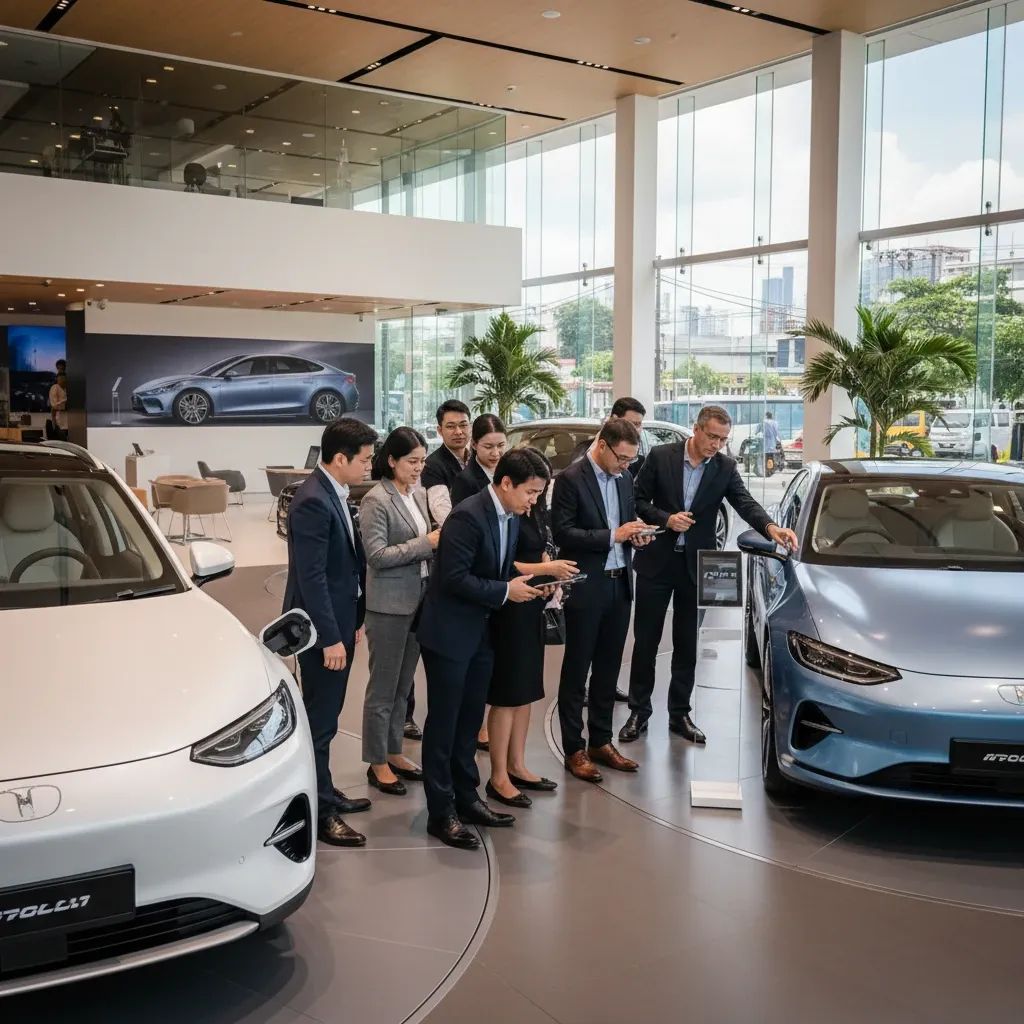
The Thailand coastal city of Pattaya is experiencing a quiet mobility revolution, with electric motorcycles becoming the vehicle of choice as global oil prices squeeze household budgets. Dealers across the resort town report a notable uptick in showroom traffic, driven by residents and workers seeking refuge from volatile fuel costs that show no sign of stabilizing.
Why This Matters
• Cost advantage: E-bikes eliminate exposure to unpredictable gasoline prices, offering fixed, lower operating expenses
• Price range: Models available from ฿36,400 to ฿87,200, with dealers absorbing registration and mandatory insurance costs
• Urban practicality: Minimal maintenance requirements and zero fuel dependency make electric two-wheelers ideal for Pattaya's congested streets
The Economic Trigger Behind the Shift
Rising crude prices on international markets are no longer abstract economic indicators for Thailand residents—they translate directly into higher commuting costs. For the thousands who navigate Pattaya's dense urban grid daily, the math is straightforward: conventional motorcycles now represent a growing liability, while electric alternatives promise predictable monthly expenses.
Weera Amornworanich, who manages the MIT EV Pattaya Sukhumvit dealership, describes the behavioral change as recent but decisive. Customer inquiries have surged over recent weeks, he notes, with buyers specifically citing fuel price anxiety as their primary motivator. The appeal centers on three core advantages: dramatically reduced running costs, near-zero maintenance schedules, and immunity to the energy market's mood swings.
"Electric motorcycles solve a practical problem," Weera explains. "When you can't predict what gasoline will cost next month, eliminating that variable entirely becomes attractive."
What Dealers Are Offering
The electric motorcycle market in Pattaya has matured beyond early-adopter novelty. Showrooms now stock diverse model lines designed to appeal across different aesthetic preferences and functional needs. European-inspired scooter designs sit alongside more aggressive contemporary frames like the Legend Pro, each targeting distinct customer segments.
Despite broader energy sector cost pressures, retailers have kept pricing stable—a strategic move to capitalize on heightened consumer interest. Many dealerships sweeten the proposition further by bundling free vehicle registration and compulsory insurance coverage into the purchase price, removing administrative friction that might otherwise discourage buyers unfamiliar with electric vehicle ownership.
The pricing spectrum reflects genuine product differentiation rather than arbitrary markups. Entry-level models begin around ฿36,400, positioning them competitively against conventional fuel-powered motorcycles when total cost of ownership is calculated. Premium offerings, equipped with enhanced battery capacity, superior build quality, or advanced electronics, reach approximately ฿87,200—still within reach for middle-income households seeking a durable commuting solution.
Impact on Urban Mobility Patterns
Pattaya's geography and traffic conditions create an ideal environment for electric motorcycle adoption. The city's relatively compact layout means most daily journeys fall well within the range capabilities of modern e-bikes, while chronic congestion rewards the nimble handling and instant acceleration these vehicles provide.
The shift carries implications beyond individual consumer decisions. A meaningful transition toward electric two-wheelers would reduce local air pollution concentrations, particularly in high-traffic corridors where conventional motorcycles contribute significantly to particulate emissions. Noise pollution would likewise decline—an outcome particularly relevant for Pattaya's tourism-dependent economy, where environmental quality directly affects visitor experience.
Battery charging infrastructure remains a practical consideration, though less problematic than for four-wheel electric vehicles. Most electric motorcycle owners charge at home using standard electrical outlets, a routine that integrates seamlessly into overnight parking. The modest battery capacities involved mean charging times remain manageable, typically ranging from 3 to 6 hours for a full cycle.
What This Means for Residents
For anyone currently riding a conventional motorcycle in Thailand's coastal regions, the calculation has shifted. Fuel costs that once represented a manageable line item now constitute a significant and unpredictable expense. Electric alternatives eliminate that volatility while offering operational simplicity—no oil changes, no spark plug replacements, no carburetor adjustments.
The upfront investment remains higher than budget gasoline motorcycles, but the payback period shortens as fuel prices climb. A moderate daily commuter covering 30 kilometers might recover the price premium within 18 to 24 months through fuel savings alone, after which the economic advantage compounds indefinitely.
Prospective buyers should consider actual usage patterns rather than theoretical range anxiety. Most urban riders rarely exceed 50 kilometers daily, well within the capabilities of entry-level models. Long-distance touring remains the domain of conventional motorcycles, but that represents a minority use case in Pattaya's context.
Market Trajectory and Long-Term Outlook
Industry observers tracking the Thailand electric vehicle sector view Pattaya's current trend as a bellwether rather than an isolated phenomenon. Should oil prices remain elevated—a scenario many analysts consider likely given ongoing geopolitical tensions and supply constraints—the economic logic favoring electric motorcycles strengthens across all Thai urban centers.
The transition may accelerate if government policy shifts to actively encourage adoption through tax incentives or infrastructure investment. Thailand's automotive manufacturing base gives the country strategic reasons to support electric vehicle development, potentially translating into subsidies or preferential financing that would further tip the scales.
What began as a response to immediate financial pressure could catalyze a broader transformation in how Thai cities approach personal mobility. Electric motorcycles offer a pragmatic pathway toward reduced fossil fuel dependency without requiring the massive infrastructure investments associated with public transit expansion or the behavioral shifts needed for car-to-motorcycle conversions.
For now, Pattaya residents voting with their wallets are making a statement that resonates beyond transportation preferences: when economic conditions change, consumer behavior adapts quickly—and sometimes permanently.


