
Thailand's Fuel Price Caps Removed: What Happened and Why Anutin Apologized
Thailand's government removed long-standing fuel price caps, causing petrol prices to jump 6 baht per liter overnight. The sudden policy shift sparked confusion among Bangkok commuters, delivery riders, and residents nationwide, prompting Prime Minister Anutin Charnvirakul to publicly apologize for the execution.
The Immediate Impact
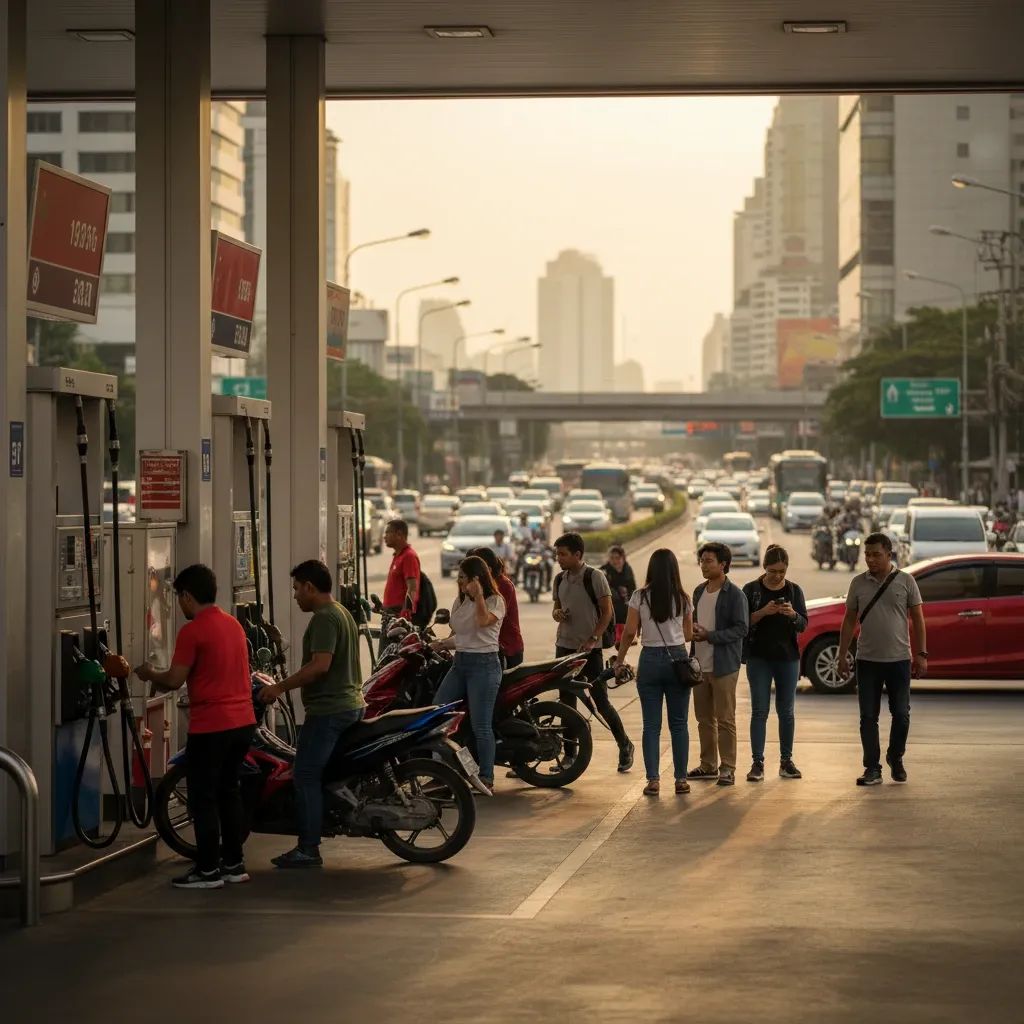
The price increase took effect without advance public warning, creating long queues at petrol stations as drivers scrambled to understand what had changed. Transportation-dependent workers—delivery riders, taxi drivers, and logistics operators—faced immediate concerns about their operational costs. Ride-sharing platforms and delivery services began evaluating how the higher fuel costs would affect their business models.
Why the Government Made This Change
Thailand has maintained fuel price subsidies for decades through mechanisms designed to shield consumers from global oil market volatility. However, these protections became increasingly expensive to maintain. When international oil prices remained elevated, the government's subsidy programs drained faster than revenues could replenish them, creating a fiscal pressure that required policy adjustment.
Officials determined that removing price caps was necessary to prevent the subsidy system from becoming unsustainable. The decision represented a fundamental shift: Thai fuel prices would now track global market movements more directly rather than being buffered by government protection.
The Apology
Prime Minister Anutin acknowledged the government should have better prepared the public for this transition. He recognized that "the sudden change caused hardship and confusion," but offered no compensation mechanisms or phased implementation to soften the immediate impact.
What This Means Going Forward
With fuel price caps removed, Thai petrol prices will now respond more directly to global oil market conditions and OPEC decisions. This represents a significant change for Bangkok residents accustomed to price stability. Those outside Bangkok's mass transit network face particular challenges, as alternative transportation options remain limited in provincial areas.
Residents and business operators are now adjusting to a new reality where fuel costs carry greater volatility. For individuals, this requires budget recalibration. For businesses dependent on transportation—from delivery platforms to logistics firms—the shift demands operational reassessment.
The government has indicated intentions to develop a clearer energy pricing framework, though specific details remain to be announced. How this situation evolves will depend on both government policy decisions and how households and businesses adapt to managing fuel costs without the historical price protection they previously relied upon.


