
The Thailand Meteorological Department has confirmed that the country's northern and central provinces will continue to endure temperatures exceeding 40°C through at least March 30, marking one of the most intense heat waves of the 2026 summer season. The agency warns that conditions will remain hazardous for outdoor workers, farmers, and vulnerable populations, with Bangkok's Heat Index reaching the 'Dangerous' orange zone (42-52°C threshold) as of March 25.
Why This Matters
• Peak heat period: Late March through April represents the hottest stretch of the year, with temperatures in some northern areas projected to hit 43°C.
• Health emergencies escalate: Heatstroke fatalities are possible for elderly residents, pregnant women, chronic patients, and outdoor laborers without adequate precautions.
• Power grid under strain: Record electricity demand has already touched 8,684.90 MW peak capacity on March 9, and the Metropolitan Electricity Authority (MEA) expects further spikes as air conditioning usage surges.
• Agricultural disruption: Prolonged heat threatens rice, corn, and sugarcane yields, with downstream effects on food prices and export volumes.
Heat Wave Intensifies Across Upper Thailand
Thailand's summer season officially began on February 22, 2026—roughly two weeks later than usual—but the delay has not softened the blow. Average maximum temperatures across upper Thailand are now running 36-37°C, above both historical norms and last year's figures. Isolated pockets in the North and Central plains are seeing thermometers climb past the 40°C mark, accompanied by daytime haze and intermittent thunderstorms driven by a low-pressure trough parked over the region.
In the Northeast, conditions remained dry and hazy through March 28, but forecasters expect thunderstorms to affect 10-30% of the region from March 29 onward, with gusty winds concentrated in eastern provinces. Minimum temperatures hover between 22-27°C overnight, offering little relief before daily highs rebound to 36-39°C.
The Central region, including the capital, faces similarly punishing conditions. Bangkok and surrounding provinces can expect daytime readings of 34-39°C, with scattered storms affecting roughly 10% of the area. Southerly winds at 10-15 km/h provide minimal cooling, and the Heat Index—which combines temperature and humidity—remains firmly in the "Dangerous" orange zone.
Coastal Areas Fare Better, But Caution Required
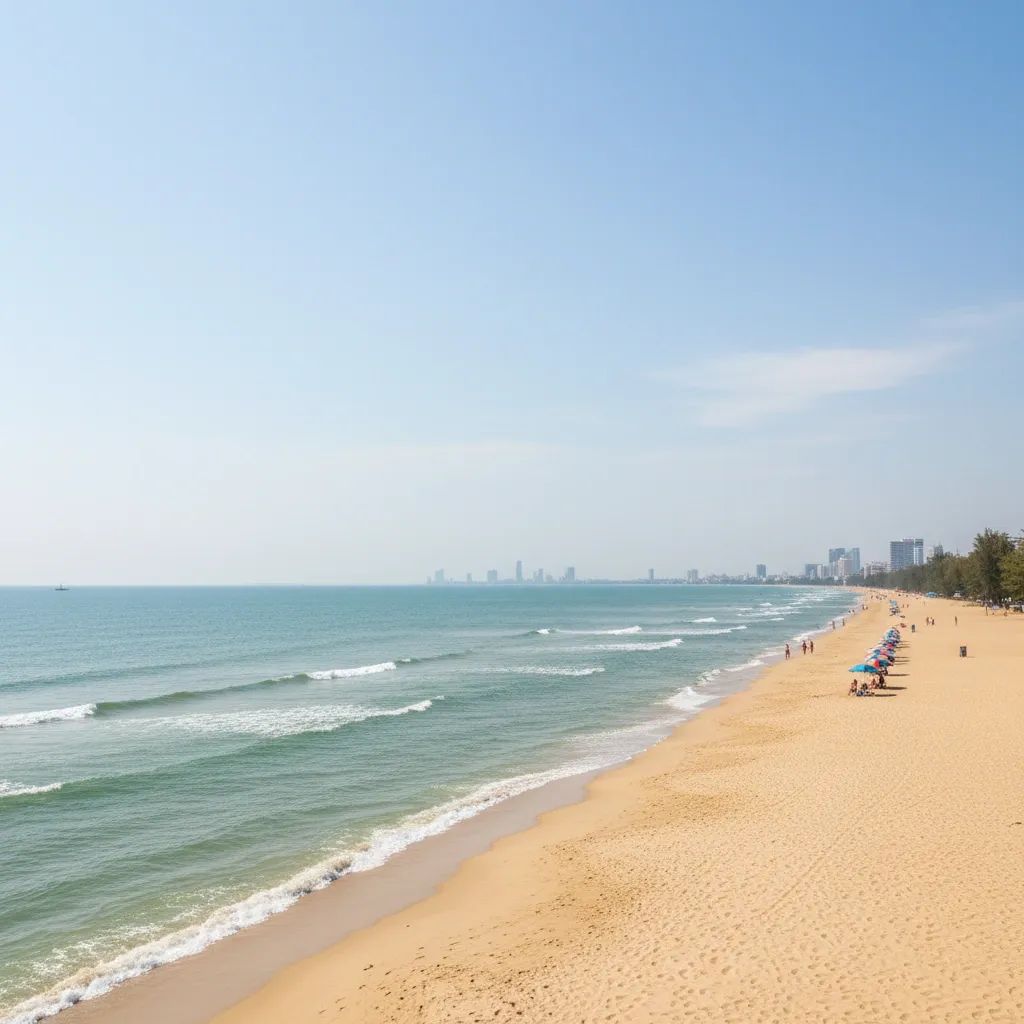
Coastal residents in Pattaya and the wider Eastern Seaboard are experiencing more moderate conditions, with maximum temperatures of 33-39°C and southeasterly winds of 10-30 km/h. Sea conditions remain calm, with wave heights below 1 meter except in localized thunderstorm zones, making it a relatively favorable period for marine tourism and water sports.
The Gulf of Thailand and Andaman Sea coasts are seeing 10-20% thunderstorm coverage, but overall rainfall remains limited. On the western (Andaman) coast, winds will shift from easterly to northwesterly between March 28-30, though wave heights will stay around 1 meter. Small boat operators are advised to exercise caution in areas where convective cells develop.
Government Rolls Out Multi-Tier Heat Response
Thailand's Ministry of Public Health and the Meteorological Department jointly operate a four-tier heat warning system to guide public behavior:
• Green (Caution): Heat Index 27.0-32.9°C – Normal precautions
• Yellow (Warning): Heat Index 33.0-41.9°C – Reduce outdoor activity
• Orange (Danger): Heat Index 42.0-51.9°C – High heatstroke risk, avoid prolonged exposure
• Red (Extreme Danger): Heat Index >52.0°C – Cancel outdoor activities entirely
As of March 25, Bangkok sits in the orange zone, and several northern provinces are flirting with red-level conditions during peak afternoon hours.
Bangkok Metropolitan Administration (BMA) has activated its annual heat management plan, establishing over 225 cooling centers across the capital—climate-controlled public spaces equipped with drinking water, first-aid kits, and trained staff. These facilities operate 11:00 AM to 3:00 PM through April, targeting the city's 379 identified heat-risk hotspots. An additional 2,806 free drinking water stations are scattered throughout the metropolis.
The Ministry of Interior has deployed five proactive drought measures, including close monitoring of water reserves, emergency response teams, repair of aging water supply infrastructure, and public campaigns promoting water conservation. Farmers are being urged to reinforce fruit trees, prepare livestock shelters, and delay outdoor tasks until evening hours.
Impact on Residents
Health Risks Peak for Vulnerable Groups
Medical authorities emphasize that heatstroke can be fatal within hours for individuals with underlying conditions or those taking certain medications—particularly antihypertensives, decongestants, and psychiatric drugs. Early symptoms include flushed skin, rapid pulse, headache, dizziness, confusion, and unconsciousness. If these appear, move the person to shade, apply cool water or ice packs, and transport immediately to a hospital.
Key protective measures include:
• Hydrate continuously: Drink at least 6-8 glasses of water daily, even without thirst. Electrolyte solutions are recommended if sweating heavily.
• Avoid alcohol and sugary drinks: Soda and energy drinks accelerate dehydration.
• Dress for ventilation: Light-colored, loose-fitting fabrics and wide-brimmed hats or umbrellas.
• Time outdoor work wisely: Never leave children or pets in parked vehicles, even briefly.
Agricultural Sector Braces for Losses
Heat stress above 40°C can scorch leaf tissue independent of water availability, stunting growth and reducing yields. Rice paddies, corn fields, and sugarcane plantations—Thailand's export pillars—are especially vulnerable during flowering and grain-fill stages. Farmers without access to irrigation infrastructure face the steepest losses, with household-level output projected to decline further if drought conditions persist throughout the season.
The climate phenomenon currently underway involves La Niña conditions weakening into a neutral phase in February, with a likely shift toward El Niño conditions by mid-2026. If confirmed, this would suppress monsoon rainfall by 30-40% below normal, delaying the wet season and exacerbating drought risk. Livestock and aquaculture operations are also under pressure, as water scarcity compounds heat-related stress.
Electricity Demand Hits Record Territory
Thailand's power consumption surged to an all-time peak of 8,684.90 MW on March 9, 2026, driven almost entirely by air conditioning load. MEA forecasts for 2026 project a system peak near 9,977 MW across Bangkok, Nonthaburi, and Samut Prakan. While the utility insists its distribution network and substations are prepared, sustained demand at these levels places unusual strain on generation and transmission assets.
Solar panel efficiency also suffers in extreme heat, with output dropping roughly 0.45% per degree Celsius above optimal operating temperature—a counterintuitive downside of Thailand's otherwise favorable conditions for photovoltaic deployment.
Regional Context: Southeast Asia Responds
Thailand is not alone. Neighbors across the region are deploying similar countermeasures:
• Singapore is expanding its network of Wet Bulb Globe Temperature (WBGT) monitoring stations and designating community centers, residential estates, and indoor sports facilities as public cooling refuges.
• Malaysia uses a three-tier heat alert system and is calling for mandatory workplace heat-safety regulations and adjusted shift schedules during heat warnings.
• Indonesia has launched "cool roof" initiatives using reflective coatings to reduce building heat absorption, alongside expanded urban green space to combat urban heat island effects.
• Vietnam is developing a National Cooling Action Plan covering both urban and rural adaptation strategies.
• Cambodia is promoting heat-tolerant crops such as pineapple, sugarcane, jackfruit, and mango to help farmers adjust to the new normal.
What to Expect Next
The Thailand Meteorological Department expects current conditions to persist through March 30, after which a shift in wind patterns and the possibility of pre-monsoon convection may bring limited relief. However, the overall summer forecast extends through mid-May, with the potential for continued heat and drought during this period.
Residents are advised to monitor daily Heat Index bulletins, plan essential errands for early morning or evening hours, and familiarize themselves with the nearest cooling center or water station. Agricultural operators should consider crop insurance, diversified planting schedules, and investment in soil moisture retention techniques to weather the months ahead.
For now, the message from authorities is clear: this is not a typical hot season—treat it as a public health emergency and plan accordingly.


