
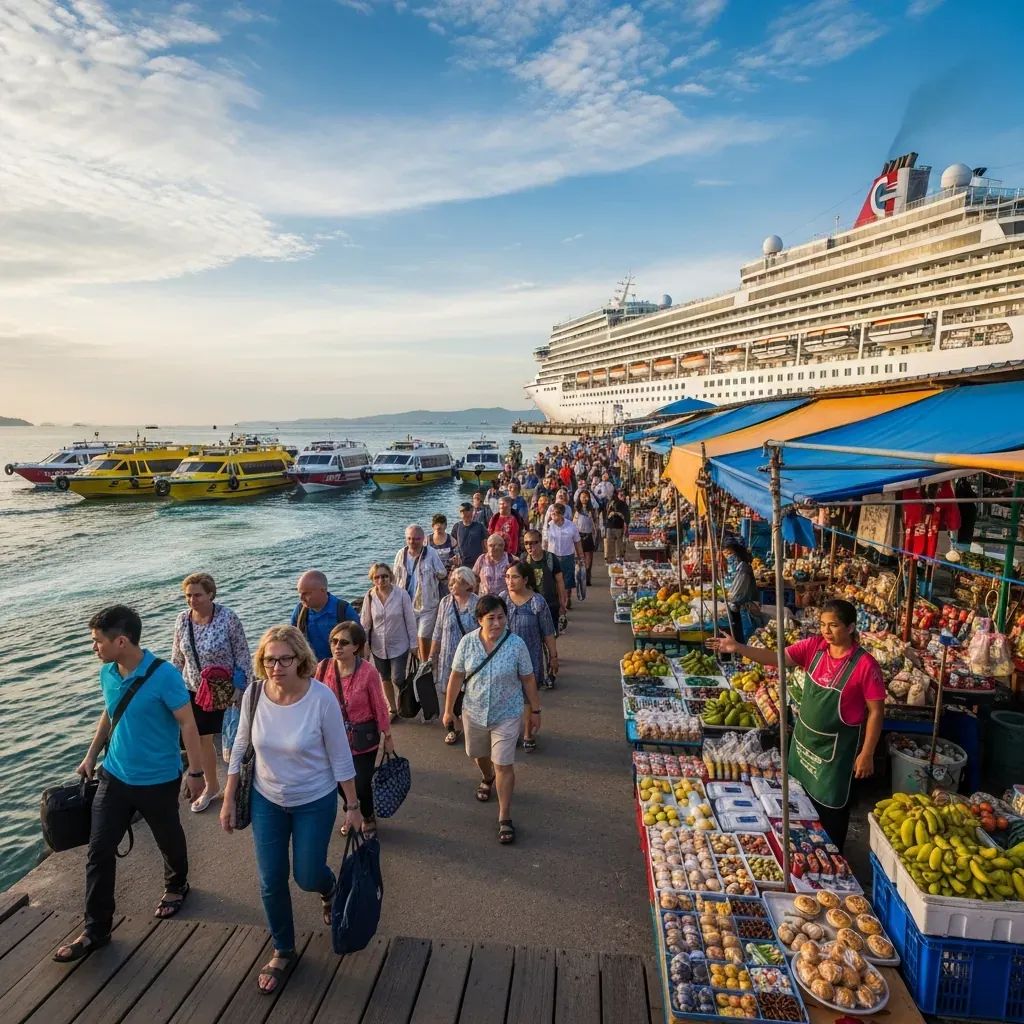
The Singapore-based Genting Dream docked at Phuket Deep Sea Port on the morning of April 15, 2023, disembarking more than 4,000 cruise passengers during the peak of Songkran 2023 festivities—a one-day influx that injected an estimated ฿24M into the island's economy through tours, shopping, and local services.
Why This Matters:
• Cruise tourism drives concentrated spending: With passengers averaging ฿6,000 per person during port calls (based on typical spending patterns), single-ship arrivals create immediate revenue bursts for vendors, transport operators, and attractions.
• Phuket targets 170 cruise ships annually: Thailand's Marine Department is positioning the island as the Andaman Coast's primary cruise hub, aiming to match or exceed pre-pandemic volumes.
• Overnight stays multiply impact: Unlike typical day visits, extended itineraries—like Genting Dream's occasional overnight stops—allow passengers to explore beyond port areas and book evening services.
• Songkran timing amplifies demand: Festival dates (April 13-15) align with peak Southeast Asian travel, making cruise arrivals strategically lucrative for merchants stocking OTOP handicrafts, tropical fruit, and street food.
Singapore Route Anchors Regional Cruise Network
The Genting Dream, operated by Resorts World Cruises, runs a twice-monthly schedule between Singapore and Phuket throughout 2023, part of a broader Southeast Asian circuit that includes Koh Samui, Laem Chabang (Bangkok), Penang, and Kuala Lumpur's Port Klang. The ship departed Singapore on April 14, 2023, carrying between 3,300 and 4,500 passengers, arriving in Phuket the following morning on April 15. Passengers had approximately eight to ten hours ashore before the vessel departed at midnight the same day.
Many passengers booked chartered minivans and buses through onboard excursion desks, fanning out to Old Phuket Town, the Big Buddha, Wat Chalong, and beach clubs in Patong and Kamala. Port-side vendors reported brisk sales of One Tambon One Product (OTOP) textiles, batik sarongs, and packaged spices, while fruit stalls moved crates of mangosteens, rambutans, and durian.
Economic Footprint Beyond the Gangway
Cruise tourism plays a significant role in Thailand's tourism economy. For Phuket specifically, each cruise call generates substantial same-day expenditure when combined passenger and crew spending is accounted for. Crew members—often numbering 1,200 to 1,500 per vessel—typically spend around ฿1,000 each on SIM cards, drinks, and street snacks during brief shore leave.
That spending circulates rapidly: taxi and tuk-tuk drivers ferry groups to temples and viewpoints, restaurants serve lunch buffets tailored to Mandarin-speaking and Indian vegetarian clientele, and souvenir shops stock up on keychains, elephant figurines, and fridge magnets. For small operators without steady walk-in traffic, cruise days represent concentrated revenue opportunities that can sustain lean weeks.
However, the short duration of most calls limits deeper engagement. Unlike land-based tourists who book multi-night hotel stays and evening dining, cruise passengers typically stick to daytime itineraries and return to the ship for dinner. This "drive-by" model has prompted Phuket authorities to prioritize overnight berths and homeport development, encouraging longer stays and onboard provisioning contracts with local suppliers.
Infrastructure Push to Capture Homeport Potential
The Thailand Marine Department is advancing plans to transform Phuket into a full-service marina hub capable of hosting contemporary and larger cruise vessels. Current facilities at the Deep Sea Port handle most contemporary-class vessels, but larger liners require specialized gangways, deeper channels, and expanded customs zones.
Alongside cruise infrastructure, the province is developing a 200-berth superyacht facility at Ao Sapam, reinforcing Phuket's position in the maritime tourism sector. Combined, these projects aim to capture higher-value maritime tourism, from luxury expedition cruises to private charter arrivals that book villa stays and spa packages.
Cruise Season and Visitor Patterns
Cruise season in Phuket typically peaks between November and April, with Songkran (April 13-15) being one of the highest-traffic periods. The April 15, 2023 Genting Dream call coincided with Thailand's traditional New Year, when domestic and international arrivals surge. Cruise operators strategically schedule extra calls during this window to capitalize on festival tourism, water celebrations, and cultural attractions that draw crowds to Old Town.
Passengers interviewed dockside noted the Songkran street parties as a key draw, with some extending their trips by booking post-cruise hotel nights in Patong or Kata. This "cruise-to-land conversion" is increasingly important for destination marketing: surveys indicate that a significant portion of Southeast Asian cruise passengers express intent to return for independent, land-based travel, effectively treating the ship as a sampling platform for future visits.
What This Means for Residents and Expats
For those living in Phuket, cruise arrivals—particularly during peak season (November to April)—offer both opportunity and challenges.
Economic Opportunities:
• Transport entrepreneurs including tuk-tuk cooperatives and van rental agencies can secure lucrative day charters, though competition is intense and advance booking through ship concessions often limits independent operators
• Restaurant owners near port areas benefit from lunch rushes; however, cruise passengers typically book pre-arranged group menus rather than ordering à la carte
• Multilingual tour guides and service providers can earn ฿3,000 to ฿5,000 per half-day group tour, though access typically requires accreditation through the Tourism Authority of Thailand (TAT) or partnerships with established agencies
• Hospitality, logistics, and retail workers see increased short-term hiring demand during cruise season for guides, customer service representatives, and logistics coordinators
Local Impact and Considerations:
• Traffic congestion spikes around Chalong Circle and the Heroines Monument when multiple tour buses converge on popular cultural sites on cruise days
• Residents accustomed to peaceful temple visits may encounter large guided groups during peak cruise hours
• Cruise tourism diversifies revenue beyond Patong's bar scene, channeling spending into cultural sites, handicraft cooperatives, and rural homestays through organized excursions
• Independent shore exploration promotions are helping maximize local business capture beyond major tour operators
Checking cruise schedules: Residents and business owners can monitor upcoming cruise arrivals through the Phuket Port Authority or Thailand Maritime Department websites to plan staffing, inventory, and traffic management accordingly.
Challenges in Consistency and Coordination
Despite the economic upside, Phuket's cruise calendar remains variable. The number of arrivals fluctuates year-to-year, affected by regional health protocols, fuel costs, and itinerary shifts favoring alternative destinations like Vietnam's Halong Bay or Myanmar's Mergui Archipelago. Following the 2022 pandemic impacts, the sector has been recovering through 2023 and beyond.
Coordination between port authorities, immigration, and tour operators also presents operational challenges. Long customs queues can delay disembarkation, cutting into shore time and potentially affecting passenger satisfaction. Conversely, sudden itinerary changes—such as weather-driven cancellations or last-minute berth adjustments—leave vendors with unsold inventory and idle transport capacity.
Looking Ahead: A Volatile but Valuable Sector
The Genting Dream's Songkran 2023 call underscores cruise tourism's concentrated economic impact: intense, brief, and unevenly distributed across business sectors. While the sector contributes meaningfully to tourism revenues, much of that value accrues to onboard operators, ship provisioners, and excursion wholesalers rather than street-level vendors.
Efforts to maximize local capture—such as promoting independent shore exploration over packaged tours and developing homeporting infrastructure—remain ongoing. As Phuket continues to enhance its cruise facilities and position itself as a regional maritime hub, residents and expats should monitor opportunities and schedule impacts during the peak cruise season (November to April).


