
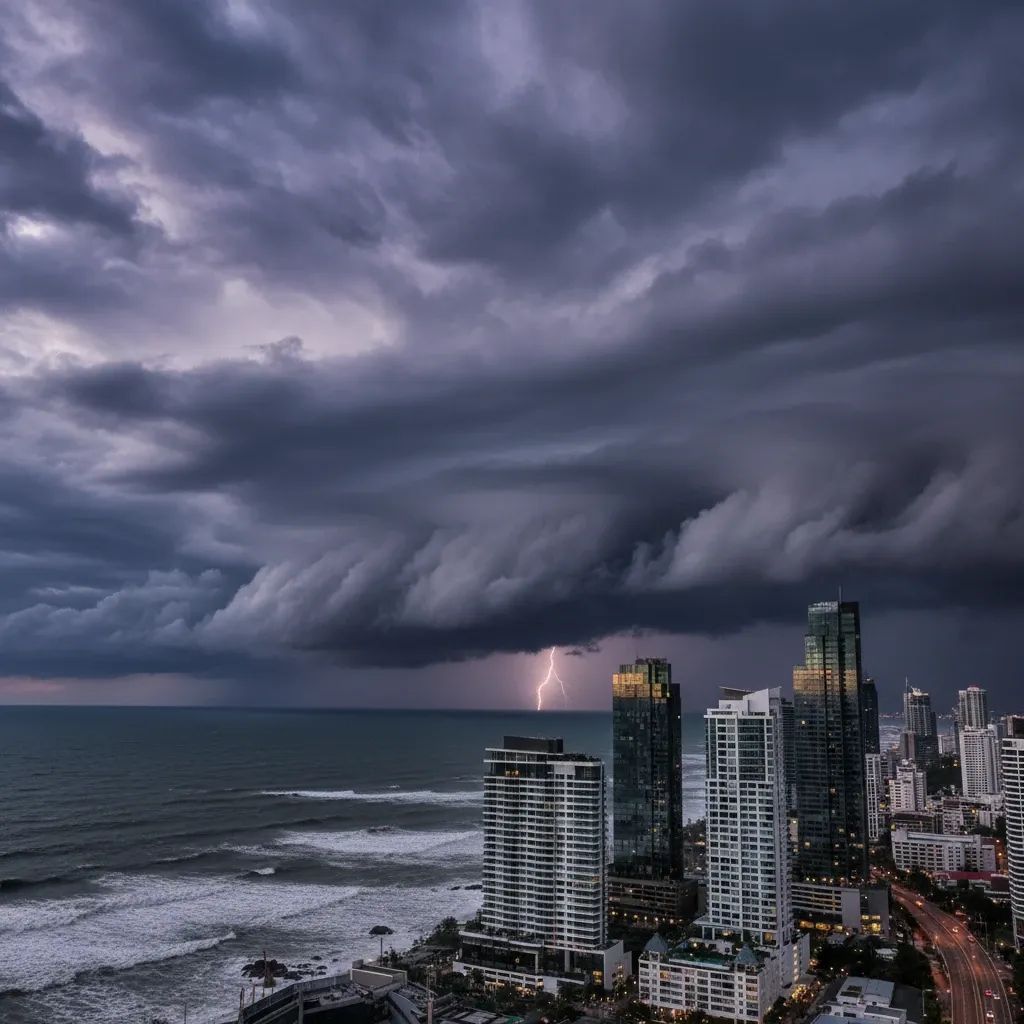
The Thailand Meteorological Department has issued a summer storm advisory for the northern provinces running from tomorrow through Saturday, with coastal Pattaya and Chonburi set to experience spillover effects as the weather system migrates southward. Residents and visitors should expect abrupt afternoon downpours, gusty winds, and possible disruptions to outdoor activities as the seasonal transition intensifies.
Why This Matters
• Storm window: April 23–25 brings elevated risk of thunderstorms, strong winds, lightning strikes, and isolated hail across northern, northeastern, and eastern Thailand.
• Coastal impact: Pattaya will see increased afternoon and evening storm activity, potentially disrupting beach outings and road traffic.
• Tourist considerations: This is the low season pivot—fewer crowds and better hotel rates, but unpredictable weather that may cut short outdoor plans.
Collision of Air Masses Fuels Volatile Conditions
The storm advisory stems from a high-pressure system advancing from China, which is clashing with intense surface heat blanketed over Thailand. This meteorological collision forces superheated, moisture-laden air upward at speed, spawning towering cumulonimbus clouds capable of delivering torrential rain, lightning, and wind gusts within minutes.
The Thailand Royal Irrigation Department has directed its regional offices to monitor reservoirs and drainage infrastructure around the clock, adjusting water levels to absorb sudden rainfall surges. Agricultural zones in the eastern corridor have been placed on standby, with farmers urged to reinforce fruit trees and secure livestock ahead of the predicted squall lines.
While the core of the storm threat targets provinces in the north and northeast—many already grappling with persistent smog—the system is forecast to sweep into central Thailand by midweek, pulling Bangkok and surrounding areas into its path. Pattaya, situated on the eastern seaboard, sits on the periphery but will not escape entirely.
What This Means for Pattaya Residents and Visitors
Coastal Chonburi Province, home to Pattaya, is expected to maintain its characteristic late-April heat—highs between 31°C and 33°C—but with mounting cloud cover and a rising probability of sharp, localized thunderstorms during the afternoon and evening hours. These are not the gentle tropical showers of monsoon season; they arrive with little warning, driven by convective instability, and can dump significant rainfall in under an hour.
Practical impacts include:
• Beach disruptions: Sudden wind gusts and lightning can render Pattaya's beaches unsafe. Authorities recommend vacating open shoreline areas at the first sign of darkening skies.
• Traffic delays: Flash flooding on low-lying roads is possible, particularly in areas with poor drainage. Motorcyclists should carry rain gear and allow extra travel time.
• Outdoor dining and events: Restaurant terraces and beach clubs may need to suspend service temporarily. Visitors planning sunset cruises or island excursions should confirm departure times the morning of travel.
Sea temperatures remain warm at 30°C to 31°C, and mornings are generally dry, making early outings the safest bet for water sports and sightseeing. By contrast, afternoons carry the highest storm risk, especially between 3 PM and 8 PM.
Tourism and Economic Ripple Effects
May marks the onset of Thailand's rainy season, and the current storm wave is an early signal of the meteorological shift. For Pattaya's tourism-dependent economy, this transitional period presents a mixed picture. Off-season pricing can drop hotel rates by 20% to 30%, attracting budget-conscious travelers. Yet the same weather volatility that clears crowds also discourages bookings, compressing revenue for hospitality operators already navigating a post-pandemic recovery.
Research cited by Thai tourism analysts suggests that if global average temperatures rise by 2°C, Thailand could forfeit more than ฿62 billion in annual international tourism revenue. While this projection addresses long-term climate trends, the immediate consequence of summer storm clusters is tangible: cancelled boat tours, grounded parasailing operations, and empty beach loungers translate to lost income for small vendors and service providers.
Chonburi Province officials, working through the Provincial Disaster Prevention and Mitigation Office, have activated contingency protocols under the regional disaster management plan updated in June 2025. These include:
• Real-time monitoring stations at flood-prone intersections, feeding data to a centralized command center.
• 24-hour standby teams equipped with portable pumps and emergency lighting.
• Public messaging campaigns via radio, social media, and municipal loudspeakers, urging residents to secure loose objects and avoid standing near billboards or tall trees during gusts.
Cooperation with the private sector is also underway. Industrial parks such as Amata City Chonburi have coordinated with provincial authorities to audit drainage systems and stockpile sandbags, ensuring factories can maintain operations even if surrounding roads flood.
Preparing for the Seasonal Pivot
Pattaya in May is defined by high heat, high humidity, and high uncertainty. Average rainfall for the month reaches 148 mm to 160 mm, spread across 12 to 21 rainy days. Most precipitation falls in concentrated bursts rather than all-day drizzles, and humidity hovers near 80%, amplifying the perceived temperature—sometimes pushing the heat index above 45°C.
For those navigating this environment, preparation is straightforward:
• Pack a compact umbrella and waterproof footwear. Late-afternoon showers are nearly guaranteed.
• Avoid outdoor exposure during thunderstorms. Lightning fatalities, though rare, do occur. Seek enclosed shelter at the first rumble of thunder.
• Monitor updates from the Thailand Meteorological Department. Forecasts are revised multiple times daily during active storm periods.
• Plan major outdoor activities for mornings. Between 8 AM and noon, conditions are typically stable, with ample sunshine and lower storm risk.
Infrastructure inspections mandated by The National Disaster Prevention and Mitigation Command include checks on electrical poles, aging signage, and roadside trees. Property owners are encouraged to trim overhanging branches and reinforce rooftop fixtures that could become projectiles in high winds.
Broader Atmospheric Context
This week's storm advisory is one of several issued since late February, as the interaction between cold continental air and tropical moisture has repeatedly destabilized Thailand's atmosphere. Previous alerts were issued for February 22–25, March 11–13, and April 16–20, each following a similar pattern: a surge of high pressure from southern China wedging beneath Thailand's sweltering air mass, triggering explosive convection.
The phenomenon is seasonal and predictable, but 2026 has brought heightened intensity. Meteorologists attribute this to a strong El Niño pattern that elevated baseline temperatures across Southeast Asia earlier in the year, combined with a late retreat of the winter monsoon. The result: hotter surface conditions and more vigorous storm cells when cooler air finally arrives.
Northern provinces have borne the brunt, with smog from agricultural burning exacerbating visibility issues already complicated by storm clouds. Chiang Mai and Chiang Rai saw hazardous air quality readings for much of March and April, and the incoming rains—while offering some relief—also pose flash flood risks in mountain valleys.
What Comes Next
The current advisory expires Saturday, April 25, but residents should not interpret the end date as a return to stable conditions. The transition into monsoon season is rarely linear; intermittent storm clusters are likely through mid-May, punctuated by scorching dry spells. The Thailand Meteorological Department will continue issuing localized warnings as systems develop.
For Pattaya, the practical takeaway is clear: adaptability is essential. Morning hours remain largely safe for tourism and daily errands. Afternoons require vigilance, a charged mobile phone, and a backup plan. The city's infrastructure—while tested annually—has proven resilient to moderate storm events, and local authorities maintain robust communication channels to alert the public when conditions worsen.
Travelers considering a visit during this window should weigh the trade-offs. Lower prices and thinner crowds are genuine advantages, but the risk of weather-related cancellations is real. Those with flexible schedules and a tolerance for sudden plan changes will find value; those seeking guaranteed sunshine should consider a different window.
As the thermometer climbs and the skies darken, the message from officials is consistent: stay informed, stay flexible, and seek indoor shelter when thunderstorms approach.


