
Why This Matters
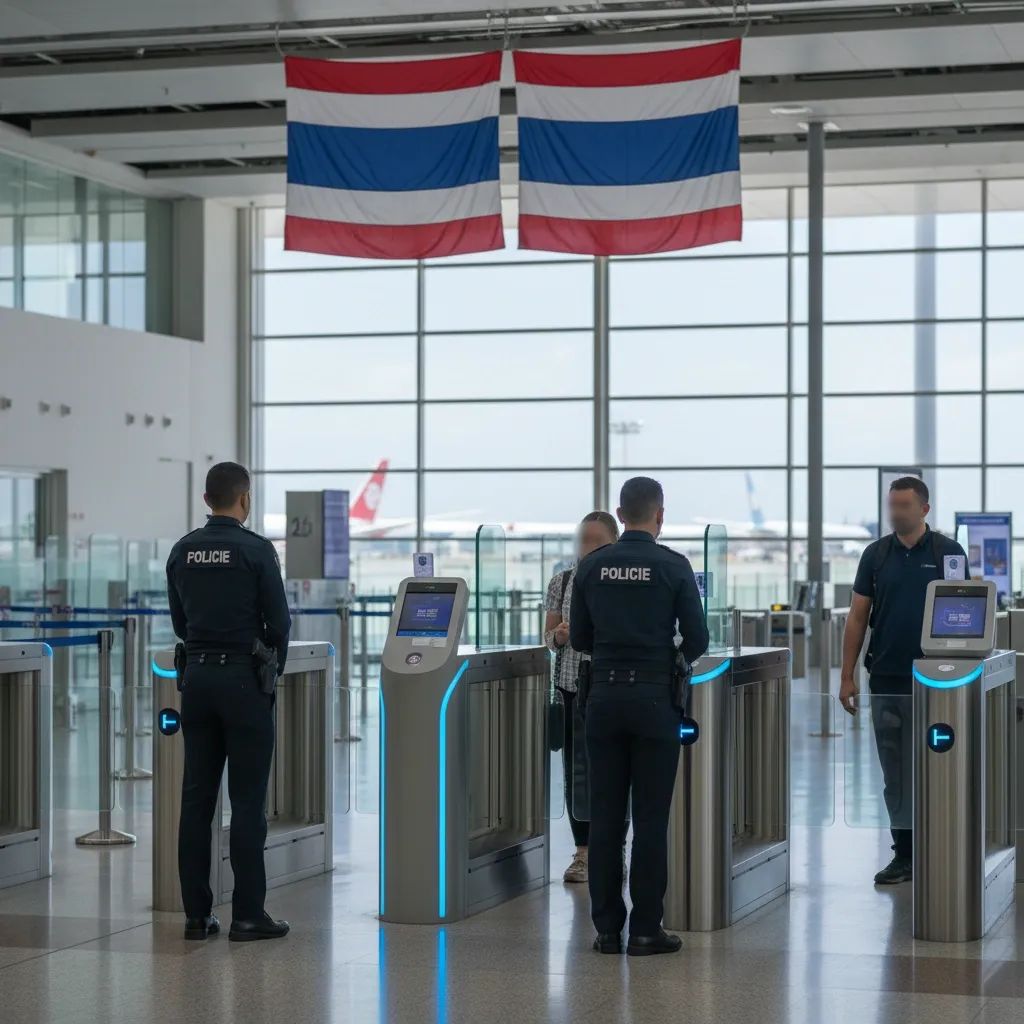
The Thailand Revenue Department's detection of a 28-year-old Saudi national attempting to export ketamine through Phuket International Airport marks another intersection point between trafficking networks and a border security system that increasingly demonstrates institutional capability. On June 3, 2026, the arrest exposed how modern contraband concealment—body-cavity smuggling of pharmaceutical capsules—still encounters multi-layered screening infrastructure designed to catch precisely such attempts. For residents and frequent travelers, the case underscores operational reality: airport security operates as a progression system, not a single checkpoint, and detection occurs even after passengers clear conventional immigration barriers.
Key Takeaways:
• Body scanners function as secondary interdiction points—the suspect passed immigration, completed check-in, and was flagged during departure-zone screening, revealing how enforcement extends beyond traditional passport control.
• 32 grams of ketamine carries severe criminal exposure—possession charges under Thai Narcotics Act trigger presumptions of trafficking intent, with sentences reaching 15-30 years imprisonment plus substantial fines.
• Thailand's geographic position attracts trafficking networks seeking Gulf and European markets—ketamine demand in wealthy Middle Eastern jurisdictions creates routing incentives through Thai departure hubs toward UAE-bound flights.
How Detection Worked
The suspect, Khalid Ali Hussein Safi, proceeded through standard passenger protocols: checked luggage, immigration clearance, international departure terminal access. Routine body-scanning equipment detected anatomical anomalies around his torso. Security personnel conducted targeted physical examination, discovering a white cloth pouch concealed within his underwear containing 63 red-and-white capsules filled with white powder. The combined material weighed approximately 32 grams—roughly equivalent to five aspirin tablets in volume, yet sufficient to trigger trafficking presumptions under Thailand's Narcotics Act B.E. 2480 (1937) and its Category 2 classification system.
Chemical reagent testing using ONCB053 Ketamine Reagent produced the characteristic light purple discoloration confirming the substance's identity. Two iPhone handsets were seized simultaneously, signaling investigative focus on digital forensics—call logs, messaging applications, financial transaction records, and contact mappings that reveal supplier-distributor networks.
The Sakhu Police Station, holding jurisdiction over Phuket International Airport operations, transferred Safi and materials to specialized investigative units. Initial inquiries centered on whether Safi operated as an independent courier or functioned as a node within organized trafficking infrastructure. The distinction carries investigative weight: independent operatives suggest fragmented supply chains; network membership indicates hierarchical criminal organization requiring multi-tier dismantling.
Thailand's Narcotics Classification System and Export Penalties
Category 2 controlled substances—including ketamine—occupy the narcotics classification tier reserved for drugs with legitimate but restricted medical applications and documented high abuse potential. Ketamine, primarily diverted from veterinary pharmaceutical supplies and illicit laboratory synthesis, serves both recreational and tranquilizer markets across multiple demand regions.
Category 2 violations impose non-discretionary sentencing frameworks. Possession activates 5-15 year imprisonment. Export or trafficking charges carry enhanced penalties reaching 30 years. Fines range from 40,000 to 5 million baht (approximately $1,100 to $140,000 USD equivalent), with sentences frequently imposed concurrently rather than consecutively.
Crucial legal principle: Intent is presumed when seized quantities exceed de facto personal-consumption thresholds. Thai jurisprudence recognizes no meaningful distinction between trafficking and possession-for-use once quantities exceed minimal amounts. Prosecutors need not establish intent through circumstantial evidence; the quantity itself generates rebuttable presumptions of export or distribution activity. Safi's 32-gram seizure substantially exceeds these thresholds.
The Customs Act B.E. 2560 (2017) compounds exposure. Attempting to export prohibited goods through international border checkpoints triggers additional criminal liability independent of narcotics statutes. Conviction results in sentences of 3-10 years imprisonment and fines up to 5 million baht. Multiple charges typically run concurrently, but prosecutors exercise discretion in sequencing them to maximize sentence stability on appeal.
Impact on Travelers and Residents
Phuket International Airport processes approximately 8.5 million passengers annually, making it Thailand's secondary aviation gateway after Suvarnabhumi. The Safi interdiction reveals operational mechanics that affect everyone transiting this facility:
First, multi-stage screening is continuous, not episodic. Immigration represents a checkpoint, not the final security stage. Departure zones employ independent security layers: X-ray scanners, millimeter-wave body imaging systems, and K-9 narcotics detection units rotate through terminals on programmed schedules. Intelligence-sharing protocols between Thailand's Office of the Narcotics Control Board, Customs Authority, Royal Thai Police, and Airport Interdiction Task Force (AITF) trigger enhanced scrutiny for passengers matching trafficking profiles—unexplained transit patterns, frequent same-day connections, passengers originating from known production regions, or those traveling on one-way tickets to high-risk destinations.
Second, concealment sophistication does not confer legal protection. Authorities acknowledge that smuggling methods evolve: liquid-state narcotics designed to evade powder-detection systems, nano-encapsulation techniques, concealment within electronics or food products. Simultaneously, Thai airports have deployed advanced spectrographic analysis, chemical detection arrays, and algorithmic screening systems capable of identifying synthetic compounds within sealed packaging or body cavities. This technological arms race favors institutional detection as newer concealment methods are identified and countermeasures deployed.
Third, transit passengers face systematized scrutiny. Thailand's geographic position—situated between major production zones in Myanmar's Shan State and lucrative Gulf, European, and Australian end-markets—means transfer passengers are categorically assessed. Using Thailand as a stopover amplifies interdiction exposure. Passengers with Phuket-to-Abu Dhabi or Phuket-to-Dubai routing face particular scrutiny given ketamine's documented demand concentration in Gulf Cooperation Council nations.
Fourth, possession claims provide no legal safe harbor. Regardless of personal assertion, Thai courts do not recognize personal-use defense once quantities exceed statutory thresholds. The evidentiary burden falls to the accused to demonstrate legitimate medical purpose—a threshold nearly impossible to meet for ketamine seizures.
Thailand's Position in Global Narcotics Supply Chains
The Golden Triangle—the tri-border region where Myanmar, Laos, and Thailand converge—remains the world's second-largest illicit opium production region and an increasingly significant synthetic drug manufacturing hub. Myanmar's political transition since 2021 fundamentally restructured regional drug economics. Armed groups, ethnic militias, and criminal syndicates, facing reduced revenue from traditional extraction industries, dramatically accelerated methamphetamine and ketamine production to fund military operations and organizational maintenance.
Shan State, Myanmar's eastern region adjacent to Thailand and Laos, now functions as a de facto industrial manufacturing zone for narcotics. Laboratories operate in areas beyond state military control, often protected by armed groups providing territorial security in exchange for profit participation. This arrangement creates production capacity largely insulated from international enforcement pressure.
Four principal trafficking corridors channel drugs through Thailand toward destination markets:
Northern Corridor: Direct overland crossings from Shan State into Chiang Mai, Chiang Rai, and surrounding provinces. This remains the most established route, operating for decades through established smuggling infrastructure and localized distribution networks.
Northeastern Corridor: An emerging concern for UNODC and Thailand's narcotics control agencies. Drugs flow from Myanmar through Laos into Thailand's Isaan provinces—Nakhon Phanom, Mukdahan, Udon Thani—before dispersing southward toward Bangkok and central Thailand. This corridor has expanded rapidly due to improved logistics infrastructure along the Mekong River and reduced interdiction capacity in Laotian border areas.
Western Border Route: Overland smuggling along Myanmar's western border with Thailand, typically involving smaller shipments destined for regional domestic distribution rather than international export.
Southern Maritime Route: Organized nautical trafficking originating from Myanmar's southern coast, traversing through Thailand's southern archipelago into Malaysian territorial waters. This route accommodates large shipment volumes—multiple tons per operation—and remains notoriously difficult to interdict due to geographic complexity, limited naval interdiction capacity, and coordination challenges across multiple national jurisdictions.
Enforcement Data and Operational Context
In the first six months of 2026, Thailand's Royal Police processed 145,541 drug-related criminal cases and seized approximately 700 million methamphetamine tablets. These figures do not represent success indicators as much as capacity metrics—the scale of drug movement exceeds institutional interdiction capability. Ketamine seizures remain elevated, though methamphetamine dominates by volume and frequency.
The Safi arrest constitutes one incident within systematic enforcement operations. Its newsworthiness derives not from uniqueness but from operational demonstration: detection systems functioned as designed, interdiction occurred at a point preventing harm multiplication. Equivalent arrests occur dozens of times monthly across Thailand's airports, maritime ports, and land borders.
Police Colonel Salan Santisatsanakul, superintendent of Sakhu Police Station (holding jurisdiction over Phuket Airport), emphasized continued screening rigor. His public statement served institutional signaling—reassurance to traveling public and business stakeholders that security protocols remain uncompromised. Behind the statement lies operational reality: staffing constraints, equipment maintenance demands, and investigative resource limitations create enforcement gaps. Institutions manage these gaps through technological deployment and intelligence prioritization rather than comprehensive coverage.
Digital Investigation and Network Mapping
The seizure of two iPhones signals investigative pivot toward network analysis. Mobile device forensics in Thai law enforcement contexts typically examine: call logs and outgoing contact patterns, WhatsApp and Telegram messaging threads, cryptocurrency wallet access records, banking application transaction histories, and location data from GPS applications.
Thailand's investigators hypothesize that Safi represents one operational node within larger trafficking infrastructure. Initial questions include: Did the phones contain contact information for upstream suppliers in Myanmar or Afghanistan pharmaceutical diversion operations? Did financial records show payment deposits from organized crime entities or cryptocurrency transfers indicating remote handler control? Were other passengers or shipping operations identified through device contents suggesting broader network scope?
The investigation's trajectory depends partly on Safi's cooperation willingness. Thai criminal procedure permits detention without charge for 12-15 days during investigation phase. Extended periods enable forensic examination, international cooperation requests (particularly to Saudi Arabian authorities), and Interpol coordination. If Safi cooperates, investigators may rapidly map specific trafficking nodes. If he exercises silence rights, investigation duration extends substantially, potentially requiring months before prosecution commencement.
Ketamine Market Economics and Trafficking Incentives
Ketamine occupies a specialized niche within international narcotics markets. Unlike heroin—which commands premium street prices in certain Middle Eastern demographics with established addiction populations—or methamphetamine—which dominates Southeast Asian consumption—ketamine appeals primarily to recreational drug markets in wealthy economies with purchasing power infrastructure.
Gulf Cooperation Council nations—Saudi Arabia, United Arab Emirates, Qatar, Kuwait, Oman—represent ketamine's primary destination markets within the Middle East. Demand reflects affluent youth demographics, nightlife entertainment sector expansion, and limited established heroin addiction infrastructure. Gulf nations provide market characteristics maximizing profit margins: high street prices ($80-120 USD per gram in Riyadh and Dubai), wealthy consumer base, and limited traditional opiate markets creating ketamine consumption differentiation.
The shift toward ketamine trafficking through Thai airports reflects criminal market adaptation. If traditional methamphetamine routes encounter enhanced enforcement pressure, trafficking networks diversify into substances with different demand profiles and distribution channels. Safi's routing through Phuket Airport toward Etihad Airways flights (Abu Dhabi or Dubai-destined) aligns precisely with documented ketamine market geography and logistics optimization.
Prosecution Pathway and Legal Proceedings
The Thailand Office of the Narcotics Control Board (ป.ป.ส) and Public Prosecutor's Office will compile evidence packages before formal indictment. Evidentiary priorities include: forensic confirmation of seized substance identity through laboratory chemical analysis, digital extraction from confiscated iPhones, financial investigation of banking records, and Sakhu Police investigative findings regarding Safi's origin, travel booking patterns, and stated purpose.
Saudi Arabia maintains formal diplomatic relations with Thailand, yet extradition treaties do not automatically apply. Should Safi face conviction, he will serve sentences within Thai prison facilities—a consequence many recruited couriers inadequately anticipate when entering trafficking schemes. Thai penal institutions house significant populations of foreign nationals, creating parallel detention communities.
Prosecutorial strategy will likely emphasize export charges (utilizing international border-crossing elements) over simple possession. Export charges activate enhanced sentencing frameworks because they address transnational trafficking infrastructure rather than domestic consumption scenarios. Concurrent sentencing on multiple charges (narcotics export, narcotics possession, customs violations) may yield effective sentences of 15-25 years imprisonment, with fine amounts reaching multiple millions of baht.
Institutional Learning and Detection Evolution
Thai authorities publicly acknowledge that trafficking networks continuously adapt concealment methodologies. Recent innovations documented through prior interdictions include: liquid-state narcotics designed specifically to evade powder-detection resonance systems, nano-encapsulation techniques reducing particle detection signatures, and innovative concealment within commercially viable objects—electronics, furniture components, vehicle engine blocks.
The Safi case contributed incremental intelligence to broader pattern datasets. Investigators now possess specific operational signatures: a late-twenties demographic, Saudi origin, ketamine substance specificity, Phuket Airport routing, Etihad Airways carrier preference, and internal concealment method (body-cavity placement in underwear). This intelligence feeds predictive profiling systems that flag similar passenger profiles for enhanced scrutiny.
This represents the operational mechanism of modern border enforcement: individual arrests accumulate into datasets that enhance system sensitivity iteratively. Each interdicted trafficking attempt provides tactical intelligence—concealment failures, communication patterns, financial mechanisms—that inform next-generation enforcement protocols. Over multi-year periods, this accumulation translates into marginally improved detection rates, though comprehensive interdiction remains technologically and organizationally unfeasible.
Persistent Regional Security Challenge
Thailand confronts a strategic security dilemma: preventing the country's infrastructure from becoming a systematic trafficking corridor for international cartels while avoiding enforcement friction that damages legitimate commerce and tourism revenue streams. This tension shapes operational enforcement strategy and resource allocation decisions.
Suvarnabhumi Airport, Thailand's primary international aviation hub, processes over 60 million passengers annually. Implementing thorough narcotics screening on this operational scale requires technological solutions supplementing personnel-intensive inspection. Advanced body scanners, chemical spectrography systems, K-9 detection units, and integrated databases represent institutional responses to volume constraints.
The Phuket interdiction demonstrates that detection systems function at designed operational capacity. Equally significant, enforcement activity now extends throughout passenger progression—not terminating after immigration clearance but continuing through security zones and boarding sequences. This layered approach reflects institutional practice refined across hundreds of prior interdictions.
Yet this operational effectiveness remains bounded. The 700 million methamphetamine tablets seized in six months of 2026 suggests substantially larger volumes successfully traverse Thai territory. Enforcement interdicts a portion—perhaps 15-20% by some institutional estimates—while majority volumes reach destination markets. This reality shapes policy discussions regarding alternative interventions: upstream production disruption in Myanmar's Shan State, financial system countermeasures targeting trafficking proceeds, and demand-reduction programming in destination markets.


