
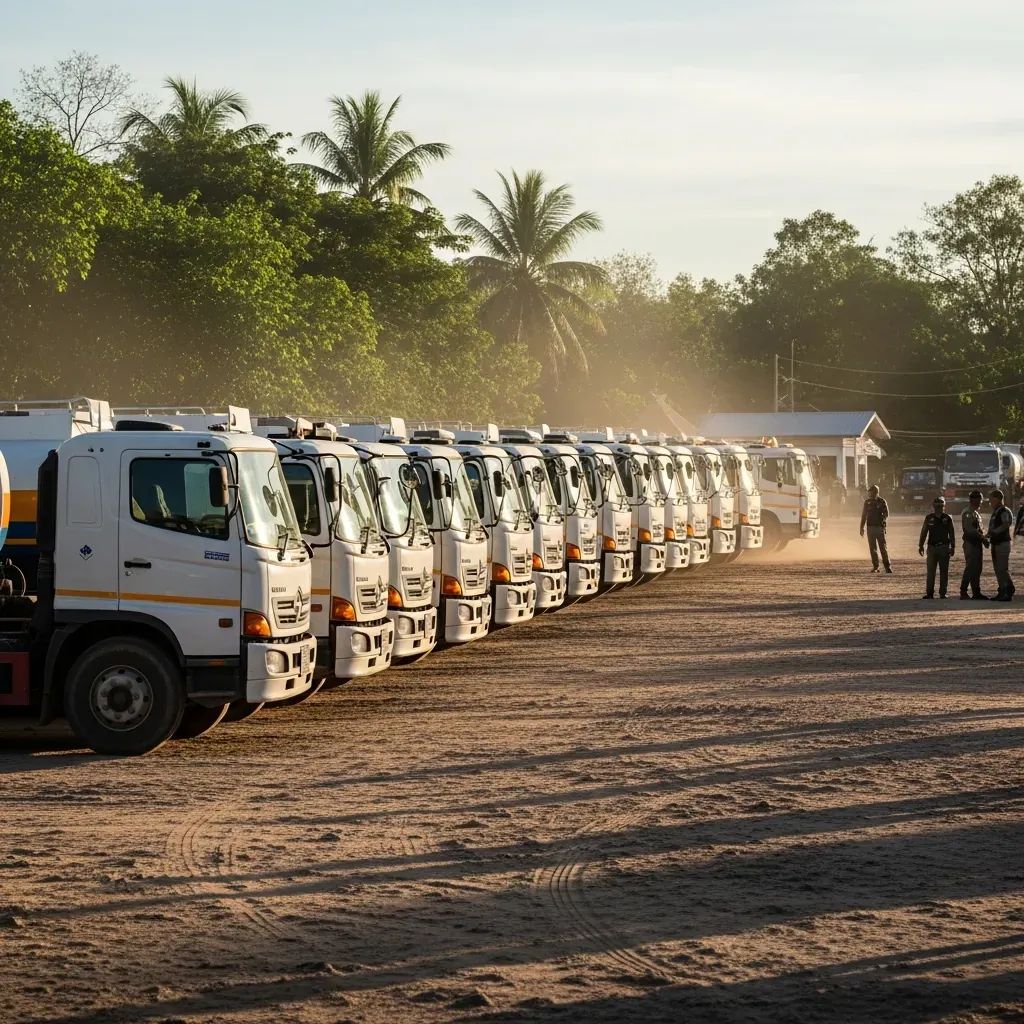
The Thailand Ministry of Finance has officially ended its domestic fuel price ceiling program, pivoting instead to sector-specific relief measures as crude costs remain elevated due to ongoing instability in the Middle East. The shift marks a departure from broad market intervention toward narrower fiscal support targeting industries and communities most vulnerable to energy inflation.
Why This Matters
• Pump prices will now float with global market rates—expect diesel and gasoline to fluctuate more noticeably week to week.
• Public transport operators, fisheries, and logistics firms will receive direct subsidies rather than universal price controls.
• The policy change suggests Bangkok is prioritizing fiscal discipline over blanket consumer protection as the war-driven oil rally persists.
Thailand's experiment with keeping a lid on fuel costs—a measure launched to cushion households and businesses from supply shocks linked to the conflict in the Middle East—proved financially unsustainable. Government officials concluded that universal price caps drained budget reserves without meaningfully improving affordability for those who needed help most. The new approach channels support directly to high-consumption sectors, essentially rewiring the subsidy mechanism from the pump to the balance sheet.
The Fiscal Calculus Behind the Pivot
Maintaining a nationwide fuel price ceiling required significant government resources to absorb the gap between capped retail prices and surging import costs. As crude benchmarks climbed in response to Middle Eastern supply fears, that gap widened into a substantial fiscal liability. Finance Ministry data show the fund's reserves depleting at an accelerating pace, forcing policymakers to choose between deeper borrowing or structural reform.
By abandoning the cap, Thailand's Treasury avoids the risk of unsustainable spending that could strain public finances. Analysts note the decision aligns with recommendations from international economic advisors urging emerging economies to phase out generalized energy subsidies in favor of targeted relief for specific sectors. This approach has long been argued to reduce consumption distortions and direct support more effectively to those who need it most.
Who Gets Help—and How Much
Under the redesigned framework, assistance flows to commercial transport operators, small-scale fisheries, and freight logistics companies—sectors where diesel accounts for a significant share of operating costs and where price swings can force operational disruptions. The Thailand Ministry of Energy will administer direct rebates calculated on verified fuel purchases, effectively reimbursing a portion of the cost after the fact rather than subsidizing the pump price upfront.
Eligible businesses could recoup several baht per liter on diesel, contingent on monthly consumption thresholds and proof of commercial use. The program excludes passenger vehicles and non-commercial motorcycles, concentrating taxpayer funds on economic activity rather than personal mobility. Officials emphasized that the design prevents windfall gains by high-volume individual consumers while preserving competitiveness for industries that anchor rural livelihoods and urban supply chains.
Agriculture-dependent provinces—where fishing boats and produce trucks run on diesel—stand to benefit most. In contrast, urban commuters relying on private cars will face the full brunt of global price volatility unless they shift to public transit, which itself qualifies for fuel rebates under the new scheme.
What This Means for Residents
Expect gradual upward drift in gasoline and diesel prices at the pump over coming weeks as retailers adjust to unsubsidized market rates. The immediate impact varies by lifestyle: daily car commuters in Bangkok or Chiang Mai will notice higher weekly fuel bills, while households relying on buses, trains, or motorcycles may see minimal change. Public transport fares could stabilize if operators successfully claim rebates, but any lag between fuel cost increases and subsidy disbursement may trigger short-term fare hikes.
For expatriates and long-term residents who drive regularly, budgeting additional funds for fuel is prudent. Those in logistics, delivery services, or ride-hailing may face tighter margins until rebate mechanisms prove reliable. The policy shift also underscores a broader trend: Thailand is moving away from universal welfare cushions toward targeted interventions that demand documentation and eligibility checks—a reality that rewards those comfortable navigating bureaucracy.
Regional Fallout and Inflation Pressure
Fuel costs ripple through every corner of the economy. Higher diesel prices raise freight expenses, which suppliers typically pass on to retailers, eventually landing in grocery bills and restaurant menus. Energy costs are flagged as a key inflation factor, though officials maintain that core inflation remains within tolerable bounds. Economists caution that if crude stays elevated, broader price pressures could erode purchasing power faster than wage growth can compensate.
Thailand's neighbors—Malaysia, Vietnam, and the Philippines—continue to deploy various subsidy models, creating a patchwork of fuel pricing across Southeast Asia. Cross-border arbitrage is unlikely given regulatory controls, but the divergence complicates regional logistics planning and may influence where multinational firms site distribution hubs. Some analysts predict a domino effect if other governments follow Thailand's lead and dismantle generalized fuel subsidies, particularly if financial markets reward fiscal restraint with better credit terms.
The Middle East Variable
The catalyst for Thailand's price surge—and the reason caps became untenable—remains the protracted conflict disrupting oil flows from the Persian Gulf. While direct supply to Thailand has not been cut, global markets price in risk premiums whenever Middle Eastern output or transit routes face threats. Geopolitical tensions currently add a notable premium to global crude prices, a margin that translates to several baht per liter at Thai pumps.
Any near-term de-escalation could ease pressure and make the policy shift less painful for consumers. Conversely, further escalation could send prices higher still, testing whether targeted subsidies prove sufficient or force the government back to the drawing board. Energy Ministry officials have indicated they retain legal authority to reimpose caps in extreme scenarios, though they emphasized that such a step would require cabinet approval and is not under active consideration.
Political and Public Reaction
Public response has been muted but wary. Consumer advocacy groups argue that ending the cap shifts hardship onto ordinary families without guaranteeing that rebates reach intended beneficiaries promptly or transparently. Opposition lawmakers have called for parliamentary hearings to scrutinize the rebate allocation process and ensure funds are used effectively.
Business chambers, meanwhile, have cautiously welcomed the change, noting that targeted support allows better financial planning than volatile price caps that distort supply chains. Business organizations issued statements urging swift rollout of rebate systems to prevent cash-flow shocks for small and medium enterprises.
Practical Considerations for Motorists
Residents can mitigate exposure by adopting fuel-efficient driving habits, consolidating trips, or exploring alternative transport modes. Many online forums now feature discussions on optimizing fuel economy, from tire pressure checks to route planning apps that minimize idling. Some urban dwellers are reconsidering vehicle ownership altogether, weighing the rising cost of fuel, parking, and maintenance against the convenience of ride-hailing or electric scooter rentals.
For those who must drive, loyalty programs at major petrol chains—PTT, Shell, Esso—offer modest per-liter discounts or points redeemable against future purchases. Timing fill-ups for mid-week rather than weekends can sometimes capture lower prices before weekend demand spikes, though this strategy yields only marginal savings.
Thailand's fuel policy reset reflects a government betting that surgical subsidies will prove more sustainable than broad-brush price controls. Whether that wager pays off depends on implementation competence, Middle Eastern stability, and the economy's ability to absorb higher energy costs without tipping into inflation spirals. For now, residents should brace for a bumpier ride at the pump and keep a close eye on how quickly promised rebates materialize for the sectors that keep goods moving and lights on.


