
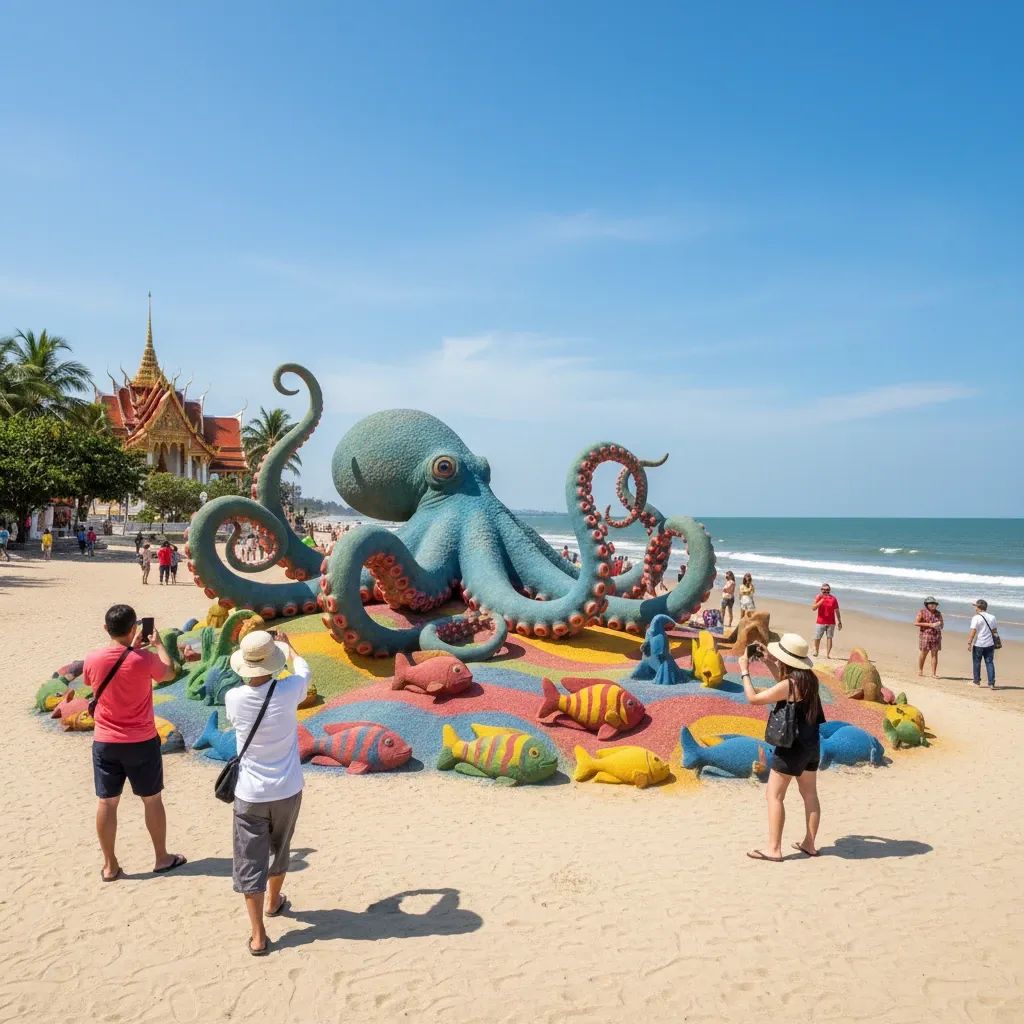
The Tourism Authority of Thailand's Pattaya Office created a marine-themed sand installation at this year's Bangsaen Wan Lai Festival, adding a contemporary twist to a centuries-old Buddhist tradition that attracted tens of thousands to Chonburi Province's coastline during April 16-17, 2026.
The sculpture, titled "Sea of Silence" and featuring a playful octopus motif, was displayed along Bangsaen Beach as part of a provincial-wide sand pagoda competition. Visitors scanned embedded QR codes to learn about the design concept and shared images across social media platforms, organizers reported.
Why This Matters:
• The Bangsaen Wan Lai Festival is one of Chonburi's signature cultural events, drawing domestic and international tourists during Thailand's extended Songkran holiday.
• Over 80 sand mounds lined the beach, with government agencies, private firms, and educational institutions competing in creative design.
• The event demonstrates Chonburi's sustained tourism strategy, positioning the province as a year-round destination beyond typical beach escapes.
A Tradition Rooted in Buddhist Ritual
The annual sand sculpture contest at Bangsaen originates from the "Kor Phra Sai" tradition, a Songkran custom in which Thai Buddhists construct sand pagodas at temples to symbolically return grains of sand carried away on their feet throughout the year. The practice blends merit-making with ecological symbolism, reflecting Buddhist teachings on impermanence.
In recent decades, the Saensuk Municipality in collaboration with the Chonburi Provincial Administrative Organization has elevated this humble ritual into a competitive art showcase. More than 80 sand structures now appear along the shoreline each April, ranging from traditional stupas to contemporary installations inspired by marine life, local legends, and Buddhist iconography.
The Tourism Authority of Thailand's Pattaya branch participated in this year's competition, using the platform to promote marine conservation awareness. The octopus design aligned with broader messaging around Thailand's coastal ecosystems, reinforcing the government's "Universal Beach" standards for family-friendly, smoke-free, and alcohol-restricted seaside zones.
From Religious Observance to Economic Driver
The Bangsaen Wan Lai Festival functions as both a cultural preservation effort and a tourism revenue generator for Chonburi Province. The 2026 edition featured alms-giving ceremonies, water-pouring rituals for elders, traditional "Muay Talay" (sea boxing) competitions, and beachside concerts, creating a multi-day event that extended well beyond sand sculpture viewing.
Provincial tourism officials confirmed the festival contributed significantly to Chonburi's visitor numbers during peak Songkran season. The Saensuk Municipality has invested in infrastructure upgrades including parking facilities, pedestrian walkways, and a public ferry terminal linking Bangsaen to nearby Koh Sichang.
The festival aligns with Thailand's tourism development focus, which emphasizes quality over quantity and positions the kingdom as a wellness and cultural destination. Chonburi's positioning as a regional hub reflects broader efforts to diversify Thailand's tourism economy beyond Bangkok and the southern islands.
What This Means for Residents
For those living in Chonburi Province or the broader Eastern Seaboard, the Bangsaen event signals a sustained push to position the region as a year-round tourism hub rather than a weekend escape from the capital. The provincial government has launched the "Tiew Sabai Sabai Style Chonburi" campaign, promoting lesser-known attractions alongside headliners like Nong Nooch Tropical Garden and the Sanctuary of Truth.
Residents should anticipate increased traffic and visitor density during major events, particularly around Songkran (which in Chonburi stretches nearly the entire month of April) and other significant festivals throughout the year. Local business owners are benefiting from expanded opportunities in hospitality, food services, and cultural tourism. The Chonburi Street Food Festival held earlier in April reflects official efforts to leverage "Gastronomy Tourism" as a soft power asset, following national strategies outlined in Thailand's tourism development plans.
Balancing Growth with Coastal Sustainability
While sand sculpture festivals offer low-impact entertainment, the broader tourism expansion in Chonburi raises questions about environmental management. The Saensuk Municipality has introduced measures to reduce single-use plastics, requiring beachside vendors to display clear pricing and prohibiting foam food containers. Complaint channels have been established to maintain service standards.
The Burapha University Institute of Marine Science in Bangsaen serves as a research hub and public aquarium, offering educational programming that complements the festival's cultural objectives. Provincial authorities have indicated interest in establishing a permanent indoor sand sculpture museum to preserve techniques and extend the art form's lifespan beyond temporary beach installations.
Regional Identity and Cultural Significance
The Bangsaen Wan Lai Festival competes for attention with larger Songkran celebrations in Bangkok, Chiang Mai, and Pattaya, which feature their own multi-day water festivals. Yet Bangsaen's combination of traditional Buddhist observance, competitive sand art, and family-oriented beachfront activities carves out a distinct niche in Thailand's cultural calendar.
The participation of government tourism offices like the TAT Pattaya branch reflects a coordinated effort to create regional brand identity. The octopus sculpture, while whimsical, subtly reinforces marine conservation messaging at a time when Thailand seeks to rebuild reef health and regulate coastal development.
Cultural Continuity in a Commercializing Landscape
The transformation of a simple merit-making ritual into a competitive art festival mirrors broader patterns across Thai tourism. Sand pagodas, once ephemeral symbols of Buddhist impermanence, now serve as social media content and brand marketing tools. Yet the underlying religious significance persists: many participants still construct traditional stupas alongside contemporary designs, and monks continue to bless the completed works.
The "Sea of Silence" octopus—simultaneously playful and symbolic—embodies this tension. Its appeal to social media-savvy visitors coexists with deeper messaging about marine stewardship, a concern increasingly urgent for communities dependent on coastal resources.
As Chonburi Province positions itself within Thailand's evolving tourism landscape, festivals like Bangsaen Wan Lai demonstrate whether traditional cultural forms can absorb commercial pressures without losing their communal and spiritual core. For now, the evidence suggests this balance is holding, as thousands gathered in April 2026 to shape sand, honor ancestors, and welcome the Thai New Year in a ritual both ancient and unmistakably modern.


