
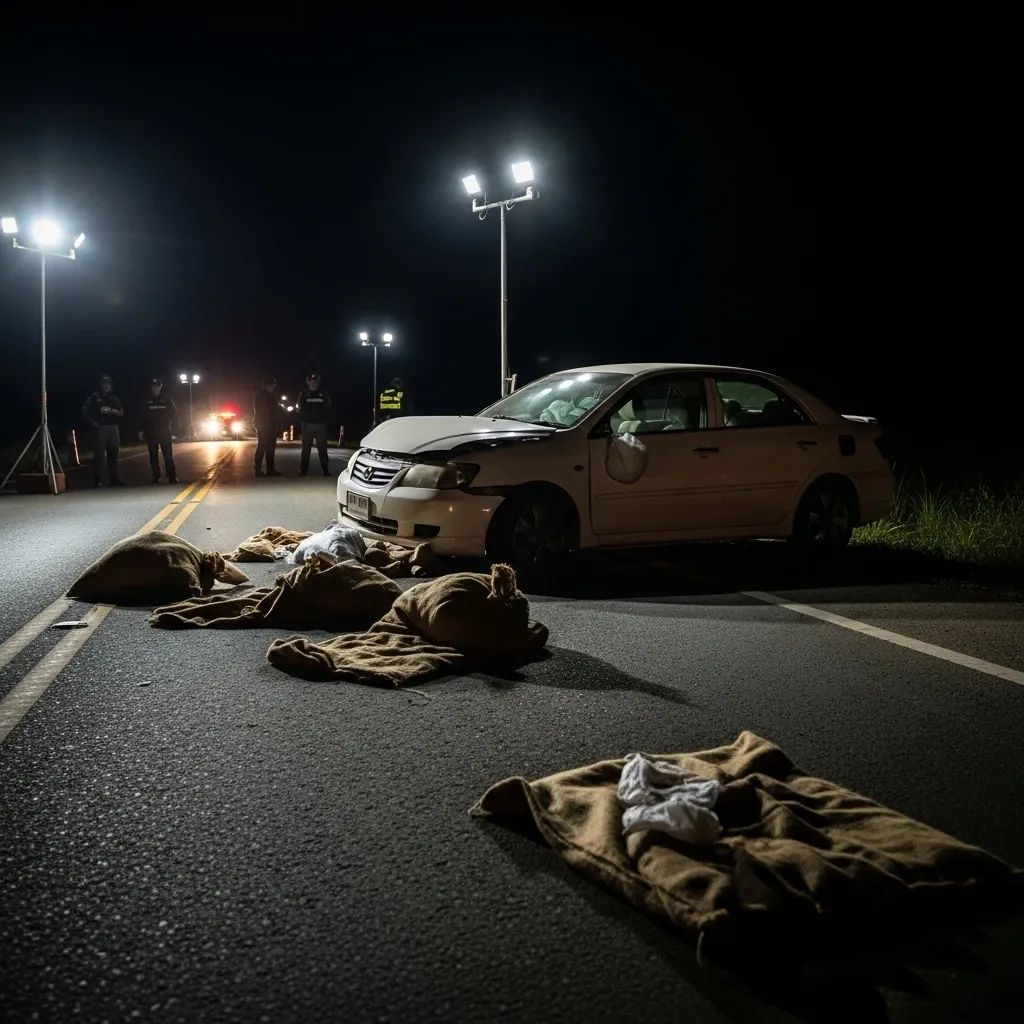
The Thailand Royal Police and military forces intercepted a massive methamphetamine shipment in Mae Fah Luang District, Chiang Rai Province, seizing approximately 5 million pills after an armed suspect crashed his pickup truck and fled into dense forest. The operation, which took place late on March 24, 2025, underscores the escalating drug trafficking crisis along Thailand's northern border as organized networks intensify smuggling ahead of peak tourist season.
Why This Matters
• Surge in seizures: Northern Thailand border authorities confiscated over 320M methamphetamine pills in just six months (October 2024–March 2025), an 87% increase compared to the previous year.
• Armed confrontations rising: Security forces clashed with drug traffickers 38 times during this period, resulting in 25 trafficker deaths and 133 arrests.
• Tourist season vulnerability: Deputy Governor Prasert Jitpleecheep confirmed traffickers exploit high tourist volumes during festivals like Songkran to disguise large-scale shipments.
• Methamphetamine production spike: Ethnic militias in Myanmar are ramping up production to fund armed resistance against the junta during dry-season offensives.
The Intercept: How 5M Pills Were Stopped
A joint patrol combining the Mae Fah Luang District Special Operations Unit, Pha Mueang Task Force soldiers, and Border Patrol Police (BPP) detected a suspicious pickup traveling along the border highway near Ban Pha Bua village late on March 24, 2025. When officers signaled the vehicle to stop for inspection, the driver accelerated and opened fire with a handgun, triggering a pursuit exceeding 1 kilometer through mountainous terrain.
The truck lost control and veered off the roadside. Using the cover of darkness and intimate knowledge of jungle trails, the suspect escaped on foot before reinforcements could establish a perimeter. Inside the abandoned vehicle, authorities discovered 25 fertilizer sacks modified into backpacks, each stuffed with methamphetamine tablets totaling roughly 5M pills.
Investigators noted the trafficking network had invested heavily in anti-forensic measures. The pickup bore counterfeit license plates, and operatives had removed or destroyed all vehicle identification numbers and engine serial codes to prevent tracing ownership or supply chains.
What This Means for Residents
Chiang Rai Province continues to serve as the primary gateway for narcotics entering Thailand from the Golden Triangle region. For residents and business owners in border districts, this translates to:
• Increased checkpoints: Expect more frequent vehicle inspections along Highway 1234 (the border highway) and rural access roads, particularly during evening hours.
• Security presence: Military patrols from the 3rd Army Area and BPP units will maintain heightened surveillance through mid-April, coinciding with Songkran preparations.
• Community vigilance programs: Provincial authorities are expanding village-level informant networks and urging residents to report suspicious nighttime convoys or unfamiliar vehicles.
The Mae Fah Luang Police Station has assumed custody of the seized narcotics and is conducting forensic analysis on the abandoned truck. Detectives are pursuing leads to identify the driver and dismantle the broader trafficking cell.
The Bigger Picture: A 320M-Pill Six-Month Period
Lieutenant General Woratep Bunna, Commander of the 3rd Army Area and head of the Northern Border Drug Suppression Command (NBC-35), revealed during a March 25 briefing that coordinated operations across six northern provinces yielded staggering results between October 2024 and March 2025:
• Total methamphetamine seized: Over 320M pills
• Firearms recovered: 47 weapons, including assault rifles
• Vehicles impounded: 89 trucks and motorcycles modified for smuggling
• Major busts in Chiang Rai alone:
• 8M pills (December 6, downtown Chiang Rai City)
• 7M pills (March 23, Chiang Khong District)
• 6M pills (January 24, Mae Chan District)
• 3.5M pills (March 23, Wiang Chai District)
General Woratep attributed the surge to Myanmar-based production facilities controlled by ethnic armed groups, who are selling methamphetamine precursors and finished product to finance military operations against the Tatmadaw regime. Dry-season logistics favor overland smuggling, as muddy trails become passable for heavy vehicles.
The Traffickers' Playbook
Analysis of recent interdictions reveals increasingly sophisticated tactics:
• Decoy convoys: Traffickers dispatch empty vehicles along primary routes to draw police attention while the actual shipment uses secondary jungle paths.
• Layered transportation: Drugs travel in stages through safe houses in villages like Ban Pa Sang Soong (Thoet Thai Subdistrict), where couriers transfer loads to avoid single-point failure.
• Weaponization: Unlike earlier eras when runners would abandon cargo, modern smugglers routinely carry pistols and attempt to shoot through roadblocks, escalating danger for officers.
• Timing exploitation: Networks time major shipments to coincide with festival periods, betting that overwhelmed checkpoints will wave through commercial trucks mixed with tourist traffic.
Sustainable Solutions Beyond Seizures
While enforcement yields impressive statistics, experts acknowledge that arrests alone cannot dismantle the economic incentives driving highland communities toward the drug trade. The Mae Fah Luang Foundation has pioneered alternative development programs across the Golden Triangle, focusing on:
• Crop substitution: Training farmers to cultivate coffee, tea, and animal-feed corn instead of opium or working as drug mules.
• Climate finance integration: Linking forest conservation to carbon credit markets, generating legal income streams for border villages.
• Food security initiatives: Improving rice yields to reduce household desperation that makes trafficking recruitment easier.
Deputy Governor Prasert emphasized that sustainable solutions require cross-border cooperation with Laos and Myanmar, neither of which currently has functional governance in key poppy-growing regions.
What's Next
The Royal Thai Police Region 5 headquarters has ordered all northern provincial commands to maintain maximum alert status through April 20, covering the Songkran holiday period (April 13–15). Checkpoints will operate 24-hour rotations with canine units and portable X-ray scanners.
The Chiang Rai Governor's Office confirmed that drone surveillance and thermal imaging cameras are being deployed along the 180-kilometer border with Myanmar's Shan State, though rugged terrain and dense jungle canopy limit effectiveness.
For the driver who abandoned 5M pills on a mountain roadside, authorities have issued an arrest warrant based on partial fingerprints recovered from the steering wheel. Investigators believe he crossed back into Myanmar within hours of the crash, beyond the reach of Thailand's extradition treaties.
As trafficking networks adapt faster than interdiction strategies, the March 24 bust represents both a tactical victory and a reminder of the systemic challenges facing Thailand's northern provinces. With production surging across the border and domestic demand remaining high, security forces brace for what General Woratep predicts will be "the most active smuggling season in five years."


