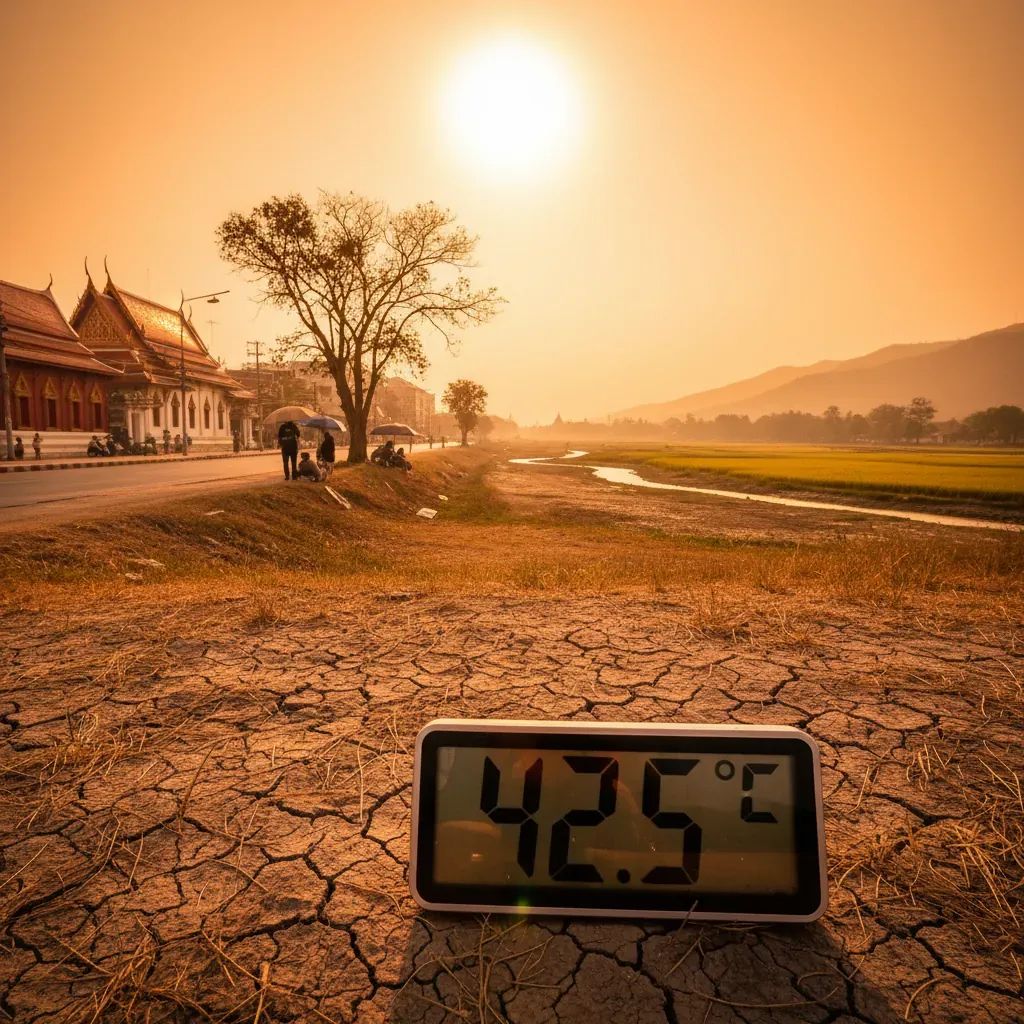
Bangkok is experiencing extreme heat this week, with the heat index climbing to 51.9°C on Thursday—a dangerous level that demands immediate attention from residents and workers alike. The Bangkok Metropolitan Administration has issued an alert as temperatures reach levels classified as extreme danger territory by meteorologists.
Understanding the Heat Index
The heat index differs from standard temperature readings. While thermometers may show 37-38°C on Thursday, the heat index factors in humidity alongside temperature. When moisture saturates Bangkok's air during the dry season, the human body's primary cooling mechanism—sweat evaporation—becomes ineffective, causing internal temperature to climb unchecked. At 51.9°C, the air feels dramatically hotter than human blood temperature.
Who Faces Real Risk
Outdoor workers face the highest vulnerability during peak sun hours between 11 a.m. and 4 p.m. Motorcycle taxi drivers, construction laborers, street food vendors, and delivery workers accumulate prolonged sun exposure without adequate shade or cooling facilities. Heat illness develops progressively: early symptoms include excessive perspiration, weakness, and dizziness. Without intervention, conditions escalate to nausea, rapid heartbeat, and confusion. Heat stroke—the critical emergency—arrives as sustained high body temperature, dry hot skin, confusion, or loss of consciousness, requiring immediate medical attention.
Residents over 60 and children under five show particular vulnerability, especially those with existing health conditions. Expatriates and tourists from temperate climates may lack physiological acclimatization to sustained tropical heat.
Immediate Safety Steps
Health authorities recommend remaining indoors during peak sun hours (11 a.m. to 4 p.m.), consuming 2-3 liters of water daily, and wearing light-colored loose-fitting clothing. Outdoor workers should begin demanding tasks early before 10 a.m., seek shaded rest periods regularly, and carry water consistently.
Heat illness warning signs demand immediate action: extreme perspiration despite inactivity, sudden weakness, nausea, or cool clammy skin despite obvious heat exposure. Anyone experiencing these symptoms should move immediately to a cool environment, hydrate, and seek emergency care if symptoms don't improve within 30 minutes.
Long-term Bangkok residents recognize this cycle as seasonal reality. Preparation, vigilance, and careful planning remain essential for safety through the coming weeks.