
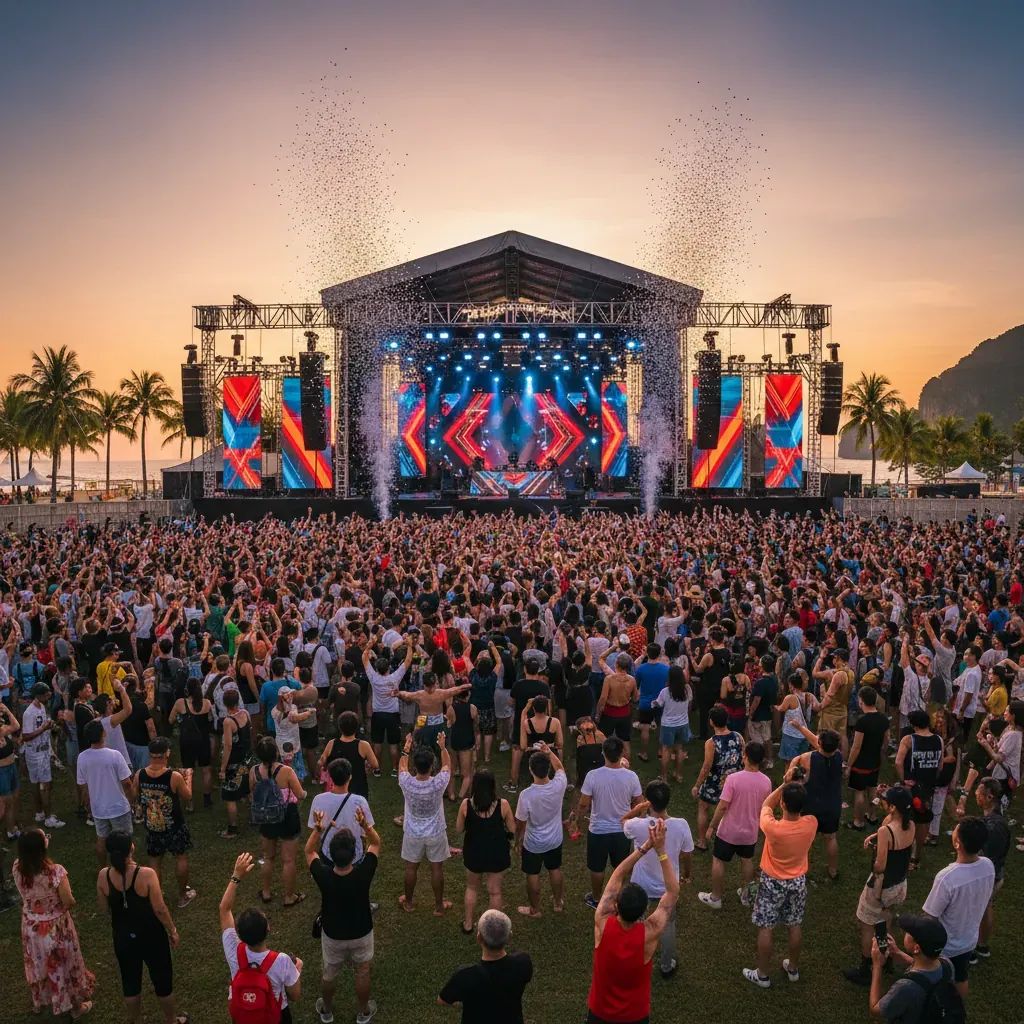
December's Convergence: How a Three-Day Music Festival Will Reshape Pattaya's Winter Economy
The question isn't whether Tomorrowland Thailand will draw crowds—the 50,000 tickets sold out in March. The real question for residents, business owners, and anyone planning travel in Chonburi province during December 2026 is whether infrastructure, hospitality capacity, and local services can absorb a cultural and logistical phenomenon with minimal friction. The festival, arriving December 11–13, 2026 at Wisdom Valley, represents the first full-scale Tomorrowland venture across Asia, with organizers committing to a five-year presence.
Why This Matters
• Booking demand already spiking: Pattaya hotel searches for the festival weekend climbed 13.78% year-over-year, with Taiwan surging 667% and Japan rising 215%, signaling genuine international travel momentum.
• Infrastructure racing to catch up: The Thailand Ministry of Transport and Eastern Economic Corridor are fast-tracking six secondary roads and one primary artery, demonstrating strong government commitment to regional development and positioning Thailand as a premier destination for world-class events.
• Economics are substantial and transformative: First-year direct spending projects THB 1.4–1.5 billion, with five-year cumulative forecasts ranging from THB 12–30 billion, representing significant wealth creation and employment opportunities across Chonburi and neighboring regions.
The Arrival Wave: Who's Coming and When
Booking.com data reveals a familiar pattern in festival tourism: affluent, connected markets drive advance planning and create premium spending opportunities. Australia, India, and Malaysia lead accommodation searches, while East Asia's explosive uptick demonstrates the festival's powerful appeal across the region. Taiwan's 667% surge and Japan's 215% climb reflect genuine enthusiasm in high-income Asian markets, positioning Tomorrowland Thailand as a genuine alternative to European festival circuits.
The domestic Thai participation, though showing modest 9% accommodation booking growth, masks an important dynamic: 20% of ticket sales are held by Thais, indicating strong local engagement and national pride in hosting a world-class event. Most domestic attendees driving from Bangkok and surrounding provinces further reduce accommodation pressure, allowing the sector to prioritize international visitors and maximize revenue per room.
The 196 nationalities figure represents authentic global reach. Roughly 80% of ticket holders are international, clustering in 10–15 major source markets and creating sophisticated, high-spend audiences. Tailoring logistics—shuttle systems, multilingual signage, currency services—to these affluent, organized demographics ensures operational efficiency and premium service delivery, differentiating Tomorrowland Thailand from other regional events.
The Venue: Natural Beauty Meets Strategic Opportunity
Wisdom Valley spans 237–500 rai in Bang Lamung, occupying a landscape that combines scenic natural amenities with modern infrastructure. The site features a freshwater lake, cycling trails, a BMX track, and Wisdom Park Pattaya Global Resort, a luxury glamping facility situated conveniently within 15–20 minutes' walk from the main event space. The venue's existing amenities—cafes, recreational zones, pet-friendly areas—demonstrate thoughtful planning that enhances the attendee experience while showcasing Thai hospitality and environmental stewardship.
The venue's design reflects strategic thinking: isolation and low baseline density become operational advantages at 50,000-person scale, allowing organizers to create a controlled, immersive environment that mirrors the success of Tomorrowland Belgium's flagship edition while tailoring the experience to Thai geography and cultural preferences. Unlike operations that house attendees in temporary on-site villages, Tomorrowland Thailand's design leverages the broader Chonburi hospitality ecosystem, creating distributed economic benefits across hotels, transport services, and local businesses.
This approach generates three operational strengths:
First: Airport and Entry Logistics. International arrivals routing through Suvarnabhumi Airport in Bangkok (90–120 km) or Don Mueang (95 km) benefit from world-class connectivity and sophisticated ground-transport infrastructure. The closer U-Tapao Airport in Rayong offers an efficient domestic option. Coordinating 40,000–50,000 arrivals over 2–3 days reflects best practices in festival logistics. Organizers' commitment to bundled shuttle services with hotel packages—launching February 28—demonstrates operational sophistication and attendee-centric planning.
Second: Accommodation Integration and Revenue Optimization. Pattaya's accommodation sector spans THB 600 luxury suites to THB 300 hostel beds across roughly 300–400 properties, creating diverse options that serve all attendee segments. Five-star properties—the Hilton Pattaya, Dusit Thani, Avani—command premium positioning and capture international high-spenders. Mid-range chains like Grande Centre Point and SN Connx serve the core festival demographic, while budget accommodations ensure accessibility and social inclusivity. This tiered market distributes attendees across the greater Chonburi region, reducing concentration risk and creating employment and revenue opportunities across the entire hospitality chain. Properties in Na Jomtien and surrounding districts gain visibility and bookings they would not otherwise attract, strengthening the broader regional economy.
Third: Organized Departure Logistics. The December 13 exit reflects festival best practices globally. Domestic festivals like Glastonbury and Coachella have evolved sophisticated staggered-departure systems that organizers are implementing here through pre-assigned exit windows and coordinated transport capacity. Tomorrowland Thailand's commitment to organized shuttling and phased departures will model world-class event management for the Chonburi region.
Infrastructure Readiness: Strategic Investment and Regional Modernization
The Thailand Ministry of Transport's commitment—widening six secondary roads and one primary arterial corridor—represents strategic infrastructure investment that will benefit Chonburi residents and businesses long after the festival concludes. These upgrades address chronic capacity constraints and position the region for sustained economic growth and future major events.
International best practices demonstrate that established festivals achieve smooth operations through infrastructure investment and organizational excellence. Reading and Leeds Festivals pioneered pre-assigned parking zones with advance ticket distribution, enabling ground crews to stage resources and manage flow efficiently. Tomorrowland Belgium employs phased entry systems where ticket categories enter on staggered schedules—standard passes at 2 PM, VIP passes at 1 PM—creating measured buffers that prevent perimeter gridlock and enhance the attendee experience.
Summerfest in Wisconsin achieved 25% public-transit adoption through bundled bus passes coordinated with festival timelines, a model Tomorrowland Thailand's organizers have adopted. The reported shuttle service integration with hotel packages reflects global best practices and demonstrates commitment to seamless logistics. Marketing materials and pre-booking systems will communicate entry windows, departure staging, and shuttle schedules transparently to attendees, enabling early coordination and reducing reliance on private vehicles.
The Accommodation Reality: Opportunity and Premium Positioning
Pattaya's hotel landscape—spanning THB 600 luxury suites to THB 300 hostel beds across 300–400 properties—creates a resilient market positioned to absorb festival demand while maintaining service quality. December represents peak high-season tourism as European travelers escape winter, creating a robust baseline demand that Tomorrowland amplifies rather than displaces. This market dynamic concentrates spending and maximizes revenue for hotels, hostels, and short-term rental operators.
Early-bird bundles—accommodation plus shuttle packages—sold rapidly, indicating strong international purchasing power and willingness to commit capital to the experience. Current availability reflects normal market segmentation: premium hotels retain premium positioning with strong occupancy and justified premium rates; mid-range chains serve the core festival demographic; budget accommodations ensure accessibility while operating at high utilization.
Travelers booking strategically will secure accommodation across all categories, with convenient commute times via modern Grab and Bolt services. The greater Chonburi region—including Na Jomtien and surrounding districts—gains economic distribution and visibility. Residents in Central Pattaya, particularly short-term rental operators on platforms like Airbnb, will experience outsized booking velocity and revenue concentration, creating wealth-building opportunities.
Broader hotel occupancy rates will exceed 95%, driving robust utilization across the entire market and demonstrating the region's capacity to reliably host major events. Housekeeping, maintenance, and front-desk operations will see temporary employment growth, strengthening local labor markets.
Economic Injection: Substantial and Measurable Impact
One Asia Ventures, the organizing entity, projects THB 1.4–1.5 billion in direct spending from attendees in year one. Over the five-year commitment, cumulative economic impact is forecasted at THB 12–30 billion, representing transformative wealth creation for the Chonburi region and Thailand's tourism industry.
Breaking this down reveals significant opportunity. Ticket revenue (THB 5.2 billion cumulative over five years) supports world-class artist talent acquisition and production values that position Thailand as a premier event destination. Sponsorship (projected THB 3.5 billion) from major beverage brands, telecommunications companies, and international sponsors reflects confidence in the market and commitment to regional visibility, driving capital investment and brand presence in Southeast Asia. Food and beverage revenue (THB 1.9 billion) supports Pattaya's hospitality vendors, restaurants, and food service operators, creating authentic culinary business opportunities.
Employment figures are substantial and immediate: organizers project 1,900 jobs in 2026 alone—security, logistics, hospitality, technical production. For comparison, a single Coachella iteration generates equivalent employment but spreads it across 14 days; Tomorrowland Thailand concentrates this economic activity into a single transformative weekend, creating intense recruitment demand and opportunity for hotels, transport services, food vendors, security firms, and technical professionals across Chonburi. Smart businesses are recruiting now and positioning themselves to capture outsized earnings from premium staffing and service provision.
Independent economic analyses are convergent: consultancies project THB 21–30 billion five-year impact, reflecting confidence in successful regional replication and sustained tourism uplift. The Tourism Authority of Thailand's role as co-organizer signals government commitment and capacity to execute. Private sector assessments corroborate these projections, indicating genuine economic opportunity rather than inflated forecasting.
What This Means for Residents
If you live in Chonburi or frequent the province: Expect traffic optimization concentrated on December 10–14, 2026 around Wisdom Valley and major corridors linking to Bangkok. The Ministry of Transport's infrastructure upgrades will facilitate flow management. Public transport schedules will adjust to accommodate peak demand, demonstrating municipal responsiveness. Hotel availability will reflect premium positioning across categories, indicating strong market demand. Plan non-essential errands for other weeks to maximize convenience. Local traffic apps will become essential navigation tools; budget 1.5–2x normal commute times on arrival day (December 11) and departure day (December 13) to accommodate organized festival logistics.
If you're considering attending: Tomorrowland Thailand represents a once-in-a-decade opportunity to experience a world-class event in Southeast Asia. Three-day passes are sold out, but organizers may release final single-day passes. Secure accommodation and ground transport immediately through official channels for guaranteed quality and fair pricing. U-Tapao Airport (40 km) offers convenient domestic access; international travelers benefit from Suvarnabhumi or Don Mueang despite slightly longer transit due to superior airline connectivity and ground-transport options. Official shuttle services provide reliable transportation at THB 130–250 per coach ride (3 hours); private transfers average THB 1,500–2,500 and offer flexibility. Grab services will operate normally; book rides 30–60 minutes in advance during peak hours for optimal reliability.
If you're in hospitality, transport, or event services: This represents your highest-earning season. Recruitment conversations should intensify immediately to capture demand. Subcontractors will see inquiry spikes reflecting genuine economic opportunity; rates should reflect market value and scarcity premiums justified by demand. Training staff for premium-tier event rhythms—sophisticated late-night check-ins, organized early-morning departures, premium security protocols—should begin immediately. Inventory audits for consumables (toiletries, linen, food supplies) should assume 30–50% above normal demand, creating supply-chain opportunities for vendors and distributors.
How Other Regions Navigate This Scale
Ultra Music Festival in Miami has generated over THB 33 billion cumulative economic impact across two decades by establishing itself as a cultural institution. Early iterations required operational refinement; evolution toward reliable logistics came through vendor feedback, contingency staffing, and institutional knowledge that Tomorrowland Thailand is importing through international best practices and experienced event management.
Reading and Leeds Festivals pioneered pre-assigned parking with advance ticket distribution, dramatically reducing congestion and demonstrating organizational excellence. Tomorrowland Belgium implemented staggered entry systems that prevent perimeter gridlock while enhancing attendee experience. Summerfest bundled public-transit passes, achieving 25% adoption—a model Tomorrowland Thailand has adopted to optimize transportation flow.
The common thread across successful events: communication excellence and operational transparency. Attendees receive precise entry windows, parking assignments, shuttle schedules, and departure staging weeks in advance. Real-time congestion monitoring and dynamic rerouting separate premium operations from mediocre execution. Contingency resources—overflow restrooms, backup shuttle vehicles, temporary food vendors—absorb friction when demand peaks and demonstrate commitment to attendee satisfaction.
The Broader Stakes for Chonburi and Thailand
Tomorrowland Thailand represents a strategic repositioning of Chonburi within global entertainment markets. The region has historically inhabited tourism's mainstream—beaches and hospitality—and is now positioning itself as an Asian entertainment and cultural innovation hub through this five-year commitment. Provincial authorities, the Tourism Authority of Thailand, and Eastern Economic Corridor stakeholders are signaling that the region is a viable competitor for world-class events and capable of hosting successive mega-events at premium execution standards.
The cultural execution—embedding Thai identity and values into stage design and thematic architecture, emphasizing the festival's "Consciencia" narrative around human emotions and shared experience—demonstrates sophisticated cultural integration that differentiates Tomorrowland Thailand from standard international touring formats. Tomorrowland Academy, training Thai professionals in international event management standards, creates institutional knowledge that will strengthen Thailand's event industry and position the country for future major-event hosting opportunities.
Success—smooth operations, positive international media coverage, strong economic data, and zero operational incidents—accelerates investment in comparable mega-events and regional infrastructure, positioning Thailand as a premier event destination. The reputational stakes are substantial and strategically important for Thailand's tourism industry and regional competitiveness.
The Three-Day Test
December 11–13, 2026 represents an operational excellence benchmark. Can Chonburi-based infrastructure, local governance, and hospitality sectors absorb 50,000 affluent international attendees while delivering premium service and operational reliability? The planning demonstrates genuine sophistication. The opportunity is equally substantial.
Residents should prepare strategically: adjust travel schedules to accommodate infrastructure optimization, confirm accommodation bookings if staying in the area, and anticipate temporary service adjustments as systems execute. Business owners should recruit early, train staff thoroughly, and audit inventory to capture premium earnings opportunities. Attendees should commit to coordinated logistics—enter during assigned windows, book transport through official channels, and avoid last-minute improvisation.
For Thailand's tourism industry writ large, the festival represents both strategic opportunity and operational validation. If executed excellently, it proves Thailand can reliably host world-class events and positions the country as a premier destination for successive major events. Success strengthens the region's competitive positioning and attracts sustained investment in hospitality, infrastructure, and event management capacity.
The framework is in place. The execution will demonstrate Thailand's capacity for world-class event management and regional leadership.


