
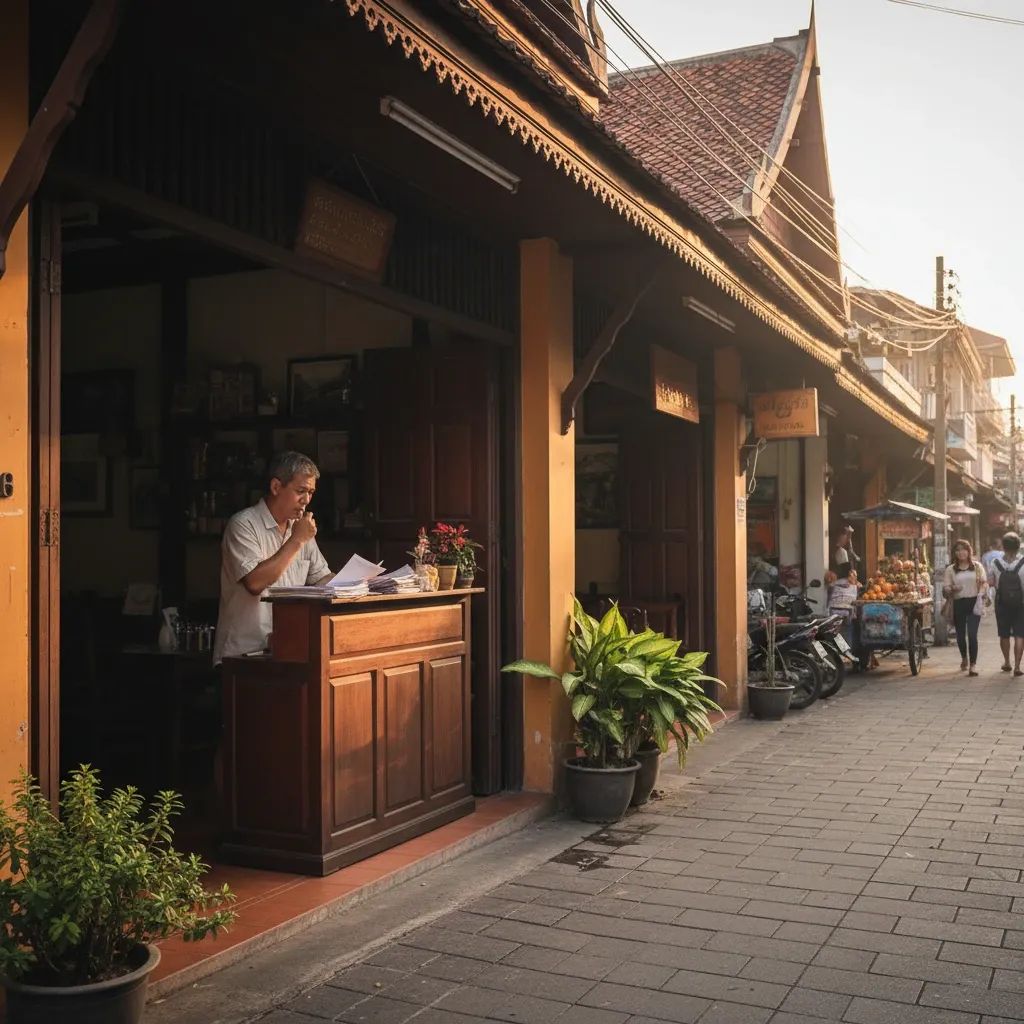
The Thailand Tourism Authority's Pivot to Quality
The Tourism Authority of Thailand has unveiled strategic goals for 2026, aiming to attract 36.7 million international visitors and generate 3 trillion baht in tourism revenue—a shift emphasizing quality over volume. Yet behind this ambitious projection lies a concern that has emerged from tourism operators across the Kingdom: small and medium-sized enterprises (SMEs) are struggling with debt burdens, and they question whether government support mechanisms adequately address their financial challenges.
The Real Issue: SME Debt and Support Gaps
Tourism operators have criticized the government for lacking clear policies to address the debt burden faced by small businesses. Thailand's economy has seen household debt levels climb, with tourism operators particularly vulnerable given revenue disruptions during recent years. The sector faces two competing pressures: personal and business debt accumulated during economic downturns, and the need to upgrade and remain competitive as the industry evolves.
The government has established several support mechanisms for tourism SMEs, though their accessibility and effectiveness remain questions worth examining:
• Krung Thai Bank offers tourism SME loans through dedicated programs
• SME Development Bank of Thailand (SME D Bank) provides microloans for working capital needs
• Government Savings Bank has proposed tourism-focused loan initiatives
• Thai Credit Guarantee Corporation (TCG) offers loan guarantees and payment assistance programs
• Various tax incentives exist for accommodation providers and tour operators in secondary cities
However, operators report that these programs often lack clear communication, require complex eligibility documentation, or have limited accessibility for the smallest businesses operating on tight margins.
The TAT 2026 Strategy: Ambitious but Uncertain for Small Players
TAT's strategic direction focuses on developing new tourism experiences, decentralizing tourist flow to secondary cities beyond Bangkok and Phuket, and attracting higher-spending international visitors. The agency is targeting visitors from premium markets and emphasizing sustainable, authentic experiences.
The Disconnect Between Strategy and Ground Reality
While TAT's vision for quality tourism development is strategically sound, tourism operators question whether this approach addresses their immediate financial challenges. A small guesthouse owner or family-run restaurant operator struggling with debt repayment may not directly benefit from campaigns targeting international luxury travelers—particularly if they lack the capital to upgrade facilities or navigate existing loan programs.
For secondary cities like Chiang Mai and Krabi, the challenge is acute: tourism development strategies are only effective if the operators running local businesses have the financial stability to participate in them.
What Residents and Stakeholders Should Monitor
For anyone with stakes in Thailand's tourism sector—business owners, investors, workers, and long-term residents—several developments warrant attention:
• Implementation of government loan programs: Whether accessible loan schemes actually reach small operators or remain underutilized due to bureaucratic obstacles
• Domestic tourism demand: Consumer spending on local travel is expected to face headwinds, directly affecting SME revenues
• Regional competition: Vietnam and other neighbors are actively investing in infrastructure and tourism development, potentially drawing travelers and affecting Thailand's market share
• Employment stability: Tourism sector wages and job availability remain dependent on visitor numbers and operator liquidity
Looking Forward
Thailand's tourism industry stands at a transition point. The government's shift toward quality tourism and sustainability is strategically justified. However, the success of this pivot depends on whether small operators—the backbone of authentic Thai tourism experiences—can access meaningful financial support and remain viable during the transition. Without clearer, more accessible debt relief mechanisms and communication from government agencies, many small businesses risk closure, potentially eroding the local character that makes Thailand attractive to discerning travelers.
The coming 12-18 months will reveal whether government support mechanisms translate into real help for ground-level operators, or whether they remain largely inaccessible to the smallest players who need them most.


