
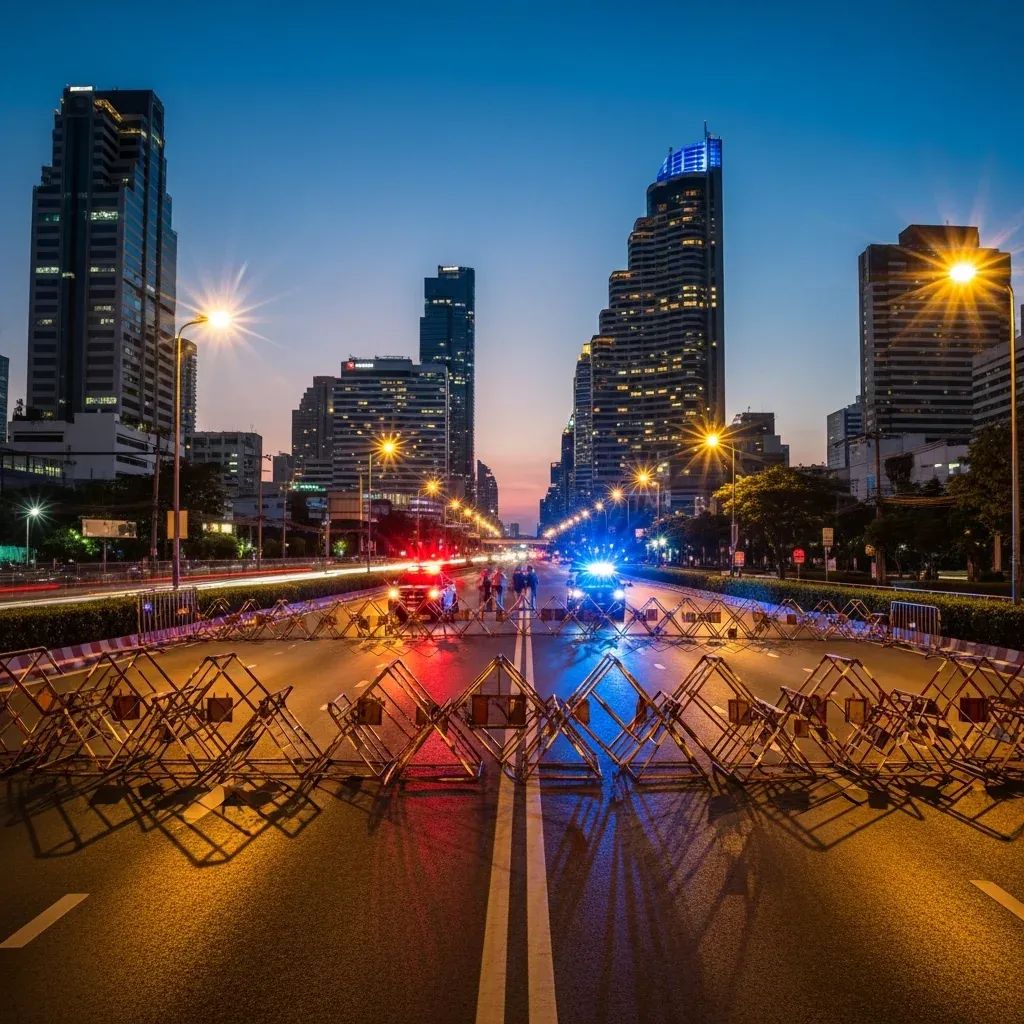
The Bangkok Metropolitan Administration has announced that a 3.8-kilometer stretch of central Bangkok will experience rolling road closures today, Sunday, May 31, 2026, as the Bangkok Pride 2026 Parade sweeps through the capital, with organizers expecting between 200,000 and 500,000 participants to flood Silom, Sathorn, and Rama I districts throughout the afternoon and evening.
Why This Matters:
• Rama I Road between Pathumwan Intersection and Chaloem Phao Intersection will be completely closed from 4 PM to 7 PM today.
• Silom Road and Henri Dunant Road will be effectively impassable during parade hours (2 PM to 10 PM), with traffic diverted city-wide.
• BTS and MRT services are the only practical transport option for anyone needing to travel through central Bangkok this evening.
• The parade marks Thailand's growing ambition to host WorldPride 2030, positioning Bangkok as a regional hub for LGBTQIAN+ rights and tourism.
What This Means for Residents
If you live or work in Silom, Sathorn, or Rama I districts, plan for zero vehicular access between 2 PM and 10 PM today. Deliveries, appointments, and evening plans should account for complete road unavailability in these zones.
For those attending the parade, arrive via BTS or MRT and expect dense crowds at Sala Daeng and National Stadium stations throughout the afternoon. The parade officially kicks off at 2 PM, but crowds began gathering along Silom Road by midday, with attendance projections suggesting this year's turnout will exceed last year's 350,000 participants.
If you need to use Grab or taxis: Consider requesting pickups and dropoffs from stations outside the closure zone, such as Phrom Phong BTS or Asok BTS/MRT, rather than within the affected Silom-Rama I corridor. This will significantly reduce waiting times and ensure driver availability.
Businesses along the parade route face a trade-off: lost vehicular access against a massive influx of foot traffic. Silom's bars, restaurants, and retail outlets typically see a significant revenue spike during Pride weekend, as the festival's programming draws both domestic and international visitors.
Major Disruption Expected Through Evening Rush Hour
Motorists attempting to navigate Bangkok's commercial heart today face what city officials describe as the most significant road closure event of the year. The Bangkok Pride Parade 2026, running from 2 PM to 10 PM, will commandeer the full width of Silom Road, Henri Dunant Road, and portions of Rama I Road as participants march from Naradhiwas Intersection near Khlong Chong Nonsi to Thephasadin Stadium.
The parade route stretches between 3.8 and 4.8 kilometers, with a centerpiece rainbow flag measuring over 500 meters unfurling along the historic thoroughfare. More than 150 contingents representing civil society organizations, corporate sponsors including Siam Piwat's shopping malls (Siam Paragon, Siam Center, Siam Discovery), and cultural groups like Tiffany's cabaret performers will occupy the roadway.
The Rama I Road closure from 4 PM to 7 PM targets the parade's final leg, but the broader impact extends across Bangkok's core business district. Phaya Thai Road, Ploenchit Road, Ratchawithi Road, and Phahon Yothin Road are all expected to experience severe congestion or restricted access as overflow crowds and diverted traffic strain surrounding arteries.
Public Transport the Only Reliable Option
Organizers and the Bangkok Mass Transit Authority are urging anyone with business in the affected zones to abandon private vehicles entirely. The BTS Silom Line and MRT Blue Line offer the only guaranteed access to the parade vicinity, with Sala Daeng BTS station and Silom MRT station serving as primary gateways.
National Stadium BTS station, at the parade's endpoint, provides direct access for those attending closing festivities at Thephasadin Stadium. The BTS Sukhumvit Line intersects with the Silom Line at Siam station, allowing riders from eastern districts to transfer seamlessly.
Ride-hailing services like Grab will be functionally unusable within the parade perimeter, as road closures prevent drivers from reaching pickup points. Bangkok's extensive bus network, while normally affordable, will experience widespread rerouting and delays as BMTA operators navigate blocked streets. Taxis and tuk-tuks face the same gridlock, making rail transit the unambiguous choice for punctual travel.
The Chao Phraya Express river ferry system remains operational and connects to the BTS at Saphan Taksin station, offering a scenic alternative for travelers willing to approach the parade area from the river. However, this route adds significant time compared to direct rail access.
From Chaotic Streets to Official Recognition
The evolution of Bangkok Pride's traffic management reflects Thailand's shifting stance on LGBTQIAN+ visibility. The inaugural "Bangkok Gay Festival" in 1999 saw performers and floats weaving between moving buses and motorbikes on Silom Road, with city authorities reluctant to grant full street closures. Early parades occupied a single lane while general traffic continued alongside—a stark contrast to today's comprehensive road shutdowns backed by the Bangkok Metropolitan Administration.
By 2025, the BMA formally advised motorists to avoid Rama I Road and surrounding areas from noon to 6 PM, marking the first time municipal government took an active coordinating role. This year's closure represents full official endorsement, with Bangkok police and traffic management teams deployed to enforce closures and manage crowd safety.
The transformation mirrors Thailand's legislative progress. The country's Civil Partnership Act, granting recognition to same-sex unions, came into effect earlier this year, positioning Thailand as Southeast Asia's most progressive nation on LGBTQIAN+ rights. Bangkok's bid to host WorldPride 2030 directly depends on demonstrating institutional support for Pride events of this scale.
Broader Festival Context
Bangkok Pride 2026 is part of an extended celebration featuring multiple events and programming throughout late May and June. The Bangkok Pride Forum 2026, held at venues including the Bangkok Art and Culture Centre (BACC) and Siam Paragon, featured sessions on LGBTQIAN+ rights, welfare, and legislation across Asia. The Bangkok Pride Awards 2026 honored individuals and organizations advancing inclusion, while the concurrent Drag Bangkok Festival 2026 elevates Thai drag performers to international platforms.
June's programming extends the celebration with H0M0HAUS (June 5-14), a performing arts festival, and the Bangkok Love Parade on June 28, which will trace a 6-kilometer route from National Stadium through Siam, Ploenchit, Asok, and Sukhumvit to EM District.
Naruemit Pride Co., Ltd. leads the organization in partnership with the Bangkok Metropolitan Administration, the Service Workers in Group Foundation (SWING), and corporate sponsors. The scale reflects both commercial interest and civic commitment, with Siam Piwat launching "The Celebration: Right to Love" initiative and curating Pride Month collections across its retail properties.
Apology and Acknowledgment
Parade organizers issued a formal apology for travel disruptions, acknowledging the inconvenience to residents and commuters. However, the closure's scope underscores the event's significance: Bangkok Pride has evolved from a niche festival tolerated on side streets to a full-scale civic celebration requiring the temporary shutdown of major arteries.
For anyone caught unaware by today's closures, the lesson is straightforward—Bangkok Pride now ranks alongside Songkran and New Year as a fixture demanding advance planning. The city's rail network can absorb the load, but only if residents and visitors abandon the expectation of driving through central Bangkok on Pride Sunday. As Thailand positions itself for WorldPride 2030, these annual disruptions are likely to become even more expansive, cementing the parade as an unmissable—and unavoidable—feature of Bangkok's civic calendar.


