Why Speed at the Border Matters—and Who Pays the Price
The Thailand-Malaysia Sadao crossing just got faster. By mid-July 2026, the new checkpoint had slashed immigration processing to roughly 30 seconds per vehicle, down from the 8-10 minute queues that used to trap Malaysian weekenders and Thai truckers in gridlock. On paper, that's a triumph of infrastructure. In practice, it's already reshaping who wins and loses in a small border town approximately 6 kilometers away.
Key Takeaways:
• Processing times dropped from 8-10 minutes to 30 seconds, courtesy of a 1.53-billion-baht facility opening July 10 with 22 car lanes and 28 immigration counters
• Malaysia sends Thailand's second-largest visitor stream—2.14 million arrivals already logged by early July, tracking toward 4.8 million for the year
• Ban Dan Nok's economy is contracting visibly as the new highway redirects traffic approximately 6 kilometers east, bypassing shopkeepers and hotel operators who built their livelihoods around checkpoint proximity
• No formal compensation or relocation assistance has been announced for affected businesses in the old checkpoint district
A Border Upgrade Built for Volume, Not Community
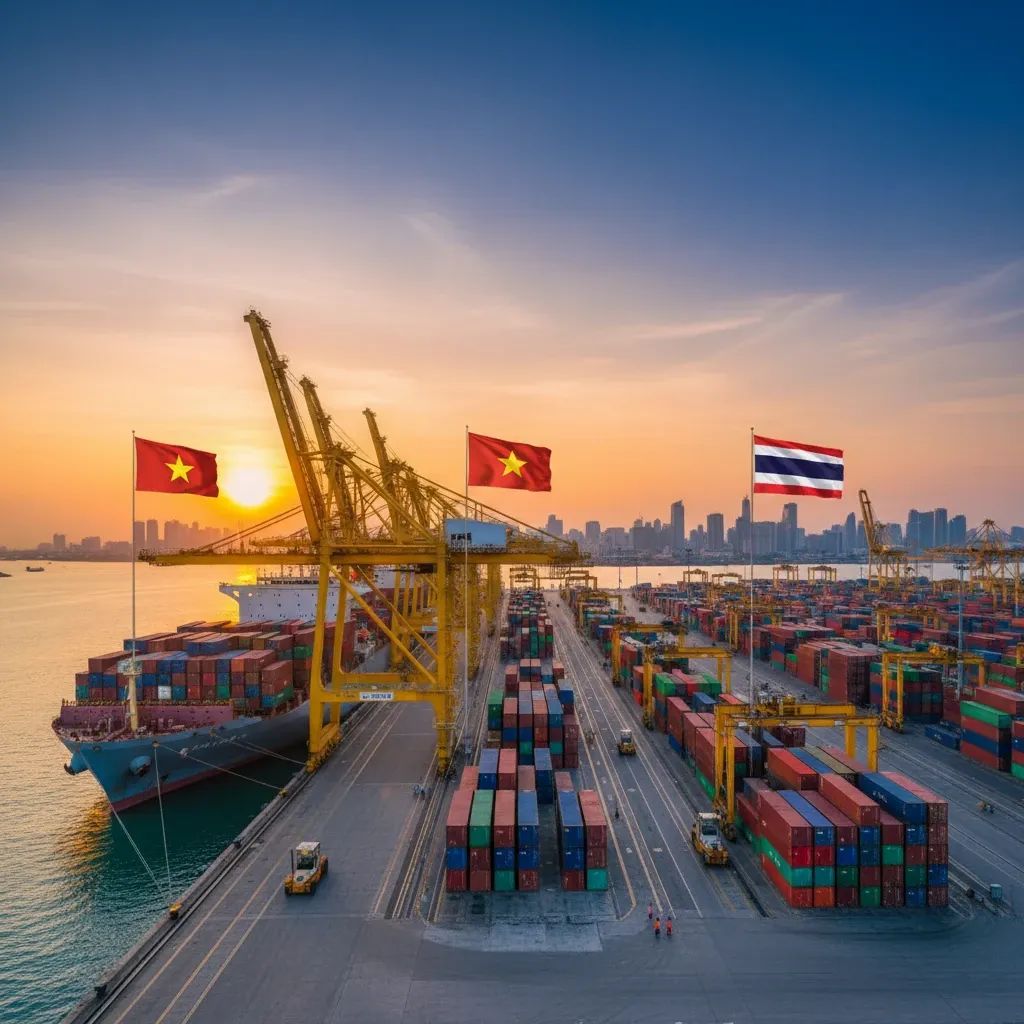
The Thailand Tourism Authority (TAT) framed the new 95-hectare complex as a regional breakthrough. Fifteen years of steady congestion—6 million annual travelers, 471.5 billion THB in cross-border trade—had taxed the old checkpoint beyond practical capacity. Malaysian day-trippers from Penang and Kedah often turned back after waiting two hours. Thai freight operators complained about unpredictable delays eating into supply chains. The facility was expensive but necessary: four additional lanes of cargo inspection, digital-only customs declarations, and parking for 300 vehicles simultaneously.
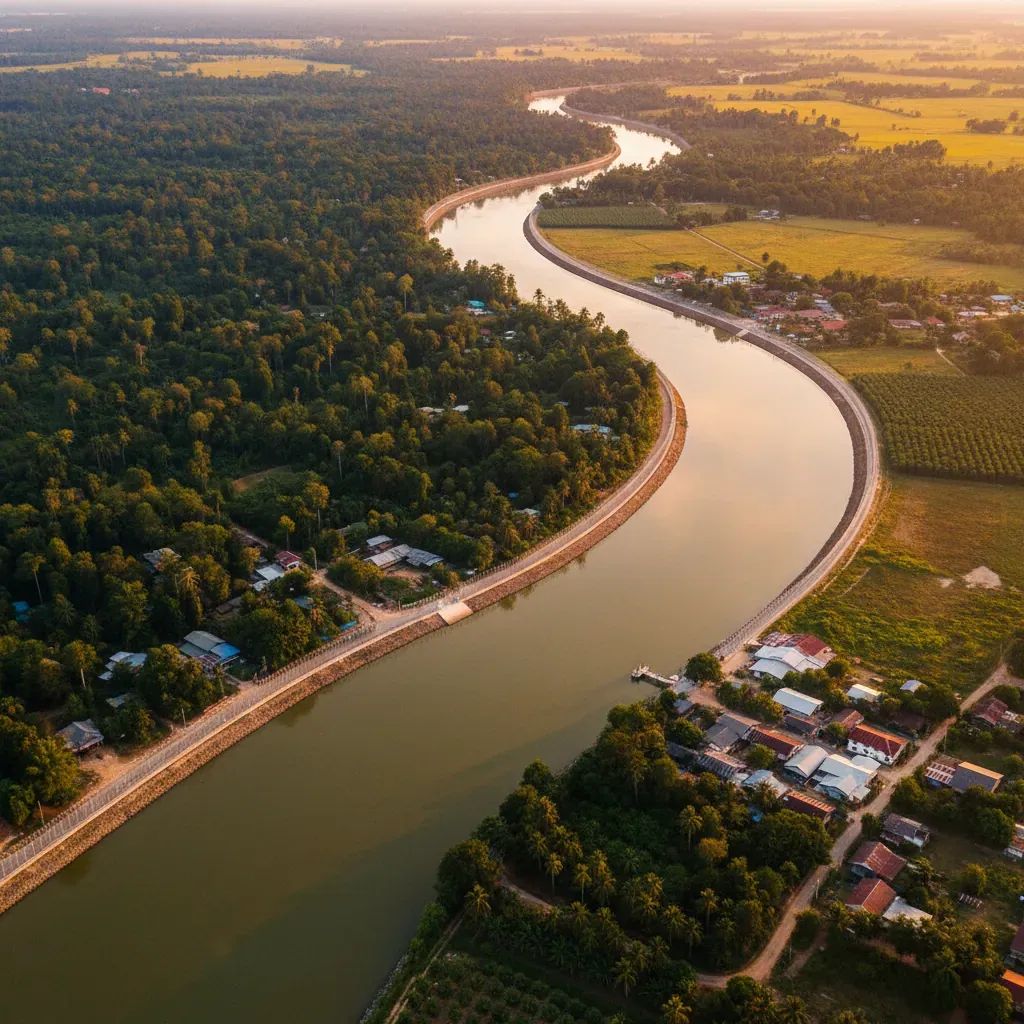
What the Sadao Customs House didn't explicitly plan for—or at least didn't publicly address beforehand—was the collateral damage to the commercial district that had thrived because of the old checkpoint's location. Ban Dan Nok, the cluster of guesthouses, fuel stations, restaurants, and currency exchange booths immediately adjacent to the old checkpoint, had become a self-contained border economy entirely dependent on serving waiting travelers. Truckers waiting for morning customs paperwork slept two nights a month in Dan Nok hotels. Malaysian motorcyclists grabbed breakfasts at family-run cafés. Small retailers profited from the simple fact that everyone passing through had nowhere else convenient to stop.
Then the government built a new highway 6 kilometers east that bypassed them entirely.
The Infrastructure Works, the Local Businesses Don't
Walking through Ban Dan Nok in mid-July offered a preview of economic dislocation most policy makers never witness directly. The 24-hour economy had begun to hollow out. A guesthouse operator reported a 70% drop in occupancy within the first week. Currency exchange booths, installed specifically to service the old checkpoint's daily flows, were closing. Cafés that had served the same trucker clientele for a decade now sat half-full during what should have been peak morning hours.
The old Sadao checkpoint itself remains staffed and operational—technically. But it now processes only pedestrians and small private vehicles, a fraction of its former volume. The designation sounds administrative until you translate it into commerce: the truck stops, the overnight lodging, the urgent-purchase category of retail, all vanished overnight when the primary customer base was rerouted elsewhere.
Local entrepreneurs argued their case to sympathetic media outlets and municipal officials with a simple proposition: run both checkpoints fully. Let the new facility handle tour buses and cargo trucks. Let Dan Nok continue serving the private cars and cross-border walkers who created decades of steady business. The logic was economically sound. It was also ignored.
Thailand's Ministry of Interior and customs authorities opted for a tiered model: new checkpoint for heavy vehicles and organized tourism, old checkpoint for residual traffic. What sounded efficient in an office memo translated to unemployment in a border town.
What This Means for Travelers and Traders
If you drive between Kuala Lumpur and Bangkok, the new checkpoint is unambiguously faster. Vehicle inspection queues that used to consume your entire lunch break now clear in 90 seconds, assuming you'd already completed the mandatory Thailand Digital Arrival Card (TDAC) online before crossing. There's no negotiating this requirement—it's been mandatory since May 2025—so anyone traveling should complete it in advance or risk joining a different queue altogether.
The facility operates 5 AM to 11 PM daily, which catches 99% of tourist and commercial traffic but excludes the after-midnight crowd. Night drivers heading south from Kuala Lumpur or north from Hat Yai toward Bangkok should plan accordingly. Late-night commercial operators sometimes finish customs just before the 11 PM closure, meaning their turnaround times are tighter than the official statistics suggest.
Tour operators based in Kuala Lumpur and George Town suddenly have a credible case for multi-day southern Thailand itineraries. The time savings at the border translate to real travel time recovered, which means a day trip to Hat Yai can now legitimately expand to include a sunset in Trang or a market morning in Phatthalung. The TAT Songkhla office is actively feeding this angle to Malaysian coach companies, promoting routes that distribute Malaysian spending across less-visited provinces rather than concentrating it all in Hat Yai's mall district and seafood restaurants.
For expat retirees and property owners with homes on both sides of the border, the streamlined process also reduces friction. There's genuine value in predictable 30-second crossings.
Who's Left Behind
What the efficiency gains obscure is the fact that Ban Dan Nok's economic model depended on inconvenience. When everyone was stuck in a two-hour queue, they bought something. They ate. They slept. Those captive-audience transactions built the town's entire service sector.
Remove the captive audience by offering a faster alternative 6 kilometers away, and the old model collapses. It's not complicated economics; it's just brutal.
The Sadao Customs House chief offered public assurances that Dan Nok remains "viable," a statement technically true but practically hollow. The town is still there. Traffic still passes through. But the quantum of traffic has shifted so dramatically that viability and profitability are different things.
Compensation frameworks—relocation assistance, business retraining funds, infrastructure investment to rebrand Dan Nok as a separate destination—haven't materialized. Government channels have been instructed to "publicize information" about the new routes and immigration procedures, which solves awareness but not solvency. The implicit assumption seems to be that improved regional throughput will eventually generate surplus wealth that trickles back to affected border communities, a timeline that offers no immediate help to a hotel owner watching his occupancy rate collapse.
The Bigger Regional Picture
The Sadao-Bukit Kayu Hitam corridor matters beyond Dan Nok's commercial district. It's Thailand's single most valuable land crossing by annual trade volume—471.5 billion THB in imports and exports, more than any other terrestrial gateway to Myanmar, Cambodia, or Laos. A faster checkpoint reduces logistics costs, encourages Malaysian companies to source goods from Thai suppliers, and makes the southern route competitive with maritime shipping for time-sensitive cargo.
On the tourism metric, Malaysia contributed 2.14 million arrivals in the first seven months of 2026 alone, putting the country on pace to deliver its full-year 4.8-million target. Road travel is Malaysia's preferred modality for regional tourism—shorter trips, family vehicles, no airfare. Border efficiency directly unlocks incremental Malaysian spending in Thai hotels, restaurants, and shopping districts. The TAT's math isn't unreasonable: every minute saved multiplies across millions of annual journeys.
But those aggregate gains accrue unequally. Hat Yai's hospitality sector and southern mall retailers capture the lion's share of the accelerated traffic. Dan Nok, the waypoint that historically benefited from friction, is left competing for residual trade without the structural advantages—proximity to the checkpoint, highway access—that built it in the first place.
What to Monitor Going Forward
The viability of the dual-checkpoint model will crystallize over the next 12 months. If Malaysian drivers genuinely continue using the old checkpoint for private cars and small purchases, Dan Nok could stabilize as a niche destination: day markets, cross-border remittance services, budget guesthouses targeting backpackers and budget travelers who have time to explore alternatives. If instead the new highway becomes the de facto choice for all categories of traffic due to inertia and convenience, the old checkpoint risks becoming a ghost terminal, and Dan Nok faces a genuine economic crisis.
The TAT promotional campaigns pushing Phatthalung, Trang, and Nakhon Si Thammarat to Malaysian tour groups are another important barometer. If those provinces report measurable spikes in Malaysian visitor numbers over the next six months, it signals that the border modernization is genuinely distributing tourism beyond Hat Yai. If not, the new checkpoint is just a faster route to the same destinations, offering efficiency without expansion.
Anyone living near Songkhla province's southern border should also track whether government agencies follow through on their stated intention to help affected businesses understand the new traffic patterns and adapt. Actual support programs—focused retraining for workers, infrastructure investment for alternative economic activities in Dan Nok—would signal genuine commitment to managing transition costs. Silence would suggest the investment calculus stopped at the checkpoint's efficiency metrics.
For residents and business operators in border communities, the lesson is direct: infrastructure upgrades that prioritize throughput often introduce winners and losers at the hyper-local level. Faster isn't always fairer.