
Thailand's government has intensified enforcement of existing firearm restrictions following a school shooting in Nonthaburi on August 7, 2026, where nine people including a 14-year-old shooter died. The Interior Ministry activated an around-the-clock reporting system and stationed police-administrative officer checkpoints nationwide, signaling that enforcement priorities have shifted toward weapons interdiction — impacting gun owners and law enforcement alike.
Why This Matters
• Public carry prohibition enforced: Licensed gun owners who possess Form Por 12 (public carry permits) that were suspended beginning February 20, 2026 — before the August tragedy — now face intensified enforcement. Firearms may be stored at home but cannot be removed for transport, including to shooting ranges or for relocation.
• New tip line 1567 goes live: Citizens can report suspected illegal weapons 24/7; all complaints trigger administrative investigation, with police opposing bail applications during investigation phases for checkpoint seizures.
• Ammunition tracking mechanisms: Retailers must log firearm sales with buyer ID cross-referenced against license databases. Carrying ammunition without the matching firearm may constitute a separate violation depending on quantity and intent.
• Mental health screening in new legislation: Deputy Prime Minister Pakorn Nilprapunt is drafting revised firearms law (to be completed 60 days from August 7) mandating psychological evaluations for all firearm license applicants, with permits renewable every three years instead of indefinitely.
The enforcement escalation followed the Thepsirintorn school shooting where a 14-year-old retrieved his grandfather's 9mm pistol stored at a residential location, brought it to campus, and killed five staff members, two adults, and himself. Thailand recorded its second such tragedy in 2026, prompting the Prime Minister to order accelerated drafting of a firearms bill targeting both criminal penalties and administrative storage requirements.
The August 7 Tragedy: Context for Intensified Enforcement
The Thepsirintorn school shooting exposed critical gaps in residential firearm storage oversight. The teenager retrieved his grandfather's 9mm from a home safe, smuggled it to campus in his backpack, and fired into staff members before turning the weapon on himself. Investigators discovered online searches for footage of mass shootings in the United States days before the incident. His school peers reported he spoke repeatedly about academic pressure and strict discipline at home.
The incident occurred roughly six months after a similar shooting at a school in February 2026. The recurrence within one calendar year transformed what officials previously dismissed as isolated incidents into a pattern requiring systemic intervention.
What's Restricted: The Existing Framework Plus Enhanced Enforcement
Form Por 12 (public carry permit) suspension began February 20, 2026, months before the August shooting. Prime Minister Anutin Charnvirakul ordered a one-year freeze on issuing this category plus Form Por 3 (purchase permits) and Form Por 4 (possession and use licenses). Existing licensed gun owners cannot renew these permits.
The Interior Ministry has clarified that legally registered firearms stored at residences "may not be removed under any circumstance" — a principle established before August but now subject to intensified enforcement through checkpoints and inspections. Licensed sport shooters with existing Form Por 12 permits can no longer transport firearms to ranges. All weapons must be deposited at licensed facilities, with ammunition purchased and consumed on-site.
Ministerial security details and government officials received notice: aides or bodyguards carrying firearms will be prosecuted without exemption. This signals that security credentials do not override the restrictions.
Enforcement Infrastructure Embedded Nationwide
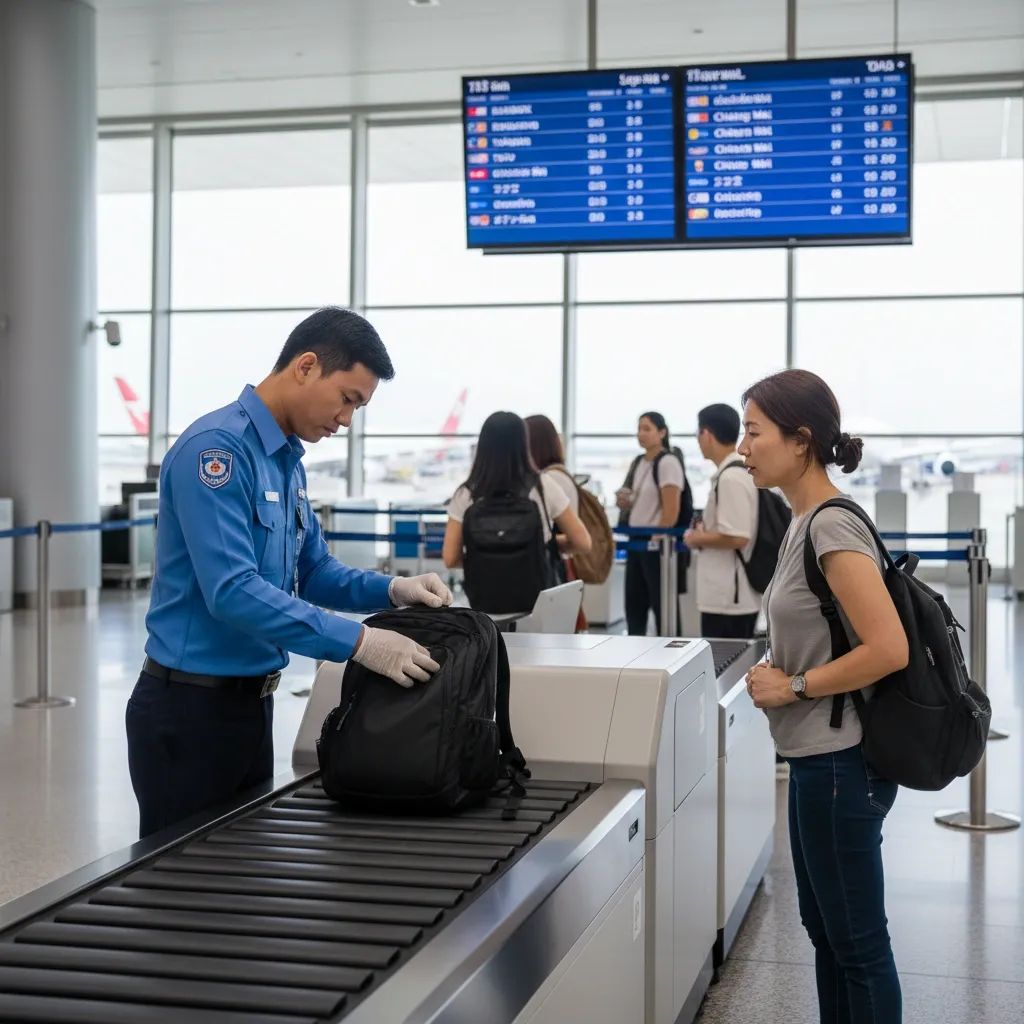
Thailand Royal Police and provincial administrative officials jointly operate checkpoints 24 hours daily on highways, in urban districts, and near public gatherings. Officers stop vehicles based on risk assessment and conduct vehicle searches in locked compartments and trunk spaces where firearms are typically concealed.
In one documented case, officers seized a CZ pistol and 30 rounds from a BMW driver in Phuket on August 10. The suspect lacked both a possession license and a carry permit; he was detained pending judicial review.
The checkpoint network differs from temporary crackdowns. Interior Ministry officials embedded enforcement into permanent administrative duties rather than deploying short-term task forces. This structural change aims to sustain intensity beyond typical campaign cycles. However, rural districts with limited staffing raise questions about training consistency.
Residents who encounter checkpoints should expect vehicle searches without advance notice. Cooperation is mandatory. Police may detain suspects pending judicial review within 48 hours — a constitutional safeguard, though civil liberties groups note that warrantless roadblock searches remain legally contestable.
The 1567 Hotline: Civilian Reporting System
Thailand's Damrongtham Centre operates the 1567 tip line continuously, accepting reports of suspected illegal firearms or public carrying. Callers provide location, physical descriptions, vehicle information, and observation times. Anonymity is promised, though Thai whistleblower protections remain limited compared to Western jurisdictions.
Administrative officers prioritize tips flagged as immediate safety risks — reports at public events, schools, or crowded markets trigger same-day investigation. Lower-priority reports queue for standard processing within 72 hours. Once confirmed, violations proceed to prosecution with police opposing bail during investigation phases.
The system shifts enforcement from reactive police work to distributed civilian reporting. Formal data on tip volume and outcome rates has not been released publicly.
Mental Health Screening and Upcoming Legislation
Deputy Prime Minister Pakorn Nilprapunt has been tasked with drafting revised firearms law within 60 days of August 7. The bill will introduce mandatory psychological evaluations for all applicants — both new and renewing license holders. Testing will assess stability, aggression indicators, and family history of violence.
License renewal cycles will shift from indefinite validity to three-year terms under Form Por 4. This periodic review creates administrative touchpoints where behavioral red flags can trigger investigation or non-renewal. Mental health data will integrate with police records and court proceedings.
Ammunition tracking represents another mechanism under consideration. Licensed retailers would document sales with buyer ID, license number, quantity, and caliber. Systems would flag bulk purchases or unusual patterns for administrative review.
Amnesty for Unregistered Weapons
The government is designing a limited-time surrender program for residents possessing unregistered firearms, inherited weapons that cannot be legally transferred, or pre-registration–era guns. The amnesty window — duration not yet finalized — would allow owners to hand over weapons to district offices without prosecution.
All 76 provinces will operate surrender centers staffed by administrative officials and police. No questions asked; no penalties applied during the amnesty period. After the deadline, authorities will conduct systematic raids targeting known storage locations and rural areas. Failure to surrender before the cutoff triggers prosecution.
Informal estimates suggest thousands of World War II–era rifles, antique hunting arms, and homemade firearms circulate in rural Thailand, particularly the northern and northeastern regions. Rural residents unfamiliar with government procedures may ignore the amnesty opportunity.
The amnesty also applies to firearms inherited but not legally transferred due to bureaucratic barriers. A widow who inherited her deceased husband's registered pistol but cannot document title transfer can surrender the weapon without liability.
What Happens at Home Stays at Home
Licensed firearms kept at residences must be stored in locked cabinets or safes with ammunition stored separately. The home is a restricted zone where weapons remain secured, unloaded, and inaccessible. Household members should monitor gun-owning relatives displaying aggressive or erratic behavior; authorities pledge to investigate reports of weapons in homes where occupants have domestic violence histories.
This domestic confinement model parallels Japan's framework, where gun owners must submit to annual surprise home inspections. Thailand's approach lacks formal inspection apparatus but mirrors the legal principle — home ownership does not justify immediate availability for use.
Impact on Expats, Diplomats, and Security Personnel
Foreign nationals holding Thai work permits or long-term residency visas are subject to identical restrictions. Expatriates cannot currently apply for new firearm licenses due to the suspension of Form Por 3 and Por 4. Those who already possess registered weapons face the same restrictions: firearms must remain at declared residences with no transport permitted.
Moving internationally while retaining a Thai-registered firearm has become procedurally complex. Departure requires notifying provincial police and obtaining written authorization to transport the weapon to a border port for export. Failure to secure advance permission constitutes violation.
Thailand's Ministry of Foreign Affairs has not issued formal guidance for diplomatic personnel. International legal experts anticipate that embassy security staff will negotiate exemptions under the Vienna Convention on Diplomatic Relations. However, bilateral negotiations remain preliminary.
Expatriate communities accustomed to licensed civilian carry in their home countries face a significant transition. Thailand now ranks alongside Japan, Singapore, and South Korea in severity of public carry restriction.
How This Compares Regionally
Japan has maintained a near-total civilian handgun ban since 1958; shotguns and air rifles require annual training and home inspection. The country recorded one firearm homicide in 2024. Singapore imposes severe mandatory penalties for illegal possession. South Korea strictly regulates hunting rifles and prohibits handguns entirely. China bans civilian ownership outright.
Thailand's approach now synthesizes elements from these models. Like Japan, it restricts home storage and mandates periodic review. The Philippines remains the regional outlier, permitting licensed carry with psychological testing requirements. Cambodia prohibits civilian ownership as a legacy of Khmer Rouge disarmament campaigns.
Thailand's intensified enforcement framework positions it as one of Asia's strictest jurisdictions regarding firearm access.
Practical Steps for Current Gun Owners
Immediately secure your firearm. Use a locked safe or cabinet separate from ammunition storage. Document serial numbers, license details, and storage conditions with photographs for records. Do not attempt transport for any reason without advance written authorization from your provincial police headquarters.
Check license status and expiration dates. If your Form Por 3, Por 4, or Por 12 is due for renewal, applications will be rejected during the suspension period. Some owners have voluntarily surrendered licenses to avoid confusion.
Cooperate fully with inspections. If administrative officials conduct compliance verification visits, permit entry without resistance. Request a signed receipt documenting items examined. Photographs of the inspection protect against later disputes.
Monitor official announcements. The Thailand Government Gazette will publish amnesty details and deadlines once finalized. District offices will distribute surrender forms; do not mail or courier weapons to police stations, as this constitutes unauthorized transport — a criminal offense.
Report illegal weapons. If acquaintances possess unregistered firearms or violate storage rules, calling 1567 initiates investigation. Provide location, physical description of weapon, and observation details.
Sustaining Enforcement or Fading Precedent?
Thailand's previous crackdowns typically peaked within months then declined as media attention waned. The government attributes this pattern to reliance on temporary task forces rather than structural institutional change.
The current effort attempts to embed enforcement into permanent administrative duties, specifically assigning district offices to participate in checkpoints continuously. If sustained, this could establish lasting cultural shifts regarding firearm norms. However, Thailand's 70 million population and resource constraints in rural provinces raise questions about long-term intensity.
Civil liberties organizations have raised concerns about warrantless checkpoint searches. The Interior Ministry counters that roadblocks comply with existing public safety statutes and seizures require judicial review within 48 hours.
Gun owners face a compressed choice: comply with restrictions, surrender weapons during the amnesty, or risk prosecution and asset forfeiture. For collectors, farmers, and sport shooting enthusiasts, the absence of exemptions has generated private frustration.
The Threshold Moment
Thailand's firearm enforcement has crossed a permanent institutional threshold. The August 7 school shooting transformed abstract criminological debate into immediate parental concern. Whether enforcement survives political cycles remains uncertain. But the legal architecture — the frozen permits, the tip line, the mental health screening provisions, and the amended bill framework — now exists.
For residents of Thailand, the practical implication is clear: assume any firearm outside the home is subject to seizure, report suspected violations to authorities, and recognize that police priorities have fundamentally reorganized around weapons interdiction. The country has moved decisively toward East Asian firearm control norms, shifting from decades of informal tolerance in the region.


