
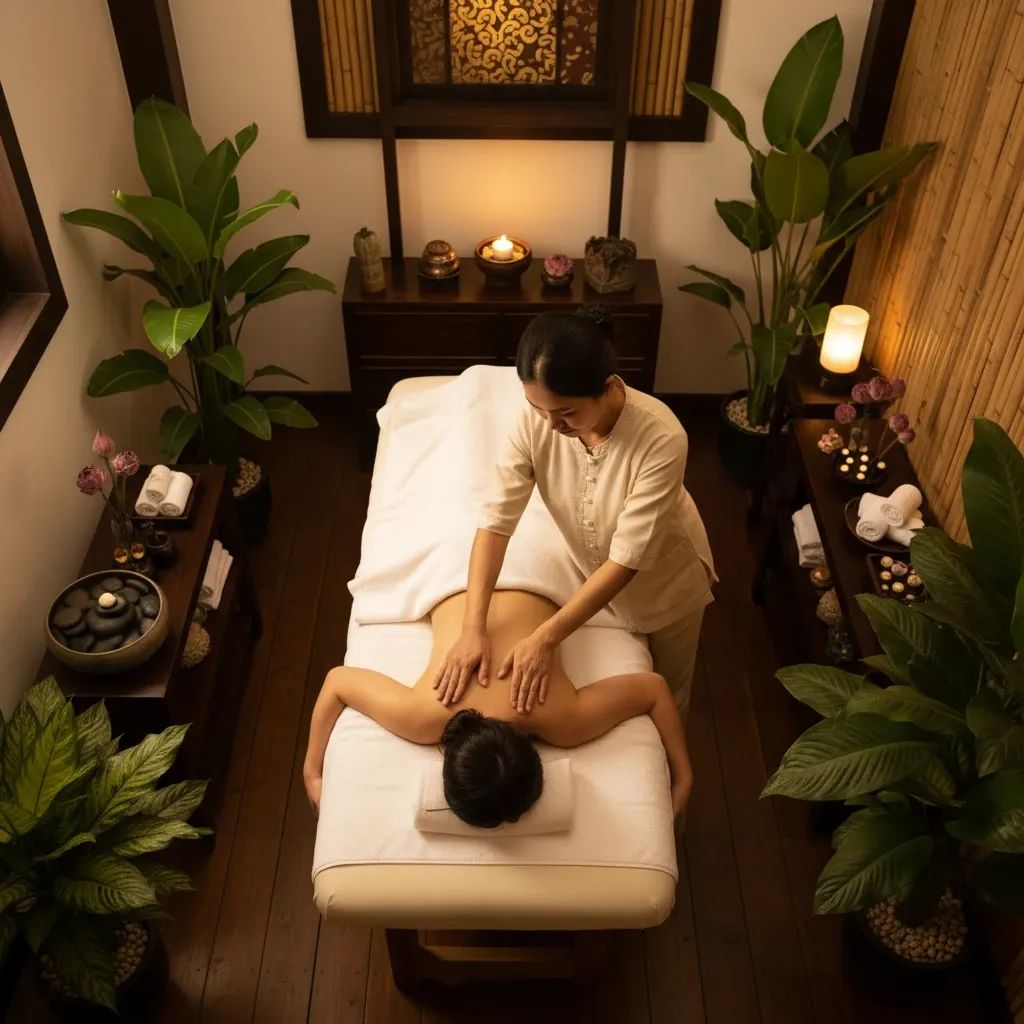
Thailand is positioning itself to capture a growing slice of an international wellness market worth $1.35 trillion by 2028. A key moment arrives on April 23 when the Thai wellness sector brings together international and local providers for structured business matching—connecting 74 foreign operators with 68 Thai providers to unlock pathways to contracts, technology transfers, and co-marketing agreements currently inaccessible to most local enterprises.
The April 23 Business-Matching Event: Key Details
The event structure is straightforward: international wellness-tourism operators sit in facilitated sessions with Thai providers across categories spanning spa brands, preventive-medicine clinics, alternative-therapy practitioners, integrated wellness resorts, and diagnostic centers.
Foreign participants typically represent distribution networks, corporate wellness budgets, insurance-funded medical-travel programs, and tour-operator alliances. For Thai entrepreneurs without established international reach, this represents direct access to channels that might otherwise require years of networking or expensive intermediaries. Conversely, international operators gain entry to suppliers offering authentic Thai experiences and professional execution at cost structures impossible to replicate in Western markets.
Why This Matters for Thailand's Market Position
• Thailand's wellness market generates $40 billion annually today, with government targets pushing medical and preventive tourism revenue to ฿125 billion within 2026.
• Health infrastructure expands beyond Bangkok and Phuket with 10 thematic routes spanning 37 distinct wellness pathways across provincial cities—meaning opportunities for career growth and service upgrades nationwide.
• A 14.6% annual growth projection through 2033 positions wellness services alongside—and potentially ahead of—traditional beach tourism in revenue contribution.
• The government has announced a 10-year strategy through 2034 aiming to position Thailand among the world's top five wellness destinations by 2027, backed by $2 billion in coordinated public and private capital.
Thailand's Competitive Standing
Thailand enters 2026 as one of Asia's leading wellness destinations, but competitive pressure is intensifying. Between 2023 and 2024, Thailand's wellness tourism expanded at 36.4%—impressive until you note that the United Arab Emirates and India grew faster. Within Asia, competitors continue raising benchmarks. Japan fuses hot spring culture with Zen meditation traditions. China's four-city cluster of Shanghai, Shenzhen, Beijing, and Guangzhou has established strong global positioning. Indonesia's Bali has built premium reputation in yoga and holistic-therapy markets. Even smaller players—Laos and the Philippines—have gained international recognition by positioning themselves strategically.
Thailand currently ranks 24th globally in the total wellness economy. The government recognizes this competitive reality and has structured the April 23 business-matching event as one visible component of a larger strategy encompassing provincial infrastructure development, visa pathway innovation, and digital platform construction.
What Cost-Benefit Reality Means for Patients and Investors
The deeper appeal lies in numbers that represent Thailand's strongest competitive advantage. Sixty-one Thai hospitals carry Joint Commission International accreditation—the global benchmark—while treatment costs run 50-70% below equivalent Western procedures. A cardiac bypass, advanced joint replacement, or cosmetic procedure that costs $25,000 in the United States or €22,000 in Western Europe typically runs $8,000–12,000 in Thailand.
For expats and retirees establishing residency in Thailand, this cost advantage drives healthcare decisions. Preventive wellness programming, age-management therapies, and access to certified providers at rational prices anchor much of the country's appeal for long-term residents planning their later years. Preventive wellness infrastructure is gradually decentralizing into secondary cities, meaning people living outside Bangkok increasingly gain access to quality services closer to home—a practical benefit in a country where regional medical variation has traditionally favored the capital.
For foreign investors, the proposition differs but aligns. A longevity retreat combining DNA sequencing, personalized nutrition, herbal medicine, and Buddhist mindfulness instruction costs $12,000–15,000 in Switzerland or California. In Thailand, comparable programs cost $2,500–3,500, often with superior hospitality and cultural immersion. That margin reflects sustainable cost structures, not corner-cutting, since wage structures, land costs, and supply chains support lower overheads without compromising quality.
Three-Tier Framework Reshapes Market Offerings
The Thailand Health Excellence 2026 framework categorizes offerings into three distinct tiers: medical excellence (advanced surgical and specialist procedures), science-based wellness (preventive medicine, longevity protocols, diagnostics), and science-based local wisdom (research-validated traditional Thai medicine, herbal therapy). This taxonomy deliberately extends beyond Bangkok.
The framework aims to distribute wellness infrastructure throughout the country. Under this approach, secondary cities including Chiang Rai, Khon Kaen, Krabi, and Ubon Ratchathani are receiving attention for targeted infrastructure investment. This decentralization creates employment opportunities in spa operations, traditional-medicine work, and healthcare support roles in provincial areas. For investors, it opens possibilities for establishing wellness facilities in secondary markets where operational costs remain lower than in Bangkok.
Two Dominant Market Trends
Longevity retreats have transitioned from niche offering to mainstream expectation. These programs combine cutting-edge DNA sequencing and personalized lifestyle design with traditional Thai therapeutics—forest bathing, herbal oil massage, nutritional coaching. Affluent individuals from developed nations increasingly view health optimization as a status marker and personal investment, not remedial intervention.
Digital detox programs address a parallel market trend: global concern over social-media dependence and constant connectivity. These programs offer structured offline immersion in natural settings—Thai beaches, forest monasteries, mountain retreats—with guided meditation rooted in Buddhist practice.
Both trends position Thailand's natural assets—tropical landscapes, Buddhist heritage, traditional knowledge systems—as essential infrastructure for premium wellness offerings.
Digital and Regulatory Infrastructure Development
Government is simultaneously building digital ecosystems to reduce operational friction. New platforms and coordination systems will aggregate operator directories and facilitate real-time booking and multi-stop itinerary coordination—solving persistent pain points where international patients struggle to sequence treatments across multiple facilities.
Regulatory oversight is expanding to establish service standards across wellness businesses nationwide. By creating consistent provider standards, the framework builds traveler confidence and supports premium pricing throughout the country, particularly important in secondary cities where service protocols may lag Bangkok standards.
Practical Impact for Residents and Business Operators
For people living in Thailand, the consequences are tangible. Hospital networks will expand accessibility. Service standards across wellness businesses—spas, fitness centers, nutritional counseling—will improve as international competition and regulatory oversight intensify. Career pathways in hospitality, medical administration, and alternative medicine will expand. Healthcare coordination tools will ease daily life for expats managing chronic conditions or pursuing preventive care.
For Thai entrepreneurs in healthcare and hospitality, competitive pressure rises alongside opportunity. Those who invest in staff training, adopt digital tools, and align with international standards will capture growing market share. Provincial businesses that connect to distribution networks gain access to customers they couldn't reach independently.
The Broader Strategic Context
Thailand's government recognizes that beach tourism, while resilient, faces structural constraints: climate vulnerability, seasonal concentration, margin compression, and overcrowding. Wellness tourism, by contrast, commands premium pricing, generates year-round visitation, attracts higher-spending demographics, and creates durable professional employment.
The April 23 business-matching event represents one visible moment within a larger framework of 10-year strategy, provincial infrastructure development, and international trade facilitation. Success will be measured by whether Thai wellness providers capture sustained international market share over time, whether secondary cities mature as recognized wellness destinations, and whether visitor spending increases measurably. This represents deliberate economic diversification designed to position Thailand for long-term prosperity beyond seasonal beach tourism.


