
The Thailand Tourism and Sports Office of Chonburi Province is staging a four-day culinary showcase on Pattaya Beach in early May 2026, positioning the Eastern Economic Corridor as a food-tourism magnet and injecting cash into a regional economy that's pivoting from industrial expansion to lifestyle hospitality.
Why This Matters
• Direct revenue impact: The "EEC Colors" festival from May 1–4, 2026 will cluster more than 120 food and craft vendors along the central beachfront, starting at the Hard Rock Hotel Pattaya.
• Talent meets tradition: A headline "Food Runway" contest on May 2 turns signature dishes from Chachoengsao, Chonburi, and Rayong into wearable fashion, merging gastronomy with performance art.
• Free nightly concerts: Four headliners—YOURMOOD, HERS, Kantong Thung-ngern, and Planing Tem Ban—anchor evening programming, extending visitor dwell time and spend.
• EEC soft-power play: The event is the 15th edition under the "Colors of EEC" banner and directly supports the corridor's shift from heavy industry to a ฿1.35 trillion development zone targeting financial services, smart cities, and lifestyle tourism.
A Night Market with Strategic Intent
On April 21, Ampai Sakdanukuljit Sliwinski, director of the Chonburi Tourism and Sports Office, convened agency heads, private-sector operators, and local administrators at Pattaya City Hall's Tappraya Room to synchronize logistics. Damrongkiat Pinijkarn, deputy mayor of Pattaya, confirmed the city's full operational support—venue coordination, traffic management, security deployment, and inter-agency liaison—underscoring the municipality's view that the festival is a test case for blending public infrastructure with commercial activation.
The festival's "Food Runway" tagline—"From Local Plate to Fashion Statement"—signals an intentional evolution. Rather than replicating standard night-market formats, organizers are staging a competition on May 2 in which designers translate iconic dishes into couture garments that models will wear on an actual catwalk. The move borrows from European gastronomy festivals, particularly the Basque Country's culinary theater, where food becomes performance and regional identity gets amplified through spectacle.
Economic Context: Chonburi's Post-Industrial Pivot
The timing aligns with broader EEC ambitions. The Eastern Economic Corridor, encompassing Chachoengsao, Chonburi, and Rayong, is absorbing ฿1.35 trillion in infrastructure and private investment through 2027, with 87.5% coming from private capital and the remainder split between state enterprises and public-private partnerships. Within that envelope, Chonburi is prioritizing tourism and real-estate development to offset volatility in traditional export manufacturing.
Recent data from the Chonburi Tourism Federation indicate that pre-COVID culinary tourism accounted for 20% of Thailand's total tourism revenue, or roughly ฿456 billion annually. The federation projects that festivals like EEC Colors can recapture domestic and near-market travelers—particularly from ASEAN capitals and greater Bangkok—who substitute for long-haul arrivals still constrained by ticket pricing and geopolitical uncertainty.
A parallel mega-project, the Global Entertainment & Lifestyle Hub, is slated for Chonburi with a ฿700 billion price tag and a design capacity of 40 million visitors per year. That development, which excludes casino components but includes large-scale theme parks, sports complexes, and retail zones, will reshape the province's tourism profile. The EEC Colors festival serves as a proof-of-concept for integrated events that can anchor visitor flows once the hub is operational.
How the Festival Translates into Local Revenue
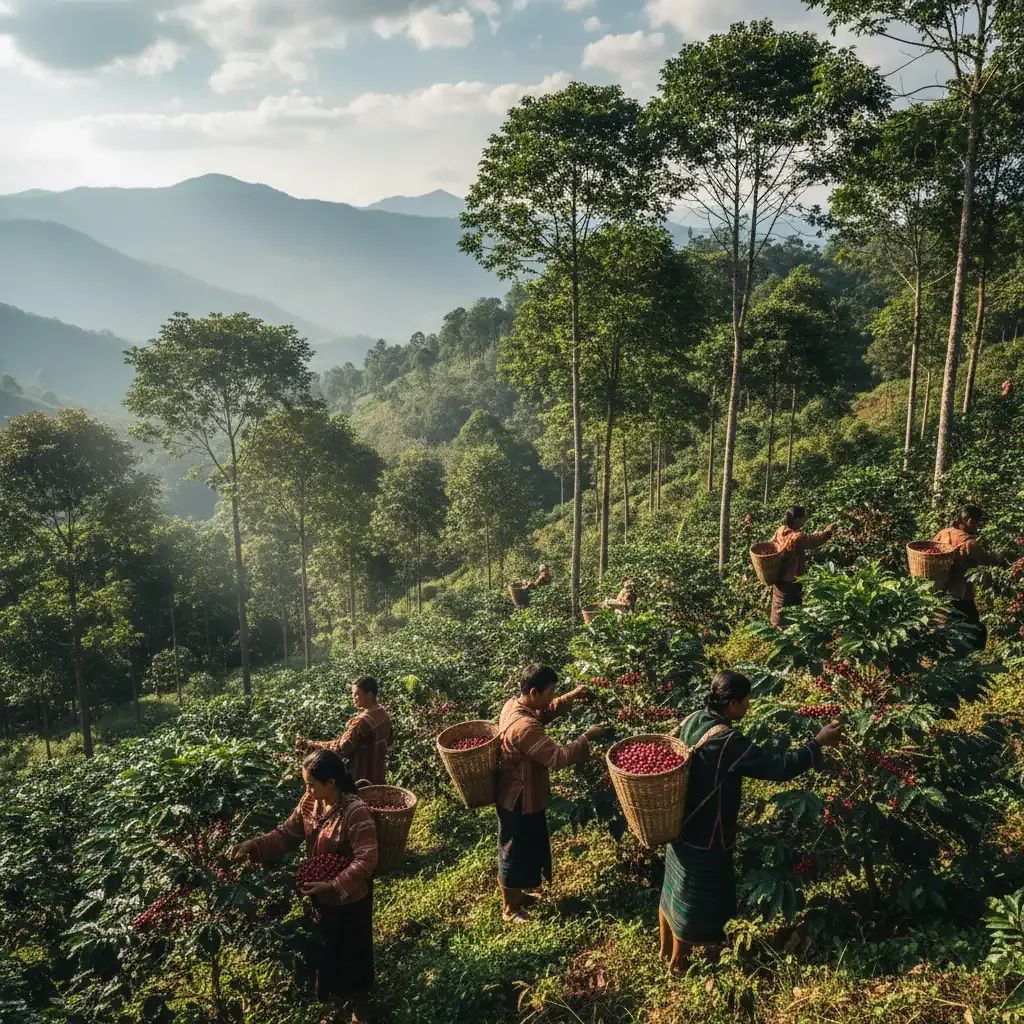
The practical mechanics matter for residents and small operators. More than 120 booths will represent the three provinces, offering everything from Chachoengsao's fermented fish pastes to Rayong's tropical-fruit desserts. Each vendor pays a nominal registration fee, but the real economic lift comes from foot traffic: organizers expect tens of thousands of attendees over four days, translating to meal purchases, merchandise sales, and spillover demand for nearby hotels and transport services.
Nightly concerts extend the earning window. YOURMOOD kicks off May 1, HERS performs May 2, Kantong Thung-ngern takes the stage May 3, and Planing Tem Ban closes May 4. Each act draws a distinct demographic—indie-pop fans, vintage Thai-folk enthusiasts, contemporary country listeners—ensuring repeat visits and broader demographic reach.
For Pattaya's hospitality sector, the festival lands during a strategic shoulder period. May sits between the Songkran exodus in mid-April and the rainy-season lull that typically starts in June. Hoteliers report that even a modest 15–20% occupancy bump during these four days can stabilize monthly cash flow, especially for mid-tier properties competing with newly opened condotels and serviced apartments.
The Food-Runway Contest: Substance or Stunt?
The May 2 fashion segment is the festival's wildcard. Contestants must design and construct garments inspired by signature dishes—think turmeric-dyed silk echoing khao mok gai, or appliqué prawns referencing goong pad phong karee. Models wear the pieces on a beachfront runway, and judges score on creativity, cultural fidelity, and craftsmanship.
Critics in Thailand's culinary community question whether the spectacle risks trivializing regional food heritage. Proponents counter that the format generates social-media velocity—images of a model in a dress evoking spicy papaya salad spread faster than a standard vendor photo—and that visibility drives subsequent demand for the actual dishes. The Basque Country's pintxos culture, which blends visual artistry with bite-sized gastronomy, offers a precedent: San Sebastián turned small-plate presentation into a tourism magnet, attracting millions annually to a city of fewer than 200,000 residents.
Thailand's own culinary reputation has accelerated significantly. The Michelin Guide Thailand, which launched in 2018, saw the number of recognized establishments climb from 98 in 2018 to 462 by 2025. Bangkok ranked second globally in Time Out's 2025 "World's Best Food Cities" list, trailing only New Orleans. The EEC Colors festival aims to extend that acclaim beyond the capital, positioning the eastern seaboard as a distinct gastronomic zone rather than a mere industrial appendage.
What This Means for Residents
For small-scale producers and community enterprises, the festival offers a rare platform. Provincial governments traditionally struggle to channel tourism revenue to rural suppliers; large hotels and tour operators capture the lion's share. By reserving booth slots for community cooperatives—artisan fish-sauce makers, organic fruit growers, handwoven-textile collectives—the event creates a direct sales channel and brand exposure that can persist beyond the four-day window.
For urban residents and expats in greater Pattaya, the festival adds a cultural amenity that the city has historically lacked. Pattaya's reputation tilts heavily toward nightlife and beach clubs; a family-friendly, heritage-focused event diversifies the social calendar and can attract domestic tourists who previously bypassed the city in favor of Hua Hin or Koh Samet.
For investors and property developers, the festival is a signal. The Thailand Cabinet's broader EEC strategy includes the EECiti smart-city project in Bang Lamung District, covering 14,619 rai with an estimated ฿1.34 trillion investment through 2027. Phase one (2025–2030) spans 5,795 rai and carries a ฿534.9 billion budget, funded partly by a ฿5 billion allocation from the 2024 central budget for land acquisition. Events like EEC Colors test whether the corridor can sustain mixed-use, lifestyle-oriented development rather than remaining a pure industrial zone.
Logistics and Public-Safety Coordination
Deputy Mayor Damrongkiat's April 21 briefing emphasized site zoning, traffic flow, and security protocols. Pattaya Beach Road will see partial lane closures from 6 p.m. to midnight each evening, with shuttle buses running between satellite parking at Bali Hai Pier and the festival grounds. The Thailand Royal Police's Tourist Division will deploy officers in plain clothes to monitor crowd density and respond to disputes, while the Pattaya City Disaster Prevention Office stations medical tents at 200-meter intervals.
Food-safety inspections began April 15, with the Chonburi Public Health Office pre-certifying vendors and mandating daily ice-supply logs. The move follows a 2023 incident at a provincial food fair where inadequate refrigeration led to dozens of gastroenteritis cases. Organizers are keenly aware that a single food-poisoning outbreak could erase months of promotional investment and damage the EEC's reputation as a premium destination.
Beyond the Festival: Long-Term Gastronomy Strategy
The Thailand Tourism Authority has championed food tourism under its "5 F" framework—Food, Film, Fashion, Fighting, and Festival—viewing culinary heritage as a core soft-power asset. Pre-pandemic, food-related spending by foreign visitors reached ฿282 billion, with domestic travelers adding ฿174 billion. The EEC Colors model, if replicated across provinces, could decentralize that revenue and reduce Bangkok's outsized share.
International precedents matter. New Orleans, which topped Time Out's 2025 ranking, built its food-tourism economy on a mix of street vendors, high-end Creole restaurants, and annual events like the Jazz & Heritage Festival that fold cuisine into broader cultural programming. Tuscany leveraged agriturismi—working farms that host guests—to distribute tourism euros across rural estates rather than concentrating them in Florence. The EEC strategy borrows elements from both: community-level participation combined with headline entertainment to anchor media coverage.
Measuring Success
Organizers have set provisional benchmarks: 50,000 total attendees over four days, ฿30 million in vendor sales, and 15% hotel-occupancy lift in central Pattaya. Social-media metrics—hashtag volume, influencer engagement—will inform whether the "Food Runway" concept merits expansion to other EEC provinces. If the festival meets targets, the Chonburi Tourism Office plans to formalize it as an annual fixture, rotating the fashion-contest theme among the three provinces' signature dishes.
For the moment, the event remains a calculated experiment: Can a mid-sized coastal city known for its bar strips and Russian-tourist enclaves reposition itself as a culinary destination? The answer will hinge less on the quality of the food—Thai cuisine's global appeal is established—and more on the execution of integrated programming that gives visitors a reason to stay overnight, explore neighboring districts, and return for future editions.
The broader EEC project, with its ฿1.35 trillion investment envelope and ambition to become a regional financial and lifestyle hub, depends on precisely this kind of incremental confidence-building. Infrastructure attracts capital, but culture retains people. The four nights on Pattaya Beach in May 2026 are a low-stakes, high-visibility test of whether the Eastern Economic Corridor can deliver both.


