
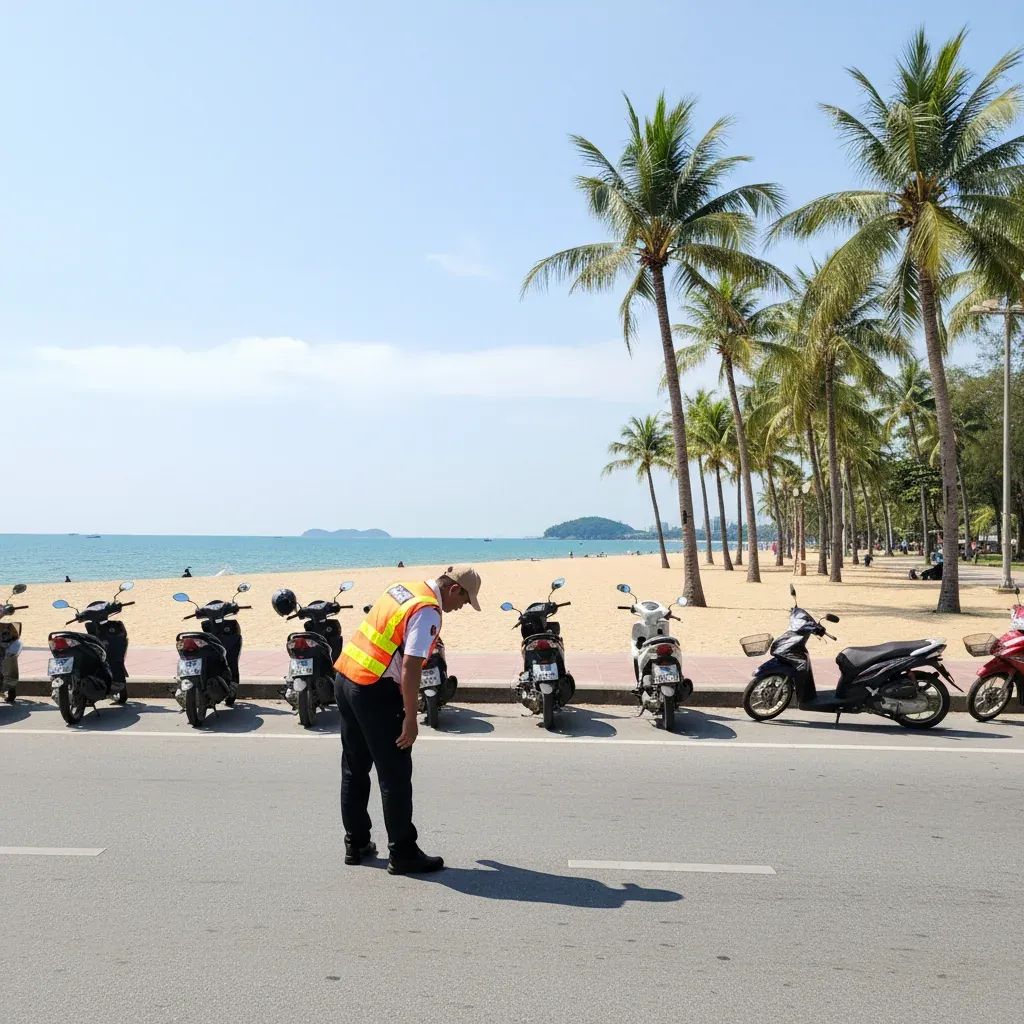
The Pattaya Municipal Authority and sanitation crews are battling a persistent litter epidemic along the city's beachfront, as visitors continue to abandon food wrappers, plastic bottles, and takeaway containers directly in the sand. The issue has sparked mounting frustration among residents and threatens the coastal city's tourism reputation.
Why This Matters
• Tourism image at stake: Litter accumulation damages Pattaya's appeal to international tourists, potentially affecting hotel occupancy and local business revenue.
• Fines increased: Beach littering now carries penalties up to ฿2,000, while smoking on the sand can result in fines up to ฿5,000.
• Marine ecosystem threat: Floating debris poses direct hazards to marine life and water quality along the Gulf of Thailand coastline.
• Resident action: Local communities are demanding stricter enforcement, loudspeaker announcements at events, and potential restrictions on bringing outside food during peak periods.
The Scale of the Problem
Cleaning teams deployed along Pattaya Beach and the adjacent Jomtien Beach have reported removing substantial quantities of waste daily, including food packaging, disposable cups, cigarette butts, and glass shards. The problem intensifies dramatically after large public gatherings, with shorelines becoming blanketed with single-use plastics and abandoned picnic equipment.
During peak seasons, cleanup crews encounter styrofoam boxes, wooden fragments, and plastic bottles mixed among wrappers. This debris discourages swimmers and reduces foot traffic to beachfront vendors.
For context, Pattaya as a municipality generated approximately 850 tons of waste daily before the pandemic. Nationally, Thailand produces roughly 27.8M tons of solid waste annually, with 12-13% consisting of plastic materials. Despite collection efforts, an estimated 428,000 tons of plastic waste still enters the environment each year due to gaps in infrastructure and disposal practices.
What This Means for Residents
The Pattaya Municipal Authority has intensified enforcement measures and infrastructure improvements in response to public outcry. Trash bins have been positioned at strategic intervals along main beach stretches, and authorities have activated surveillance systems to identify offenders. Residents can report violations via the municipal hotline (1337) or the mayor's official channels.
The penalty structure has been revised upward to act as a deterrent. General littering violations carry fines up to ฿2,000 (equivalent to roughly a week's groceries for an average household). Beach smoking offenses can result in penalties reaching ฿5,000. More severe infractions, such as untreated sewage discharge into coastal waters, carry corporate fines up to ฿100,000 and potential jail time.
For residents and long-term visitors, the situation presents both an environmental concern and a quality-of-life issue. Many have expressed anger on social media over what they perceive as a lack of personal responsibility among certain visitor demographics.
Government Response and Infrastructure Gaps
The Thailand Ministry of Natural Resources and Environment has backed a national Roadmap on Plastic Waste Management targeting 100% recycling of plastic waste by 2030 and a halt to plastic waste imports by 2025. Locally, Pattaya has aligned with this agenda by promoting low-carbon tourism initiatives, including waste segregation campaigns and restrictions on single-use plastics by some hospitality businesses.
Community-based cleanup efforts have mobilized volunteer participation, with residents, tourism stakeholders, and city officials coordinating regular restoration events. Organizations like Trash Hero engage both residents and tourists in ongoing cleanups, aiming to foster behavioral change beyond one-time participation.
Despite these efforts, infrastructure shortcomings persist. Residents and environmental advocates point out that bins are often overflowing during peak periods, and maintenance schedules do not align with visitor volume. There is also criticism that enforcement remains inconsistent, with patrols concentrated in high-visibility zones while less-trafficked beach sections are neglected.
Cultural and Behavioral Dimensions
Local voices emphasize the importance of early education in cultivating respect for public spaces. Parents and educators are calling for school programs that teach children the environmental impact of littering and the responsibility to dispose of waste properly. Some suggest that culturally tailored messaging may resonate more effectively with younger demographics than traditional public service announcements.
International tourists, particularly those from countries with less stringent public cleanliness norms, are frequently cited as contributors to the problem. However, local vendors and residents also acknowledge that Thai nationals and street food operators sometimes add to the clutter. This has led to calls for a more balanced public discourse that avoids scapegoating any single group while emphasizing universal responsibility.
The Path Forward
Pattaya authorities face pressure to demonstrate measurable progress in cleanliness. Under consideration are proposals including mandatory deposits on beverage containers, restrictions on outside food and drink during major events, and expanded use of biodegradable packaging by licensed beach vendors.
The message from local leaders is clear: visitors who enjoy Pattaya Beach are expected to leave it as they found it. Whether this appeal translates into cleaner sands will depend on a combination of tougher penalties, better infrastructure, and a collective commitment to preserving one of Thailand's most iconic coastal destinations.


