
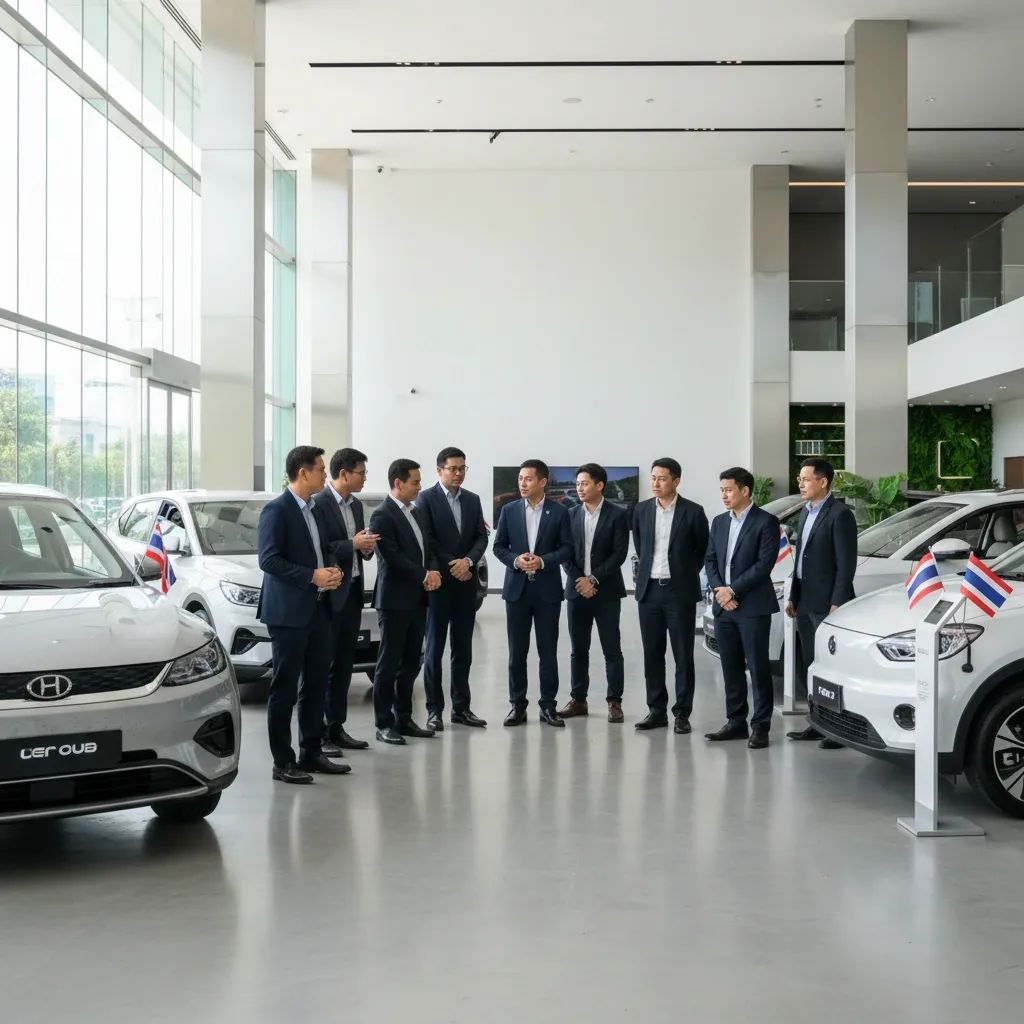
The Thailand Ministry of Industry has accelerated a nationwide initiative to dismantle and recycle unwanted cars, a response to mounting environmental pressure from millions of aging vehicles and a fragmented, often illegal, disposal system that has plagued the country for years.
Why This Matters:
• Over 5 million vehicles registered in Thailand are older than 20 years, translating to 6.55 million tons of potential steel scrap sitting on roads or in informal yards.
• Trade-in incentives launched in 2026 offer subsidies and tax breaks to swap old cars for electric or hybrid models, with an initial quota of 20,000 vehicles allocated on a first-come, first-served basis.
• Illegal dumping fines remain capped at ฿5,000 per vehicle, a penalty critics say is too low to deter abandonment in public spaces.
The Scale of Thailand's Vehicle Waste Problem
Thailand's streets and provincial outskirts are choked with a legacy fleet. The absence of a unified end-of-life vehicle (ELV) management system has left disposal in the hands of informal operators who strip cars for parts with little regard for toxic oils, batteries, or heavy metals leaching into soil and waterways. Unstandardized dismantling practices release particulate matter and noxious fumes, contributing to both air and water pollution in industrial zones and peri-urban areas.
The Thailand Department of Industrial Works estimates that privately owned cars continue to age in place, with projections indicating the volume of ELVs will surge in the next five years. Without proper channels for scrapping, many owners simply abandon vehicles on roadsides or sell them to unlicensed yards that operate outside regulatory oversight.
Multi-Agency Push for Circular Recycling
The current initiative draws on a multi-ministerial framework first outlined at the 1st National Environmental Committee meeting in March 2023. The Ministry of Industry is now collaborating with Japan's New Energy and Industrial Technology Development Organization (NEDO) and Toyota Tsusho Corporation to design advanced dismantling facilities capable of safely extracting chlorofluorocarbon gases, precious metals, and reusable components.
At present, Thailand operates only two fully integrated automobile dismantling factories. One pilot site, run by Green Metals (Thailand) Co., Ltd. in Chonburi Province, serves as a proof-of-concept for environmentally controlled scrap processing. The ministry is now evaluating technology for automated shredding and material separation to scale capacity nationwide, aligning with the government's Bio-Circular-Green (BCG) economic model that prioritizes resource efficiency and waste reduction.
Meanwhile, the Ministry of Finance has launched a car trade-in scheme in 2026 targeting low-emission vehicles. Motorists who surrender older cars can access direct subsidies—ranging from ฿5,000 to ฿100,000 depending on battery capacity and vehicle class—alongside excise and import duty cuts. The subsidy amount is determined by your vehicle's engine type, age, and the specific emission rating of your replacement vehicle. To support uptake, the Government Savings Bank is offering soft loans for purchases of battery electric vehicles (BEVs), plug-in hybrids (PHEVs), and standard hybrids (HEVs), provided the new models are domestically produced to bolster local manufacturing.
Transport Sector Expansion: Taxis in the Crosshairs
The Ministry of Transport is preparing to extend the "old-for-new" framework to cover approximately 27,000 fuel-powered taxis, a move that would significantly reduce operating costs for transport operators and ease vehicle loan burdens. Electric and hybrid conversions are seen as a dual win: cutting fleet emissions while alleviating the chronic oversupply of aging cabs that struggle to meet safety and emissions standards.
This taxi component remains under review, with the ministry assessing fleet turnover rates and financing mechanisms. If approved, it would represent one of the largest single-sector vehicle replacement programs in Southeast Asia.
Valuation Headaches and Regulatory Gaps
Implementing a fair standardized valuation system for old vehicles has proven contentious. The condition of a 20-year-old sedan varies wildly depending on maintenance history, accident records, and regional usage patterns. Attempts to set fixed buyback prices have triggered complaints from both owners—who feel shortchanged—and dealers, who argue margins are too thin.
The lack of effective vehicle tracking compounds the issue. Thailand does not maintain a centralized database linking registration histories to physical inspections, making it difficult to audit which cars have been properly scrapped versus those resold across borders or left to rust in provincial lots.
Clear regulations on mandatory disposal procedures for vehicle owners remain absent. While the Bangkok Metropolitan Administration (BMA) can fine owners up to ฿5,000 for abandoning cars on public roads, enforcement is patchy, and the penalty is far lower than the cost of legitimate disposal at a certified facility, which can run into the thousands of baht when transportation and paperwork are factored in.
What This Means for Residents
For car owners: If you own a vehicle over 15 years old, eligibility for the 2026 trade-in scheme typically requires proof of continuous registration and a passing emissions test. The program is currently in its planning and finalization phase, with soft loan criteria expected to be confirmed by the Government Savings Bank in the third quarter of 2026. Check the Ministry of Finance website at www.mof.go.th or visit Government Savings Bank branches for official announcements and registration details. You can also monitor quota availability at participating dealerships or through the ministry's official portal.
The participation process involves several steps: vehicle registration verification, emissions testing, trade-in valuation, and scrap certification. To streamline this, pilot schemes in Chonburi Province are testing one-stop service centers where residents can complete multiple requirements in a single location—contact your provincial Department of Industrial Works office for details on whether this service is available in your area.
For taxi operators: The Transport Ministry's proposed fleet conversion could cut fuel costs by up to 40% over five years, according to industry estimates. However, access to soft loans will likely hinge on fleet size and operator licensing status, with informal drivers excluded. The ministry aims to conclude consultations on the taxi fleet extension by the end of 2026.
For neighborhoods plagued by dumped cars: BMA district offices can be petitioned to remove abandoned vehicles after a six-month notice period. If unclaimed, the vehicle is auctioned or destroyed. Residents who report dumped cars may qualify for a bounty equal to half the fine collected, though this incentive has seen mixed uptake due to bureaucratic delays.
Battery Waste: The Next Frontier
The shift toward electric vehicles introduces a parallel challenge: spent EV batteries. Ambiguity persists over whether these should be classified as industrial hazardous waste or general e-waste, creating enforcement gaps. Informal workers who dismantle batteries face health risks from toxic electrolytes, yet storage and transport infrastructure for safe disposal is underdeveloped. The Department of Industrial Works is drafting guidelines for battery take-back programs, but implementation timelines remain vague.
Regional Comparison: Thailand vs. ASEAN Neighbors
Most Southeast Asian nations—Malaysia, Indonesia, Vietnam—lack formal ELV directives akin to the European Union's 95% recycling rate mandate or Japan's comprehensive producer-responsibility laws. Thailand's current push, while still nascent, represents one of the region's more coordinated efforts. Malaysia is exploring voluntary industry pledges, and Indonesia has piloted small-scale scrappage incentives, but neither has committed budget or legislative backing at Thailand's scale.
The Bio-Circular-Green framework underpinning Thailand's approach aims for carbon neutrality by 2050 and net-zero emissions by 2065, with ELV recycling contributing measurable reductions in landfill waste and recovered raw materials feeding back into domestic steel and parts manufacturing.
The Road Ahead
The Ministry of Industry is expected to announce locations for at least five new dismantling plants by the end of 2026, with Japanese technical partners providing training for local technicians. Soft loan eligibility criteria will be finalized by the Government Savings Bank in the third quarter of 2026, and the Ministry of Transport aims to conclude taxi fleet consultations before the year's close.
For Thailand's millions of aging vehicles, the era of informal scrapyards and roadside abandonment is beginning to close—gradually. Success will hinge on whether enforcement catches up to ambition, and whether subsidies prove generous enough to overcome inertia among owners accustomed to keeping cars in service for many years.


