
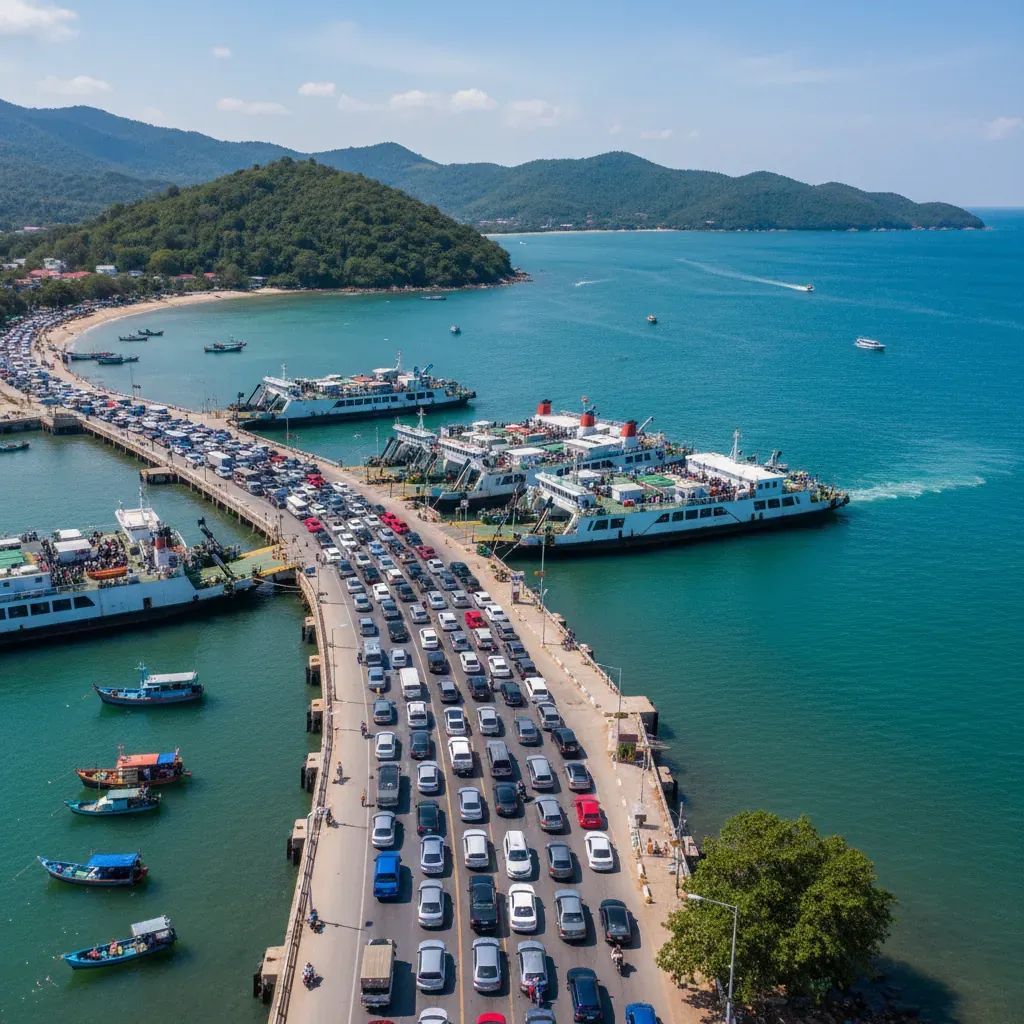
The Thailand province of Trat saw its ferry terminals overwhelmed on April 14 as tourists fled the islands of Koh Chang, Koh Kood, and Koh Mak after the Songkran holiday, creating vehicle queues stretching 1.5 kilometers and forcing operators to deploy empty ferries from the mainland to clear the backlog.
Why This Matters:
• Peak exodus on April 14: More than 1,100 vehicles departed Koh Chang alone as workers rushed to return before the April 16 work resumption.
• System capacity: Ferries can process 150–180 cars per hour, meaning delays of up to 2 hours during peak congestion.
• Significant demand surge: The April 14 departure represented double the typical weekend traffic volume across all three islands.
The gridlock highlighted the fragility of Trat's island transport network, which relies on a handful of ferry routes to move tens of thousands of holidaymakers. As the Koh Chang Police coordinated traffic at the Ao Sapparot Pier in Klong Son, queues backed up to the Mu Koh Chang National Park checkpoint, requiring officers to intervene to prevent driver confrontations and keep lanes clear.
Ferry Operators Scramble to Meet Demand
Koh Chang Ferry Co., Ltd. confirmed all four of its ferries were running at full capacity, with crews adjusting schedules and turnaround times to handle the surge. Authorities coordinated with operators to send empty vessels from the mainland pier at Laem Ngob back to Koh Chang, effectively doubling the available transport slots for outbound vehicles.
Between April 10 and 13, outgoing traffic climbed steadily, with the 14th marking the heaviest departure day. Police Chief Pol Col Kridsada Minseng explained that many travelers timed their return to avoid the April 16 restart of business operations, creating a concentrated rush that tested the system's limits.
At the Laem Sok Pier in Muang Trat district, the scene was equally chaotic as tourists departed Koh Mak and Koh Kood. Operators ferried more than 2,500 passengers off the islands that day. A spokesperson for Boonsiri High Speed Ferries reported 1,000 passengers left Koh Kood alone across five trips on April 14—double the typical weekend load of 500–600 visitors.
What This Means for Residents
For anyone planning post-Songkran travel to Thailand's eastern islands, the April 14 experience offers valuable lessons. Travelers heading to Trat's islands should budget extra time for ferry crossings—at least 2–3 hours beyond normal transit times. Booking accommodations with flexible check-in times and confirming ferry schedules the morning of departure can help avoid surprises.
Those with vehicles should consider arriving at piers during off-peak hours (early morning or late afternoon) to skip the midday rush. For residents returning from long weekends, leaving a day early avoids the worst congestion and reduces the risk of missing work commitments.
April remains the hottest month on Koh Chang, with temperatures reaching 35°C, but the island enters a transitional weather pattern in late April. Brief afternoon thunderstorms become more common as the rainy season approaches in late May. Travelers should monitor weather forecasts and ferry schedules accordingly.
Broader Holiday Traffic Patterns
Across Thailand, the State Railway of Thailand (SRT) reported 542,000 train passengers between April 11 and 16, with additional services extended through Friday to ease the return rush. Rail proved a popular alternative to road travel, capturing 45% of public transport usage during the first six days of the holiday.
The Ministry of Transport opened sections of the M6 motorway (Bang Pa-in – Nakhon Ratchasima) and the M81 motorway (Bang Yai – Kanchanaburi) temporarily to help disperse traffic. The Department of Highways also conducted pre-holiday inspections of road surfaces, lighting systems, and traffic signals across 12 major routes.
Capacity Challenges and Future Considerations
The April 14 congestion underscores ongoing challenges with Trat's ferry infrastructure. Current operations rely on adjusting schedules and maximizing turnaround efficiency rather than expanding physical assets. For context, the Koh Kood Princess ferry accommodates 300 passengers, while the Seudamgo catamaran handles up to 84 passengers—figures that remain unchanged since last season.
As of the reported period, no announcements have been made regarding plans to add new vessels or expand pier capacity in Trat for 2026. With Thailand's tourism sector continuing to recover and expand, similar bottlenecks may occur during future holidays unless authorities invest in additional vessels, expanded piers, or alternative transport modes.
Practical Takeaways
The April 14 experience demonstrates that the ferry system can handle steady flows, but buckles when demand concentrates into a single 12-hour window. For future holiday periods, the strategy remains reactive—adding trips when queues grow long—rather than proactive capacity building. Residents and travelers should plan accordingly, factoring in additional time and choosing off-peak departure windows whenever possible.


