
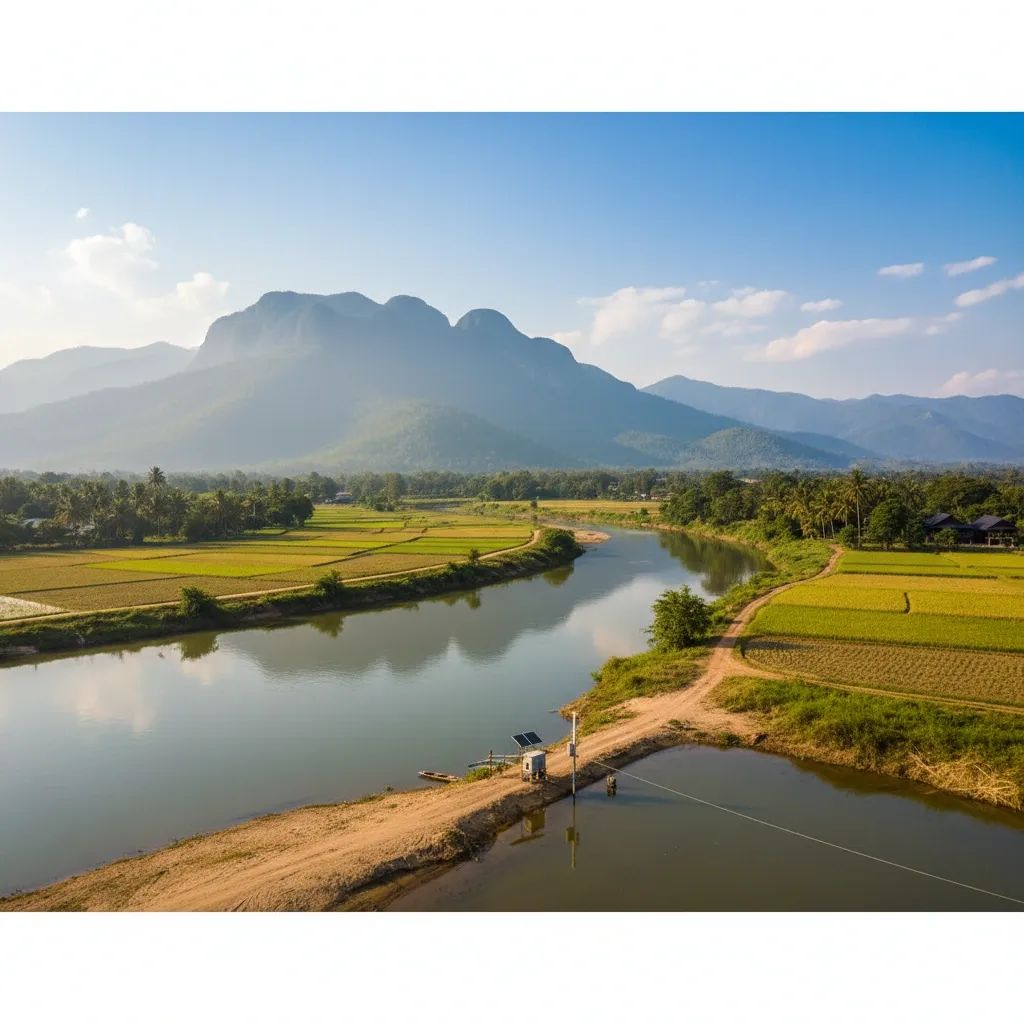
Northern Thailand Water Supply Under Pressure as Transboundary Mining Pollution Spreads
The Kok River, which originates in Myanmar's remote highlands and flows into Chiang Rai province before merging with the Mekong system, carries elevated concentrations of arsenic that have prompted local authorities to recommend residents avoid direct river water use. An international collaboration between Australia and Thailand has been initiated to design biological filtration systems to address contamination linked to unregulated mining operations across the Myanmar border.
Why This Matters
• Immediate Action Required: Residents across Chiang Rai are advised to use tap water from the Provincial Waterworks Authority rather than direct Kok River extraction due to documented arsenic contamination.
• Scale of Upstream Pollution: Mining operations in Myanmar's Shan and Wa states discharge heavy metals into tributaries that feed the Kok River. Myanmar's government has acknowledged governance challenges in regulating remote border areas.
• Health Concerns Documented: Testing has found arsenic accumulated in residents living near the river, with reported symptoms including numbness, muscle weakness, and skin irritation consistent with heavy metal exposure.
• Treatment Development Underway: Phytoremediation pilot projects are planned, with water quality improvements expected as treatment systems are implemented over the coming years.
The Contamination Landscape: Where It Comes From and How It Travels
The Kok River's degradation has accelerated due to mining operations in Myanmar's remote regions. Chinese demand for rare earth minerals—essential components in electronics manufacturing—creates economic incentives for extraction in areas with minimal state oversight. Mining operations inject water mixed with chemical solvents into hillsides to dissolve ore, creating toxic liquid slurry that percolates into tributary systems with minimal treatment.
Thailand's Pollution Control Department has documented elevated arsenic levels through systematic sampling across multiple locations. The Sai River—a primary tributary feeding into the Kok—has registered arsenic exceedances at various points. Riverbed sediment analysis has identified arsenic deposits at several affected locations. The Mekong River Commission—a multilateral body representing Thailand, Laos, Cambodia, Vietnam, and Myanmar—has formally raised concerns about arsenic contamination in the region.
Visual degradation is apparent: during dry seasons when the Kok should run relatively clear, the river appears turbid with elevated sediment concentration. This visible deterioration correlates with documented water quality measurements reflecting suspended particles and heavy metal load.
Clinical and Health Observations
Researchers have conducted testing on residents living along the Kok River corridor in Chiang Rai, collecting biological samples from villagers with varying exposure histories. Results indicate arsenic accumulation in individuals with extended river proximity, and these individuals report specific health symptoms including:
• Numbness and muscle weakness, particularly in hands and feet
• Dermatological irritation ranging from mild rashes to more severe skin reactions
• Abnormal skin pigmentation or thickened lesions
• Nasal inflammation
• Bilateral foot swelling
• Reduced urine output
These symptoms represent early stages of chronic accumulation rather than acute poisoning. The Thailand Ministry of Public Health has issued guidance requiring ongoing surveillance of water supplies, food contamination tracking, and health screenings for at-risk populations including farmers, individuals with extended water exposure, children, and elderly individuals exhibiting health symptoms.
Economic Impact
The Kok River supports multiple economic sectors affected by water quality degradation. Fishing populations have declined, and consumer confidence in riverside agricultural products has diminished due to contamination concerns. Testing has confirmed arsenic presence in rice paddies irrigated with river water and in vegetable crops grown in riverside soil. Tourism has been impacted, with cultural events historically dependent on river use being relocated or canceled due to safety concerns.
These economic disruptions have forced farming families to make difficult choices: continue irrigating with contaminated water, abandon irrigation and risk crop failure during dry seasons, or relocate to pursue opportunities elsewhere. Many communities have experienced depopulation as families migrate to urban areas.
International Response: Australia's Water Treatment Initiative
The Australian Embassy Bangkok initiated contact with Thailand's Office of the National Water Resources in late 2025, proposing technical collaboration on water treatment solutions. A coordination meeting involving Australian researchers, Thailand Institute of Scientific and Technological Research representatives, and Office of the National Water Resources officials formalized a bilateral cooperation framework.
The proposed intervention uses biological water treatment processes rather than conventional mechanical filtration. Contaminated river water would be diverted into engineered retention basins containing constructed wetlands that operate as biological filters. Hyperaccumulator plant species absorb heavy metals and arsenic from water, concentrate toxins in their tissues, and allow sediment to settle. Microorganism communities in the wetland substrate further degrade certain contaminants. When plants reach saturation with absorbed toxins, they are harvested and safely disposed of, and fresh vegetation is replanted.
This approach is part of the broader Mekong-Australia Partnership, through which Australia has contributed expertise to water quality monitoring and reservoir management for Thai provincial authorities. Thailand's Institute of Scientific and Technological Research has developed a prototype for a constructed wetland system with formal training components enabling local water management authorities and community groups to operate and expand wetland systems independently.
Timeline and Implementation
The phytoremediation pilot is scheduled for implementation beginning in the coming years. The initial phase involves establishing functioning wetland systems and monitoring their effectiveness at heavy metal extraction. The testing and validation period will determine whether constructed wetlands can process contamination at scales matching Kok River flow rates and pollutant loads.
Residents drinking treated tap water from municipal supplies will likely notice improvements sooner than those depending on agricultural irrigation or direct river uses. Full ecosystem restoration will require an extended timeframe, particularly if upstream contamination sources continue.
Ongoing Challenges and Upstream Pollution
A significant complication is the continuation of contamination sources. Myanmar's military government has acknowledged through the Mekong River Commission framework that regulating mining operations in territories controlled by ethnic armed organizations presents substantial governance challenges. Satellite imagery indicates active mining operations across Myanmar's Shan and Wa states, with economic incentives maintaining continued extraction despite environmental costs to downstream communities.
The Mekong River Commission has undertaken standardization work to align water testing methodologies across member countries. Thailand continues developing regulatory frameworks and thresholds for managing chronic arsenic exposure concerns. Thailand cannot unilaterally enforce water quality standards when contamination originates in Myanmar, making international cooperation essential.
The phytoremediation initiative represents Thailand's pragmatic approach to addressing existing contamination while pursuing diplomatic channels regarding upstream pollution sources.
Practical Guidance for Residents Today
Residents currently living in affected Chiang Rai areas should implement protective measures immediately. Exclusive reliance on treated water from the Provincial Waterworks Authority or certified village waterworks systems eliminates direct arsenic exposure from drinking and cooking water.
Health evaluations are advisable for anyone who has lived riverside for an extended period, has noticed health symptoms, or resides with vulnerable populations including young children and elderly relatives. Local health offices can arrange testing for arsenic accumulation in biological samples, providing baseline data for tracking changes over time.
Purchasing vegetables and rice from areas beyond known contamination zones reduces ongoing exposure, particularly for young children and families planning to remain in the region long-term.
The Thailand Ministry of Public Health has identified specific at-risk population categories warranting priority health surveillance: farmers engaged in irrigation agriculture, residents with extended exposure to river water or products, children in affected areas, and elderly individuals exhibiting symptoms. These groups should arrange periodic health assessments.
For Chiang Rai, international collaboration, biological water treatment development, and practical harm reduction measures provide a pathway forward. Australia's expertise supports movement toward workable solutions, while local communities navigate a reality requiring informed protective choices about water sources and food consumption. The development timeline for water treatment provides concrete movement toward restoration, grounded in established technology. Until restoration materializes, residents protect themselves through informed decision-making and vigilance regarding water and food sources.


