
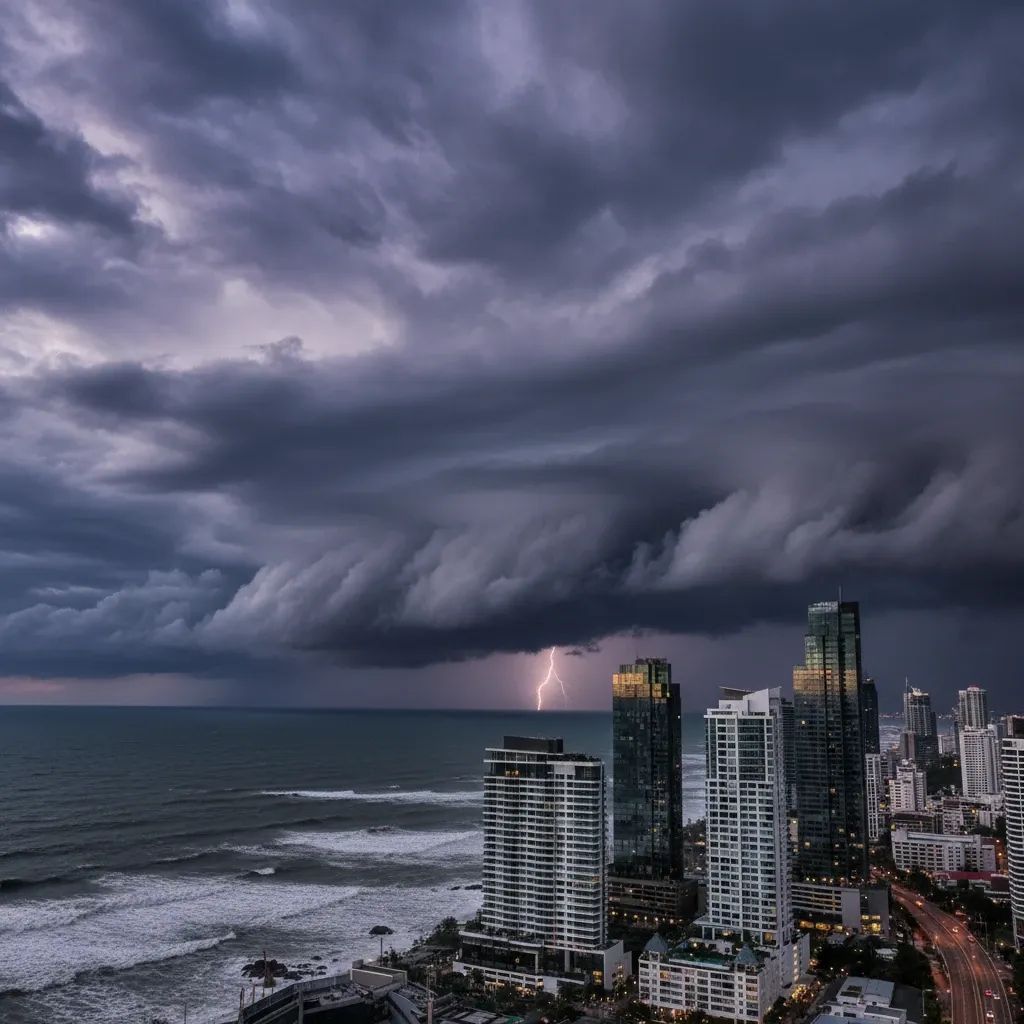
The Thailand Meteorological Department has recorded a string of abrupt weather shifts in Pattaya this week, underscoring a broader pattern of atmospheric volatility that characterizes the early monsoon transition along the Gulf of Thailand. For residents living and working in Pattaya, the message is clear: sudden downpours and coastal gusts are now the norm, not the exception, and advance preparation is essential for maintaining your daily routines safely.
Why This Matters for Your Daily Life
• Rain likelihood today: 55% chance of showers tonight, following 35% probability this afternoon—conditions can pivot within minutes, affecting your commute home.
• Feels-like temperature: Currently 37°C (98°F) despite actual air temp of 30°C, driven by 75% humidity—a factor for motorcycle riders and those walking between transport hubs.
• Marine rescue operations: Authorities conducted 15 offshore rescues near Pattaya during stormy conditions in May 2026, highlighting real risk if you commute by water taxi or ferry to outlying work sites.
• Flood-prone routes: Key residential areas experience localized flooding, particularly along Second Road and low-lying neighborhoods near Naklua—residents should identify alternate commute routes now.
Understanding Pattaya's Monsoon Reality
Pattaya is experiencing the onset phase of Thailand's southwest monsoon, a meteorological phenomenon that typically delivers 20 rain days in June alone. Unlike steady drizzle in temperate climates, these events manifest as intense, brief cloudbursts—often accompanied by gusty winds exceeding 11 km/h from the east. The Thailand Meteorological Department reports that temperatures hover between 28°C and 31°C throughout the day, but the combination of heat and moisture pushes perceived temperatures well into the high 30s.
For residents commuting on motorcycles or bikes, the rapid weather shifts pose genuine safety concerns. On any given afternoon or evening, clear skies can darken within minutes. Local traffic patterns show congestion spikes during sudden downpours as road conditions deteriorate and visibility drops sharply. The Pattaya City Traffic Police recommend adjusting your departure times to avoid peak rain windows—typically 2 p.m. to 5 p.m.—when afternoon thunderstorms are most likely.
Water temperature in the Gulf averages a warm 30°C this month, but wave conditions and wind strength can deteriorate rapidly if you use water-based transportation. The Thailand Marine Department has established seasonal coordination centers to manage marine traffic safely. If you regularly commute by ferry to islands or work on water-based operations, confirm schedules the morning of travel—operators routinely adjust timing based on real-time sea conditions.
Protecting Your Home and Preparing Your Household
The atmospheric instability that disrupts outdoor plans has triggered flash flooding in low-lying sections of the city. In mid-May, heavy overnight rain submerged several main roads, stranding vehicles and forcing traffic diversions. If you live in flood-prone neighborhoods, now is the time to prepare.
DDPM guidelines for residents include:
• Inspect your property: Check drainage around your condo or house. Clear gutters, downspouts, and surrounding areas of debris.
• Know your flood risk: Contact your Pattaya City Administration office or check local LINE community groups to understand whether your neighborhood is historically flood-prone.
• Prepare an emergency kit: Maintain bottled water, a flashlight, basic first-aid supplies, and a portable phone charger at home and in your vehicle.
• Document your belongings: For insurance purposes, photograph valuables and maintain receipts for high-cost items.
• Home maintenance costs: Anticipate potential repairs—many residents budget extra for water-damage prevention during monsoon months.
The Pattaya City Administration and Thailand Department of Disaster Prevention and Mitigation (DDPM) have intensified drain-clearing operations and staged emergency drills in high-rise buildings. Residents in condos should coordinate with building management to ensure drainage systems are functioning and that emergency protocols are clearly communicated.
Commuting Safely During Monsoon Season
For those venturing onto the water for work or transit, adherence to Marine Department protocols is non-negotiable. If you commute by ferry to Koh Larn, Koh Samet, or other offshore work sites, understand that the Marine Department's five-pillar safety strategy includes clearly marked transit zones, real-time traffic monitoring, and mandatory equipment standards. Despite these controls, the 15 offshore rescues conducted during last month's storms serve as a reminder to always check weather conditions before departing.
Motorcycle and vehicle owners should prepare for increased maintenance costs during monsoon months:
• Check tire tread regularly—water on roads increases accident risk
• Ensure braking systems are responsive
• Consider weather-resistant vehicle covers if you park outdoors
• Plan alternative routes if your regular commute passes flood-prone areas
Expat-specific considerations:
• Visa runs: If you plan border runs to renew visas, monitor flight schedules carefully—monsoon storms occasionally cause delays at U-Tapao Rayong-Pattaya International Airport and nearby Suvarnabhumi.
• Mail and package delivery: International mail services sometimes experience disruptions; arrange critical documents early.
• Internet outages: Power surges during storms can affect connectivity—ensure important work files are backed up to cloud services.
Practical Daily Routines During Monsoon
Shopping and errands: Don't limit yourself to peak-season shopping patterns. Markets and malls remain fully operational during monsoon season, but timing matters:
• Covered markets like Pattaya Floating Market (Four Regions) incorporate sheltered walkways and stall clusters—ideal for rainy-day errands
• Malls like Terminal 21 and Central Festival offer climate-controlled shopping when outdoor markets are inconvenient
• Local community markets near residential areas often have covered sections
Work and school considerations:
• Confirm that schools have flood evacuation protocols
• Discuss with employers whether work-from-home options are available during severe weather events
• Coordinate with colleagues on commute timing to avoid peak rainfall periods
Neighborhood emergency networks: Many residential communities maintain LINE group chats or WhatsApp groups for residents. If yours doesn't exist, consider initiating one to share real-time weather alerts, flood reports, and local emergency information.
Local Resources and Emergency Contacts
The Thailand Tourist Police maintain a 24-hour hotline at 1155, staffed with multilingual officers. The general emergency medical line (1669) connects callers directly to ambulance dispatch, while Pattaya City Hall (038-429-301) provides information on local infrastructure updates and flood-prevention initiatives.
Important community resources for residents:
• Pattaya Expat Facebook groups: Local expats frequently share real-time weather updates and commute advice
• Thailand Meteorological Department app: Download for hourly forecasts and severe weather warnings specific to Pattaya
• DDPM disaster preparedness line: Call 1011 for disaster-related guidance and support
• Local hospital numbers: Save contacts for nearby medical facilities—travel times can increase during flooding
Dengue fever prevention ranks high on the health checklist during monsoon months, as standing water accelerates mosquito breeding cycles. Thailand Ministry of Public Health advisories urge the use of insect repellent and long sleeves during dawn and dusk hours, when mosquito activity peaks. Buildings typically deploy fogging treatments, but personal vigilance remains essential.
Long-Term Planning and Financial Considerations
June marks only the beginning of Thailand's rainy season, which typically extends through October. Weather models indicate that rain frequency will increase in July and August, with August historically recording the highest monthly precipitation totals. However, the pattern of short, intense bursts rather than day-long downpours persists throughout, meaning multi-hour dry spells remain the norm even on "rainy days."
Financial planning for residents:
• Flood insurance: Review your property and contents insurance to ensure adequate monsoon-related coverage
• Vehicle maintenance: Budget for increased tire replacements and brake servicing during wet months
• Home repairs: Set aside funds for potential gutter, drainage, or water-damage restoration
• Work flexibility: If rain significantly impacts your commute, negotiate flexible working arrangements early in the season
Infrastructure improvements: Pattaya City Hall has committed to ongoing upgrades aimed at mitigating flash-flood risk, including expanded drainage capacity along Beach Road and Second Road. Completion timelines remain uncertain, but the work signals official recognition that seasonal climate variability demands investment in resident safety.
For those monitoring extended-term weather, check Thailand Meteorological Department forecasts via the agency's mobile app or website, both of which provide hourly updates and push notifications for severe weather warnings. Residents planning travel to Bangkok or other regions during peak monsoon (July-August) should book transportation in advance, as road conditions can deteriorate and flights may experience delays.
Living Through Monsoon: A Practical Perspective
For residents accustomed to predictable weather in home countries, the pace at which tropical conditions shift requires adjustment. The practical implication is simple: flexibility and preparedness are foundational. A planned grocery run may be delayed by an hour; a typical commute home may take 50% longer on a rainy afternoon; water may temporarily affect your neighborhood's power or internet.
In practical terms, the current weather pattern is neither catastrophic nor negligible. It demands awareness, modest preparation, and a willingness to adjust your routine on short notice. For those who accept these terms and prepare accordingly, living in Pattaya during monsoon season becomes manageable—transforming from a temporary inconvenience into a predictable seasonal reality that thousands of residents navigate successfully each year.
The key is understanding that in this climate zone, an umbrella and a rain jacket are not optional accessories—they are foundational tools for navigating daily life, just as much as your commute route and your favorite coffee shop.


