
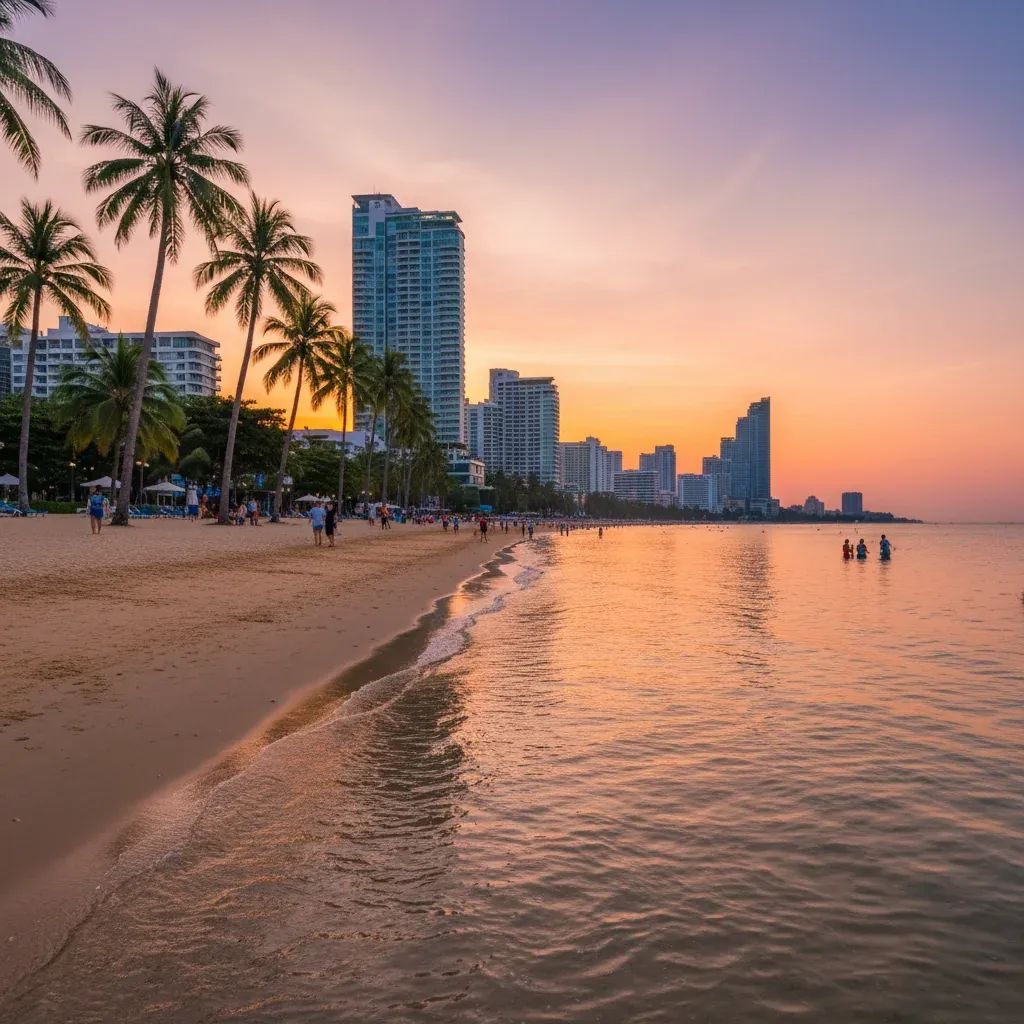
Thailand's tourism recovery is at a crossroads. While 16.21 million international visitors arrived from January to early July 2026, generating 782.57 billion baht in spending, arrivals still trailed last year's pace by 3.11%—a persistent gap that has forced policymakers to rethink strategy. The real story, however, isn't about the shortfall itself. It's about the composition of visitors arriving and what that means for the tourism sector's direction.
Why This Matters
• Summer break timing is crucial: The week of July 4 saw 83,492 Chinese arrivals alone, signaling that school holidays across Asia and Europe are driving families back to Thai destinations. Officials expect sustained momentum through mid-July.
• Revenue cushion remains strong: Despite fewer heads in hotels, tourism spending per visitor has held steady, suggesting a shift toward higher-spending travelers rather than pure decline.
• Strategic focus evolving: Thailand's tourism strategy is adapting to emphasize quality over volume, reflecting broader industry trends toward attracting visitors with higher per-capita spending.
The Anatomy of the Slowdown
Three headwinds compressed Thai tourism in the first half of 2026. Middle East tensions disrupted flight routing and inflated ticket costs from Europe and North America, making Thailand harder to reach affordably. Airlines reduced frequencies or redirected capacity, particularly affecting long-haul bookings.
Safety concerns also affected sentiment. Incidents circulated on social media and international travel platforms. A high-profile kidnapping case and complaints about dual-pricing systems created negative perceptions. While the Thailand Royal Police launched reassurance campaigns, reputation recovery moves slowly. The Tourism Authority of Thailand acknowledged the challenge and adjusted expectations, signaling a more cautious outlook for the remainder of the year.
Meanwhile, Japan maintained its position as Asia's top destination, pulling affluent leisure travelers who might have chosen Bangkok or Phuket. Japan's operational momentum and regional branding proved difficult to counter.
Where the Money Actually Is
The most revealing statistic: China alone contributed 2.65 million of the 16.21 million arrivals through early July—about 16% of total volume, but accounting for a significant share of spending. Malaysia (2.11 million), India (1.24 million), Russia (1.02 million), and South Korea (596,673) filled the remaining slots, reflecting Thailand's diverse visitor base.
This visitor composition explains the government's continued focus on high-value travelers. Attracting affluent visitors who spend more per capita now holds strategic importance. The approach is straightforward: higher average spending per visitor can offset lower total volume.
The Chinese Summer Surge
China's recovery, though uneven, offers the clearest near-term opportunity. The Association of Thai Travel Agents revised its 2026 forecast for Chinese arrivals downward from earlier projections, citing safety concerns and rising airfares. Yet weekly data painted optimism: the final week of June saw 83,492 Chinese visitors—the highest weekly tally for any nationality.
Travel behavior among Chinese tourists is also evolving. 44% now extend trips beyond their initial leave, with typical stays stretching to 3-5 days (48%) or 6-10 days (33%). Budget expectations hover around 10,000-20,000 yuan per person (roughly 47,700-95,400 baht), targeting mid-range hotels, dining, and shopping. This cohort seeks comfort and convenience, supporting higher-margin segments for the industry.
The Tourism Authority of Thailand launched campaigns aimed at rebuilding confidence through roadshows, cultural festivals, and promotional activities. The effort acknowledged past challenges and signaled intent to strengthen the relationship with source markets. For business operators in tourism-dependent cities, this signals renewed attention to serving visiting markets.
Europe's Heatwave Opens a Door
The Tourism Authority of Thailand seized on an unconventional angle: marketing monsoon-season Thailand as an alternative destination. With European temperatures rising, the pitch centered on Thailand's cooler monsoon climate. Thailand's rainy season hovers around 28-32°C with intermittent showers—still navigable for various activities, but notably cooler than peak European heat.
The campaign has been promoted across major European cities through partnerships with international airlines and tour operators. German tour operators were enlisted to drive package deals targeting broader German arrivals for the year. Early reports from destination areas suggest the campaign is positioning Thailand as a year-round option, with the Tourism Authority framing it as medium-term positioning to capture alternative travel seasons.
Thailand Capitalizes on Industrial Opportunity
Beyond tourism, Thailand is profiting from global cooling demand in a parallel dimension: air conditioners. Thai AC exports to Europe surged 41.3% year-on-year in May 2026 alone, reaching $130.1 million. For the first five months, shipments climbed 16.5% to $696.8 million. Europe now represents 18% of Thailand's total AC exports—the second-largest market after the United States.
Germany and France led the buying spree, with German shipments up 37.2% and French 13.9%. Manufacturers leveraged Thailand's electronics supply chain to ramp production—Thai AC output rose 20% in May despite overall manufacturing contraction. The Thai National Shippers' Council expects this trend to continue as demand for cooling solutions remains elevated globally.
In 2025 alone, Thailand exported approximately $7.43 billion in air conditioners and components—a significant export category. For logistics companies, component suppliers, and factory workers, the sustained demand translated into job opportunities and economic activity.
Impact on Residents and Businesses
The tourism recalibration carries immediate consequences for those living in Thailand. Service-sector operators in high-traffic zones—Sukhumvit, Patong, Ao Nang—are navigating evolving market conditions. Hotels in Phuket and other destinations have adjusted pricing strategies to respond to market demand, with discounting reported in traditionally slower periods. Taxi drivers, spa therapists, and restaurant staff experience shifts in working patterns and customer flow.
Upscale developments and premium-zone properties benefit from attracting higher-spending visitors. But establishments serving budget-conscious travelers experience different competitive pressures, creating a more differentiated market where businesses must clearly target their preferred guest profiles.
Employment dynamics are also shifting. Rather than hiring broadly across low-skill positions, tourism businesses are investing in different service roles, reflecting changing visitor expectations and spending patterns.
Competitive Pressure and Regional Dynamics
Regional competitors are actively promoting themselves. Vietnam's infrastructure development, South Korea's cultural branding, and Japan's premium positioning all attract different traveler segments. For Thailand, the contest has shifted focus to ensuring strong experiences for incoming visitors and encouraging longer stays.
Officials continue to work on geographic diversification—promoting secondary cities and regional attractions beyond Bangkok and Phuket. This approach aims to spread tourism benefits across the country and build resilience into the sector.
Domestic travel, projected at 200 million person-trips in 2026, reflects internal travel patterns among Thai residents. External visitors remain critical to overall tourism receipts and regional economies.
What's Next
The coming months will be important for Thailand's tourism sector. Seasonal trends, geopolitical developments, and operational factors will influence visitor flows through the remainder of the year.
The government's strategic approach—anchored on attracting diverse visitor types, geographic diversification, and capitalizing on export opportunities—reflects pragmatic sector management. Success will depend on strengthening confidence among source markets, maintaining service quality, and adapting to evolving travel patterns.
Thailand's dual positioning—as a destination during alternative travel seasons while also supplying solutions to global challenges—captures an approach of diversified economic opportunity. How the sector performs through the remainder of 2026 will shape confidence and planning for 2027.


