
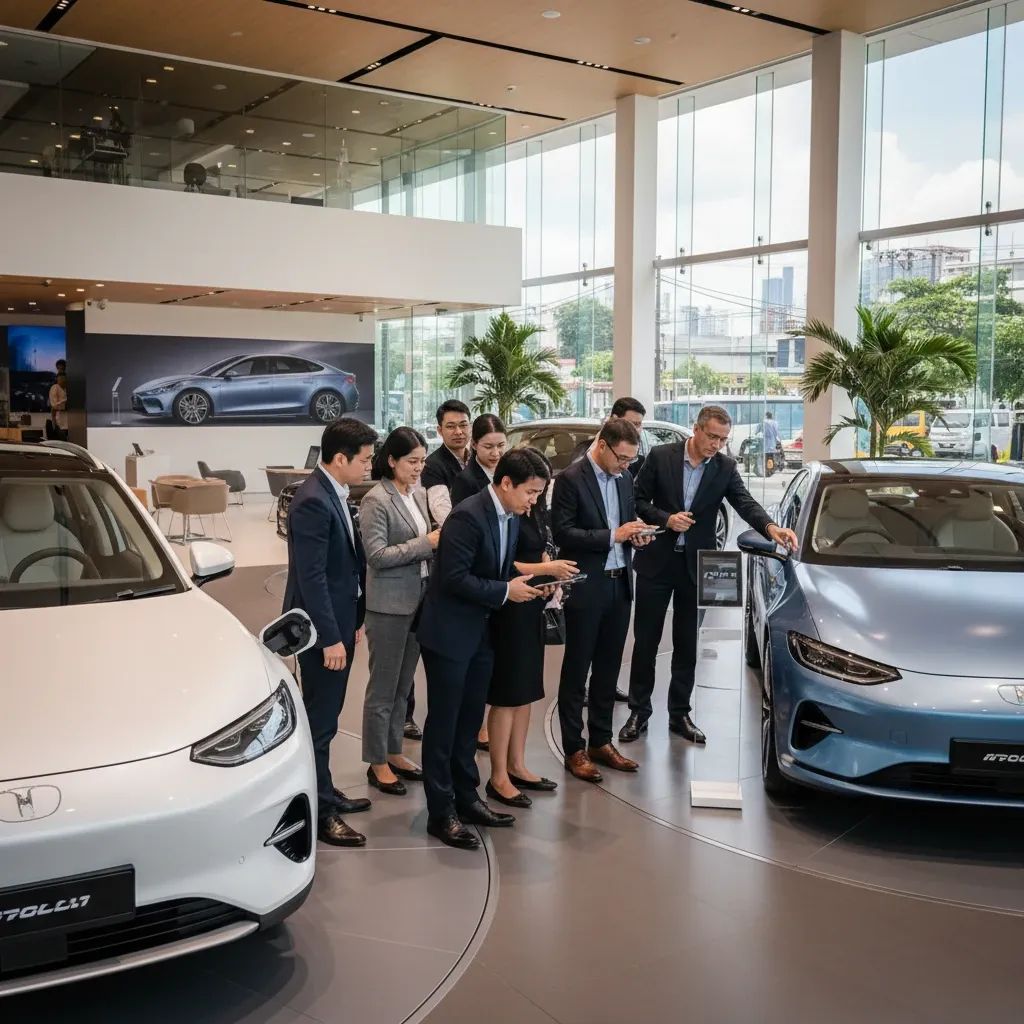
Thailand's coastal resort hub of Pattaya is witnessing a measurable uptick in electric motorbike purchases as residents and commuters seek refuge from relentless fuel price volatility tied to ongoing Middle East tensions. Dealers across the city report consistent demand growth, signaling a behavioral shift that could reshape urban mobility along the Eastern Seaboard if energy costs remain elevated.
Why This Matters
• Budget relief: Electric motorbikes eliminate daily fuel purchases, offering predictable running costs in an environment where petrol prices swing unpredictably.
• Price range: Models currently sold in Pattaya span ฿36,400 to ฿87,200, putting entry-level options within reach of middle-income households.
• Incentives active: Showrooms are absorbing registration fees and including compulsory insurance at no charge to accelerate adoption.
Fuel Anxiety Drives the Switch
The catalyst is straightforward: global oil markets remain turbulent, with benchmark crude prices reacting sharply to geopolitical developments in the Middle East. For Pattaya residents—many of whom rely on motorbikes for work commutes, short-haul deliveries, or navigating the city's congested beach roads—fluctuating pump prices translate directly into household budget stress. A daily round-trip commute that once cost a predictable amount now varies week to week, eroding financial planning confidence.
Weera Amornworanich, who manages sales at the MIT EV Pattaya Sukhumvit branch, confirms the pattern. "We're seeing customers who previously dismissed electric options now asking detailed questions about range, charging times, and total cost of ownership," he explained. "The conversation has changed. People are doing the math and realizing that independence from fuel price swings is worth the upfront investment."
The appeal centers on three operational advantages: negligible per-kilometer energy costs, minimal scheduled maintenance (no oil changes, fewer moving parts), and immunity to petrol market chaos. For a city where motorbikes outnumber cars and daily distances are manageable, the economics increasingly favor battery power.
What Dealers Are Offering
Showrooms in Pattaya have adapted quickly, holding retail prices steady even as supply-chain pressures from global battery and component markets might otherwise justify increases. The strategy appears calculated to capture market share during a window of heightened consumer interest.
Promotional packages now bundle free vehicle registration and complimentary compulsory insurance coverage, effectively reducing the out-of-pocket cost at purchase. These incentives lower the barrier for first-time EV buyers who might otherwise hesitate over paperwork complexity or initial expenses beyond the sticker price.
The product lineup has diversified. Buyers can choose classic European-inspired scooter designs that mimic the aesthetic of vintage Vespas, or opt for contemporary models like the "Legend Pro," which targets younger urban riders prioritizing sleek lines and digital connectivity. Battery capacities and motor outputs vary across the range, allowing customers to match specifications to their typical usage patterns—short city hops versus longer highway runs.
Impact on Residents and Commuters
For Pattaya's workforce—which includes hospitality staff, gig-economy drivers, and small business owners—the shift to electric represents a tangible cost-saving mechanism. A motorbike that charges overnight on household current for a few baht can replace a petrol habit costing several hundred baht weekly. Over a year, the savings compound, potentially offsetting the purchase premium of an EV over a conventional gasoline scooter.
The environmental dimension also resonates, though it remains secondary to financial logic for most buyers. Pattaya's air quality has faced scrutiny, particularly during high-traffic holiday periods. A gradual displacement of internal combustion engines by battery power would reduce localized emissions, contributing to cleaner air in beachfront and residential zones.
Charging infrastructure remains a practical consideration. Most buyers rely on home charging, plugging in overnight using standard 220V outlets. Public fast-charging stations are sparse compared to Bangkok, though some shopping malls and modern condo developments have begun installing charging points. The range limitation—typically 60 to 100 kilometers per charge depending on model and riding style—aligns well with Pattaya's compact urban footprint, making overnight home charging sufficient for the majority of daily use cases.
Broader Implications for Thailand's EV Transition
Pattaya's experience mirrors trends observed in other Thai cities, though the resort town's tourism-driven economy and higher concentration of expatriate residents may accelerate adoption rates. Thailand's government has set ambitious targets for EV adoption, including subsidies for electric two-wheelers under various stimulus programs, though these incentives have fluctuated with political cycles and budget constraints.
The motorbike segment represents a strategic entry point for broader electrification. Two-wheelers are simpler, cheaper, and more immediately practical for Thai households than electric cars, which remain priced beyond the reach of most middle-income buyers. If the Pattaya trend holds, it could provide a blueprint for provincial cities facing similar fuel cost pressures.
Industry observers caution that sustained adoption depends on oil price stability—or rather, the lack thereof. If crude prices retreat significantly and stay low, the financial incentive weakens. However, the current geopolitical landscape suggests volatility is more likely than calm, reinforcing the appeal of energy-independent transport.
Dealers also note a behavioral shift beyond pure economics: early adopters are influencing peer networks. When neighbors or coworkers report positive experiences with electric motorbikes, skepticism diminishes. Word-of-mouth validation appears to matter as much as promotional campaigns, particularly among older buyers hesitant about new technology.
The Road Ahead
Whether Pattaya's electric motorbike surge represents a permanent pivot or a temporary reaction to oil market turbulence remains uncertain. Much depends on how long fuel prices stay elevated and whether the Thailand government reinforces purchase incentives or expands charging infrastructure investment. For now, the city's showrooms are busy, test rides are booked, and more residents are calculating whether their next motorbike should plug in rather than fill up.


