
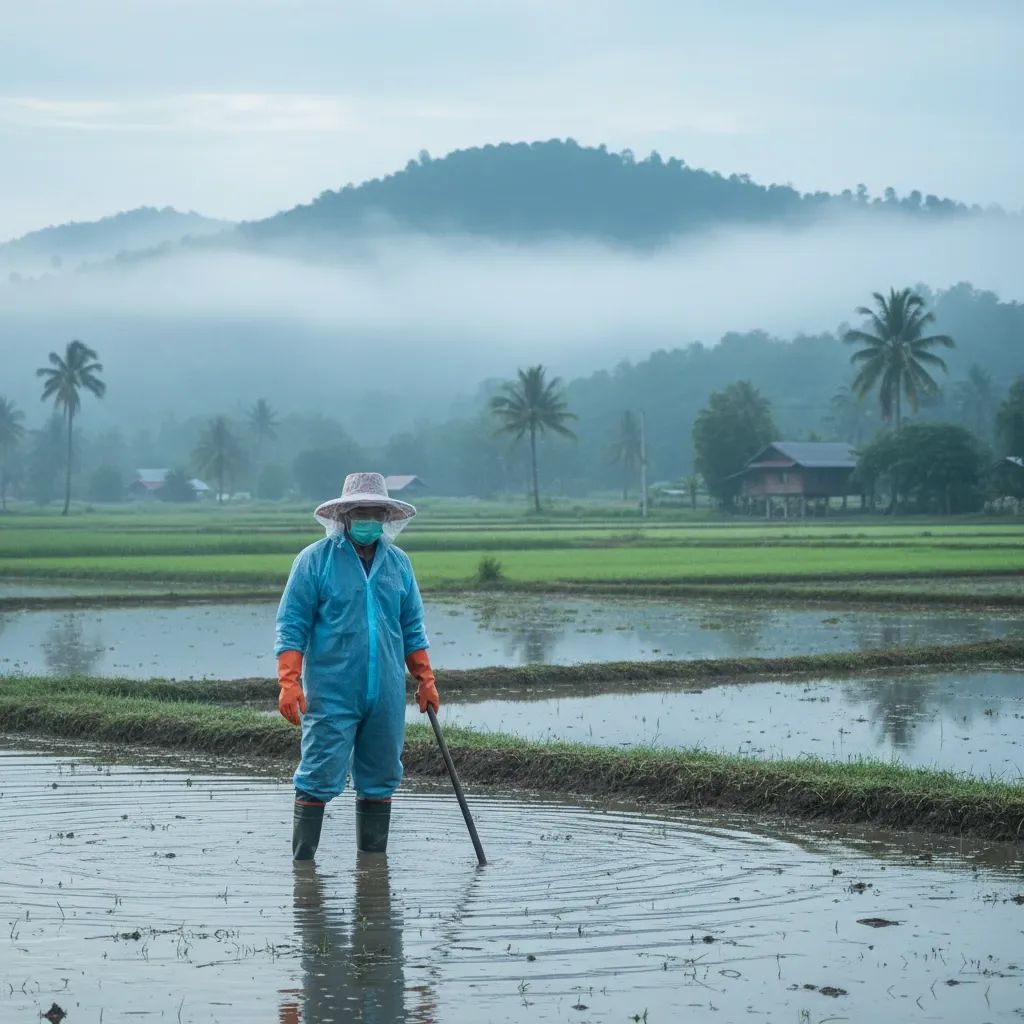
The Thailand Meteorological Department officially declared that the country will enter the rainy season on Friday, May 15, 2026. However, residents and businesses should prepare for a drier-than-usual monsoon period—one that could trigger water shortages, agricultural losses, and higher food prices across the country. Total rainfall for 2026 is forecast to fall 10% below the historical average, raising concerns about drought conditions even during what is traditionally the wettest time of year.
Why This Matters
• Agricultural risk: Rice, sugarcane, and palm oil yields could drop significantly, especially in non-irrigated areas.
• Water rationing likely: Reservoirs and natural water sources face declining levels; industrial and household use may be restricted.
• Dual water challenge: Expect both mid-season dry spells (late June to early July) and late-season heavy rain (August to September).
• El Niño alert: A potential Super El Niño event could intensify the shortage during the second half of 2026.
What's Driving the Dry Forecast
The culprit is a convergence of climate factors. The Thailand Meteorological Department warns that neutral El Niño-Southern Oscillation (ENSO) conditions are shifting toward an El Niño phase by mid-year, with a 62% probability of onset between June and August. If the phenomenon escalates to Super El Niño strength—defined by abnormally high sea-surface temperatures in the eastern Pacific—Southeast Asia, including Thailand, will see substantially reduced monsoon moisture.
Rising global temperatures compound the problem. Warmer baseline conditions amplify El Niño's drying effect, creating more extreme weather swings. The Thailand Meteorological Department is issuing real-time weather forecasts and warnings to monitor the developing conditions, but the structural deficit in rainfall will persist throughout the season.
Timeline: What to Expect Through October
Early Season (Mid-May to Mid-June): Rainfall will increase gradually, with heavy downpours concentrated in the Eastern region and the Andaman coast. Between May 14 and 18, a strong low-pressure cell over the Bay of Bengal is forecast to generate intense rain and 2–3 meter waves in the Andaman Sea—rising above 3 meters in thunderstorm zones. Small vessels have been advised to stay in port. Despite the stormy start, cumulative rainfall will lag behind typical volumes.
Mid-Season Lull (Late June to Early July): This is a critical period. Rain distribution will thin out, creating dry spells that hit non-irrigated farmland hardest. Farmers outside canal networks may face crop stress just as young plants need water most. The Thailand Ministry of Agriculture and Cooperatives is urging growers to shift toward low-water crops and efficient farming practices.
Late Season (August to September): Monsoon intensity is expected to increase, bringing a second wave of heavy rain. This is when flooding, mudslides, and riverbank overflows become the primary concern. The Thailand Department of Disaster Prevention and Mitigation has instructed provincial governors nationwide to inspect flood-prone areas and prepare response resources.
End of Season (Mid-October): Rain tapers off in the upper country but continues through December along the Gulf of Thailand's eastern coast.
Impact on Residents
Urban Areas
For residents and workers in Thailand's cities, the practical implications are immediate. Water prices may rise as municipalities manage reduced supply. Electricity costs could follow if hydropower output drops. Households in Bangkok and surrounding provinces should prepare for possible water advisories, especially during the mid-season dry spell.
Agricultural Regions
Agricultural regions—particularly the North and Northeast—face significant risks. Rice farmers who rely on rain-fed paddies could see reduced yields, potentially driving up the price of jasmine and sticky rice at local markets. Palm oil and cassava growers are equally vulnerable. The Thailand Rice Exporters Association has warned that a poor monsoon could tighten global supply and push domestic prices higher.
Industrial Sectors
Industrial sectors dependent on water-intensive processes—paper mills, textile factories, and food processing plants—may need to reduce output or implement water-conservation measures. Supply-chain effects will ripple downstream, affecting everything from packaging to retail inventory.
Government Countermeasures
The Thailand National Water Resources Committee has approved emergency measures to manage both flood and drought risks this year. The Thailand Office of National Water Resources is coordinating data integration across agencies, while the Thailand Department of Disaster Prevention and Mitigation is conducting community-level risk assessments.
Key actions include:
• Infrastructure upgrades: Dredging canals, clearing waterway obstructions, and expanding water retention systems to capture excess runoff.
• New reservoir projects: Water projects in northern provinces are being prioritized to ease shortages in drought-prone areas.
• Early-warning systems: The Thailand Meteorological Department will issue localized weather alerts for heavy rain and rough seas, with a focus on coastal and northern regions.
• Equipment deployment: Regional disaster response centers are pre-positioning pumps, sandbags, and earth-moving machinery in high-risk districts.
Provincial governors have been ordered to prepare water-conservation plans and educate communities on rationing. The government is emphasizing cross-agency coordination to prevent fragmented responses that have complicated past drought management efforts.
Economic Fallout
A below-average monsoon threatens more than crops. Household consumption may be affected if food prices rise and rural incomes decline. The Thailand agricultural sector, which still employs millions, could see debt accumulation as farmers borrow to cover input costs for diminished yields. Past droughts have cost the Thai economy significant economic losses, and the 2026 season carries comparable downside risk.
Export-oriented industries reliant on agricultural feedstocks—rubber, sugar, processed foods—may struggle to meet international contracts, potentially weakening currency performance and profit margins for manufacturers.
What Residents Should Do Now
• Track official updates: Follow the Thailand Meteorological Department and Thailand Department of Disaster Prevention and Mitigation for real-time forecasts and safety advisories.
• Conserve water: Even in urban areas, reduced usage can ease pressure on supplies. Fix leaks, limit outdoor watering, and reuse graywater where feasible.
• Stock essentials: If you live in a flood-prone zone, prepare an emergency kit with drinking water, non-perishable food, first-aid supplies, and battery-powered communication devices.
• Review insurance: Property owners in low-lying areas should confirm flood coverage and document valuables.
• Plan travel carefully: Between mid-May and September, check weather conditions before long-distance road trips, especially in the North, Northeast, and along the Andaman coast.
The 2026 monsoon will test Thailand's water management systems and response capabilities. With rainfall deficits in the forecast and potential El Niño impacts, the next four months will require careful planning, flexible management, and coordinated effort. The season begins Friday, May 15—but preparation and vigilance should start now.


