
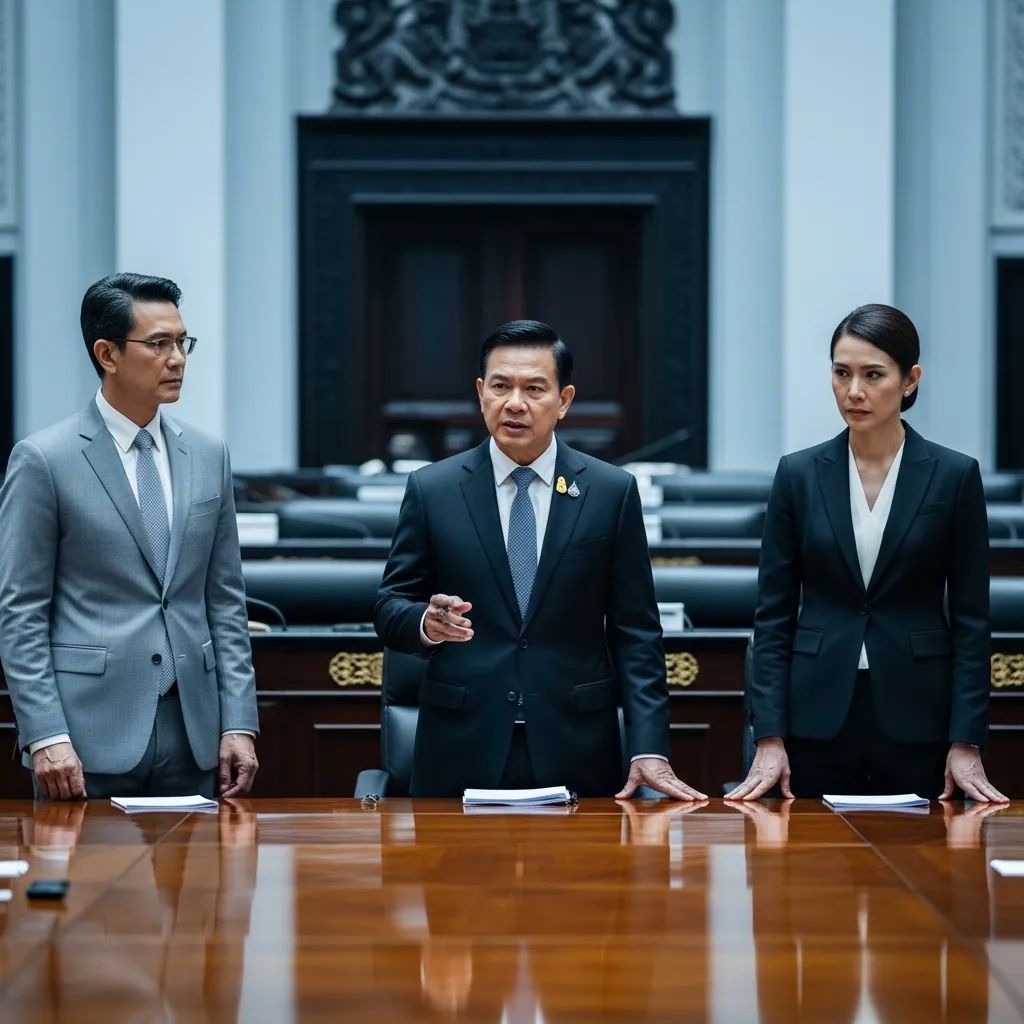
A broad three-pronged leadership slate is quickly taking shape inside Bhumjaithai, signalling how the party hopes to surf the post-dissolution campaign by blending political clout, diplomatic gravitas, and business savvy.
Snapshot before the race heats up
• House dissolved on 12 December; election must follow within 45-60 days
• Bhumjaithai weighs a trio: Anutin, Sihasak, Suphajee
• Internal allies tip Ekniti for top economic post, not the premiership
• Early polls show voters fixated on living costs rather than ideology
• Party’s new banner, “Spoke and Delivered Plus,” frames itself as the continuity choice
Three contrasting biographies, one shared brand
Bhumjaithai insiders argue that the proposed ticket would marry three distinct public images. Anutin Charnvirakul, the party’s long-time helmsman and caretaker prime minister, supplies the grass-roots network, control of the Interior Ministry, and a proven knack for coalition bargaining. Diplomat-turned-foreign-minister Sihasak Phuangketkeow brings four decades on the international stage, including his stint as UNHRC chair—assets the party believes resonate amid heightened border tensions. Completing the triangle is Suphajee Suthumpun, the ex-IBM and Dusit Thani chief now guiding the Commerce Ministry; her résumé of corporate turnarounds, tech experience, and trade negotiations targets urban and SME voters worried about exports and inflation.
Why risk three names?
Strategists close to Bhumjaithai describe the move as a hedge in an election where no single party is forecast to hit 251 seats. By offering multiple professional profiles, the party hopes to widen its appeal while buffering against last-minute legal or political torpedoes. Analysts add that a trio also keeps regional clans—northeast patrons loyal to Anutin, central business circles behind Suphajee, and diplomatic elites aligned with Sihasak—pulling in the same direction. The model mirrors the “team captain plus specialists” formula other major blocs are now copying.
Reading the temperature in the polls
Surveys released since the dissolution paint an electorate still undecided. NIDA Poll found 40 % saying “no preferred premier,” with Anutin at 12 % and his party at 10 %. Conversely, Super Poll placed Bhumjaithai on top at 14.4 %, citing appreciation for its cost-of-living pledges. A newer North Bangkok University poll, conducted 16-19 December, ranked Anutin second at 14.2 %, trailing an up-and-coming reformist. The fragmented data convince party tacticians that showcasing economic competence, rather than charisma alone, is vital.
Calendar and choreography
The Election Commission must settle on a ballot date by late January. Until then, the cabinet operates in caretaker mode, unable to unveil big-ticket programmes. Bhumjaithai plans a 25 December policy launch highlighting expanded community healthcare, targeted fuel subsidies, and deepened ASEAN supply-chain links—themes designed to exploit Sihasak’s external-affairs profile and Suphajee’s trade credentials. Insiders say a formal premier candidate announcement could land in the same week to maximise media oxygen.
What Thai voters and businesses should watch
For household voters, the question is whether a multi-talent leadership can offer faster relief on food and energy prices than rival parties. For exporters and start-ups, Sihasak’s ability to defuse border conflicts and Suphajee’s record of market expansion may weigh heavily. Finally, provincial power brokers will study whether Anutin’s Interior networks still out-muscle the newly muscular People’s Party in local canvassing. The next few weeks, therefore, may determine whether Bhumjaithai’s three-head strategy proves a stroke of political engineering or simply spreads the spotlight too thin.


