
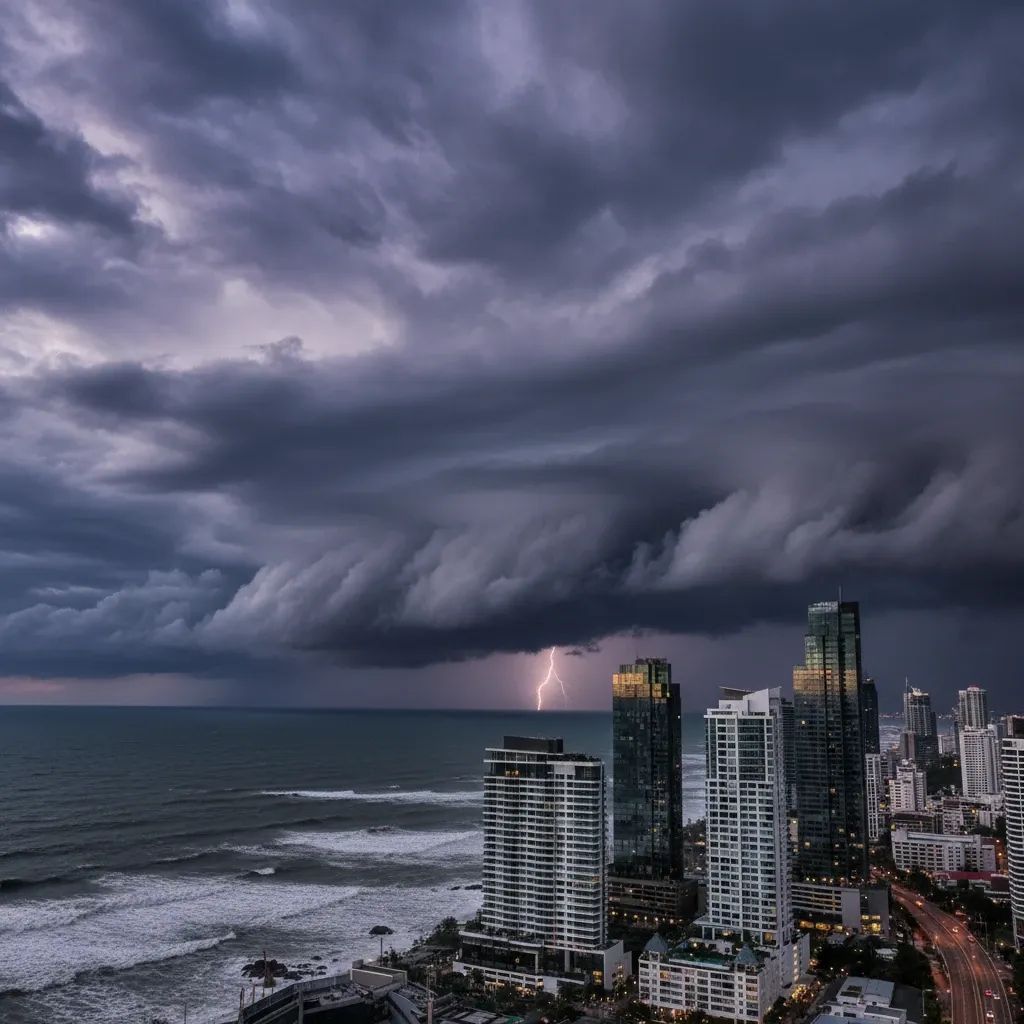
Spring Storms Grip Upper Thailand: A 48-Hour Vulnerability Window
The Thailand Meteorological Department has activated its fifth severe weather alert for April, signaling that residents across northern, northeastern, central, and eastern Thailand—including Bangkok and vicinity—face an acute two-day risk window today and tomorrow before conditions gradually stabilize through the weekend. Cold air from China colliding with tropical heat is generating explosive thunderstorms, gusty winds reaching 10–20 km/h, and localized hail that pose tangible threats to infrastructure, agriculture, and daily movement across nearly half the country.
Why This Matters
• Peak danger window closes by April 26 — today and tomorrow demand immediate protective action; delayed preparation significantly increases injury and property damage risk.
• Widespread power disruptions are probable — infrastructure damage from lightning strikes in recent storms this month has caused significant outages across multiple provinces; backup systems should be activated now.
• Agricultural losses concentrating in hill country — hydroponic farms and fruit orchards face crop destruction; farmers need 12 hours to reinforce stakes and secure livestock shelters before peak storm intensity arrives.
Understanding the Atmospheric Setup
A high-pressure mass pushing southward from China is meeting the seasonally entrenched heat dome over Thailand's northern and central regions. This creates what meteorologists call an unstable vertical structure—warm, moisture-laden air near the surface rushes upward into progressively colder layers above, condensing into towering cumulonimbus formations capable of producing hail, lightning, and sudden wind shear.
The North has baked under temperatures exceeding 40°C for over two weeks. When this collision zone activates, the release of energy is nearly instantaneous and localized, meaning one neighborhood can experience severe convection while another nearby remains clear—making forecasting precise coordinates impossible. This is why the Thailand Meteorological Department issues regional alerts rather than street-by-street warnings.
Tropical moisture will continue funneling northward through southerly and southeasterly wind currents through April 29, sustaining afternoon and evening instability even as the primary driver weakens by mid-week. Wave heights in the Gulf of Thailand and Andaman Sea will spike above 2 meters beneath active thunderstorms, creating hazards for fishing operations and small craft.
Geographic Risk Stratification: Where You Need to Act
The Thailand Meteorological Department has issued differential risk assessments. Understanding whether your province sits in the red zone or yellow zone determines the urgency of your preparations.
Red Alert Provinces (Critical Risk, April 24–25):
Northern areas including Chiang Mai, Lamphun, Mae Hong Son, and Sukhothai will experience thunderstorm coverage across 20–40% of their territories, with wind speeds accelerating to 10–20 km/h as surface temperatures plummet from 40°C into the high 30s. The Northeast—particularly Nakhon Ratchasima, Chaiyaphum, and Loei—faces more aggressive conditions, with storm coverage potentially reaching 30–60% of affected areas and comparable wind intensification.
Central provinces Uthai Thani, Saraburi, and Ayutthaya sit directly in the convergence zone, expecting 20–40% thunderstorm coverage. Bangkok and surrounding provinces including Nonthaburi, Samut Prakan, and Samut Sakhon will experience afternoon convection affecting up to 40% of the metropolitan footprint, with typical peak hours between 14:00 and 18:00. Coastal zones—Chon Buri (home to Pattaya), Rayong, Prachin Buri, and Chachoengsao—are forecast to experience 20–40% thunderstorm coverage with identical timing.
Yellow Alert Provinces (Moderate Risk, April 26–29):
Secondary-tier provinces including Chiang Rai, Loei, Nakhon Sawan, Lopburi, and Trat expect lower storm frequency (10–20% coverage) by late April as atmospheric instability gradually subsides. These regions warrant caution but face comparatively lower immediate threat.
What This Means for Residents and Businesses
Personal Safety: Immediate Steps
Avoid outdoor exposure during active thunderstorms. A concrete structure collapsed on a resident in Khon Kaen on April 18, resulting in a fatality. Lightning strikes carry no warning; do not shelter beneath large trees, near unstable buildings, billboards, or temporary scaffolding. Wind shear can convert everyday objects—chairs, potted plants, laundry racks—into dangerous projectiles in seconds. Secure all outdoor items, or move them indoors by 12:00 today.
Drivers face compounded hazards. Visibility on provincial highways can collapse from 200 meters to 20 meters within seconds during heavy downpours. Flash flooding has been documented in low-lying sections of roads throughout the East and Northeast; if approaching water appears in motion or discolored, reverse course rather than proceeding. Postpone non-essential travel between 14:00 and 18:00, when thunderstorm probability peaks.
Power infrastructure is vulnerable. Lightning triggers widespread outages; recent storms this month have paralyzed multiple provinces for hours. High-voltage transmission lines remain vulnerable to storm damage. Hospitals and essential services should activate backup generators immediately. Residents should charge all electronic devices and keep portable power banks accessible. Without redundant power, communication infrastructure—cell towers, internet routing—fails simultaneously with grid shutdown, creating communication blackouts in rural areas.
Agricultural and Livestock Protection
Farmers managing fruit orchards, hydroponic operations, or livestock installations face quantifiable economic risk. Hail can eliminate weeks of horticultural investment in minutes. Mangoes, longans, lychees, and vegetables grown in highland zones are particularly vulnerable during this growth phase. The Thailand Meteorological Department urges immediate tree reinforcement through supplementary staking and branch support systems. Livestock shelters require urgent inspection: verify roof integrity, clear drainage pathways, and confirm structural stability. Stressed animals are more susceptible to respiratory complications and injury during extreme weather. If feasible, relocate portable crops or equipment to protected storage within the next 12 hours.
Tourism and Hospitality Sector Positioning
Pattaya, Bangkok, and other coastal hospitality zones must treat this forecast as operational risk. Beach clubs, waterfront restaurants, and open-air entertainment venues face sudden closures and structural damage from sustained winds. All outdoor furniture, umbrellas, awnings, and signage must be dismantled or secured by 14:00 today. Rooftop bars and exposure-heavy venues should brief staff on emergency protocols. The Thailand Tourism Board has issued no formal closure guidance, but operators are already fielding customer cancellations for beach activities. Pre-positioning communication to guests about modified operations minimizes reputation damage and sets accurate expectations.
Infrastructure Resilience and Emergency Protocols
Spring thunderstorms develop with minimal satellite warning and can intensify rapidly—unlike coastal typhoons, which offer multi-day track predictions. The National Broadcasting and Telecommunications Commission (NBTC) mandates that licensed community radio stations throughout upper Thailand maintain continuous weather monitoring and cascade emergency alerts issued by the Department of Disaster Prevention and Mitigation (DDPM). These stations serve critical backup communication roles when mobile networks collapse due to power outages, particularly in remote districts where internet connectivity is already fragile.
Local authorities have activated communication drills with these stations to test alert cascading and message clarity. Their primary function is disseminating official warnings and actionable guidance rather than speculation. Social media platforms have already begun circulating unverified damage reports and panic-inducing claims about imminent flooding and wind damage. Residents should prioritize official channels exclusively: the Thailand Meteorological Department's website (with real-time regional updates), DDPM mobile alert system, and licensed community radio broadcasts. Secondhand information sourced from social media or messaging apps frequently distorts original data and creates unnecessary alarm.
Broader Context and Seasonal Patterns
This represents the fifth official alert from the Thailand Meteorological Department in April alone. Between April 14 and 20, 23 provinces reported storm-related incidents. Spring thunderstorms are seasonal phenomena across upper Thailand, particularly as the seasonal transition between winter and monsoon circulation patterns occurs. These cumulative warnings reflect the heightened atmospheric instability typical of this period.
Operational Timeline and Temperature Trajectory
The Thailand Meteorological Department updates its forecast every six hours; the pattern remains consistent: April 24–25 represents peak intensity, April 26–27 shows gradual decline, April 28–29 features residual activity. By May 1, the collision zone will migrate northward as the Chinese high-pressure system weakens and seasonal monsoon circulation patterns reassert dominance.
Northern temperatures will descend from 35–42°C today to 34–39°C by April 26, then further to 32–37°C by April 29. This gradual cooling will suppress atmospheric instability and reduce available convective energy. However, residents should not interpret declining temperatures as an all-clear signal; even modest thunderstorms in upper Thailand during April can trigger localized flash flooding and isolated severe weather phenomena in topographically complex terrain.
Practical Preparation Checklist
Households (Complete by 12:00 today):
Secure all outdoor items or move them indoors. Charge mobile devices, power banks, and emergency communication equipment. Brief family members on shelter locations and lightning-safety protocols. Avoid outdoor activities between 14:00 and 18:00 unless absolutely essential. Verify that backup lighting (flashlights, candles) and first-aid supplies are accessible. Clear gutters and drainage pathways around property perimeters to minimize flooding risk.
Agricultural Operations (Complete by 12:00 today):
Reinforce stakes and support structures on fruit trees. Verify livestock shelter roofing integrity and drainage capacity. Relocate portable equipment to covered storage. Brief workers on emergency shelter locations and lightning-safety protocols. Consider temporary crop protection if feasible (netting, temporary structures).
Businesses (Complete by 14:00 today):
Test backup power systems and fuel reserves. Secure external signage and equipment that could become airborne. Brief staff on emergency procedures and evacuation routes. Communicate contingency plans to customers if relevant (modified hours, service interruptions, activity cancellations).
Drivers:
Maintain heightened vigilance on provincial routes, particularly the Eastern Seaboard highways between Bangkok and Pattaya, where visibility degradation occurs most suddenly. Carry emergency contact numbers for local Thai Police and DDPM regional offices. Allow extra travel time and consider postponing non-essential trips entirely until April 26.
Monitoring and Information Strategy
The Thailand Meteorological Department continues issuing updates every six hours; monitor official channels exclusively rather than relying on social media speculation or secondhand reports. Storms will pass, but preparation and situational awareness today and tomorrow will meaningfully reduce risk to human life and property across upper Thailand.


