
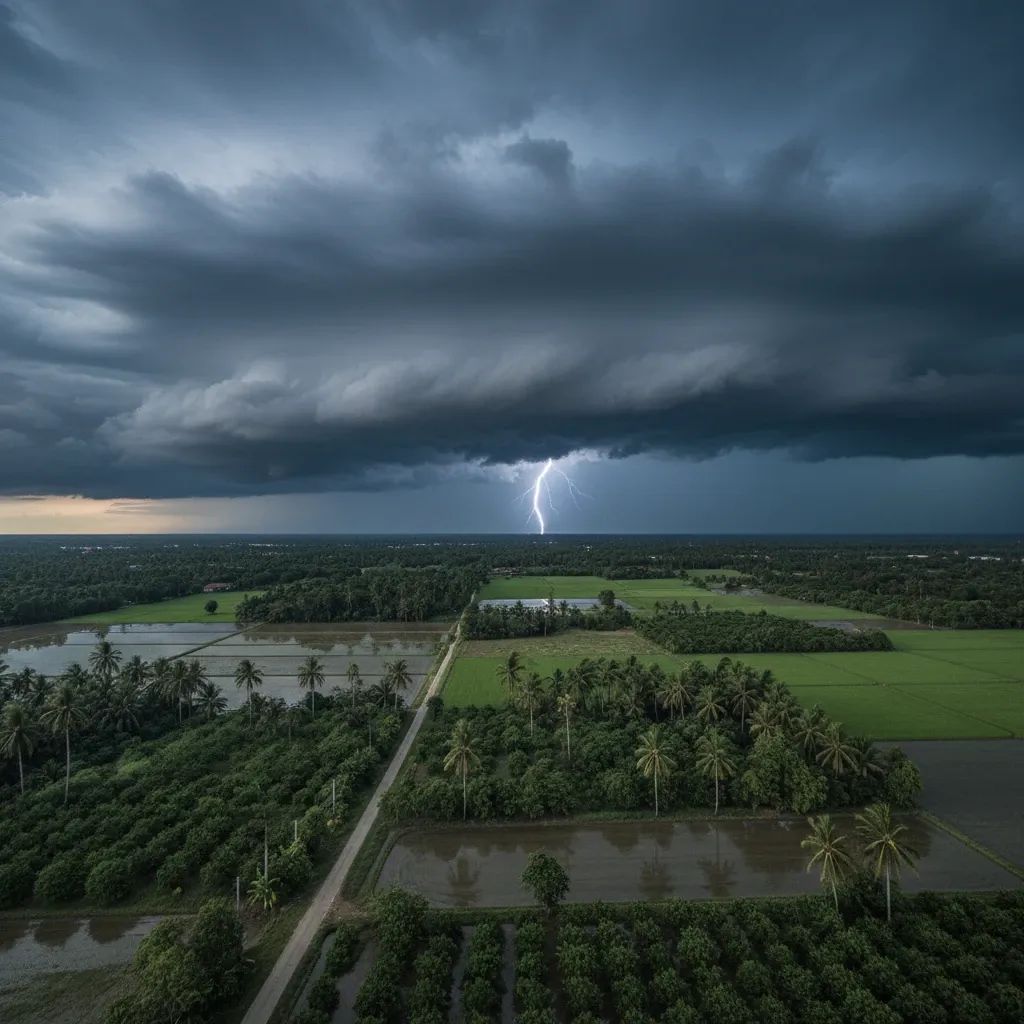
Severe Storm Arrives March 3-6: What You Need to Do Now
A major storm system will impact Thailand from tonight through Thursday, bringing heavy rain, hail, and wind gusts exceeding 50 km/h across at least 62 provinces. The Thailand Meteorological Department has issued a high-alert warning. Here's what residents need to know and do immediately.
Immediate Actions This Evening
Secure outdoor items now: Move patio furniture, plant containers, and loose materials indoors. Unsecured objects become dangerous projectiles in high winds.
Charge all devices: Expect power outages between 4 PM and 10 PM when storms peak. Charge phones, laptops, and portable devices completely. Have flashlights with fresh batteries ready.
Stock essentials: Keep 2-3 days of non-perishable food and bottled water accessible, especially if you live outside city centers.
Clear drainage: Ensure gutters and drainage pathways around your property are clear to prevent localized flooding.
Storm Timeline and Regional Impact
March 3 evening to March 4 morning: The Northeast region—Nakhon Ratchasima, Khon Kaen, and Udon Thani provinces—experiences the first major impacts with wind gusts potentially exceeding 50 km/h, hail up to 2 centimeters in diameter, and heavy rainfall.
March 4 afternoon through evening: The storm moves north, affecting Chiang Rai, Phayao, Nan, Lampang, and Lamphun provinces.
March 5 (Wednesday): Maximum coverage across the Central Plains, including Nakhon Sawan and Phetchabun. Bangkok and surrounding areas see scattered but intense thunderstorms, particularly in afternoon hours. Power outages lasting 1-4 hours are common during peak storm cells.
March 5-6 evening: Storm intensity decreases significantly. By Thursday morning, only scattered thunderstorms are expected in 10-30% of affected areas.
Pattaya and Eastern Seaboard: This region experiences lighter impacts with scattered thunderstorms (10-30% coverage) rather than widespread storms. Daytime temperatures remain 33-38°C. Sea conditions stay under one meter except during active storm passages. Defer beach activities to early morning hours.
Health and Safety During the Storm
Temperature swing: Expect overnight lows of 22°C following daytime highs of 32-38°C—a significant change that can stress elderly residents and those with respiratory conditions. Keep accessible layers of clothing and stay hydrated.
Lightning safety: During active thunderstorms, avoid using landline phones, disconnect computer systems, and refrain from bathing or showering. Avoid open areas and large isolated trees.
Road hazards: Visibility drops to 50 meters or less during heavy rain bands. Reduce vehicle speed on all routes between 3 PM and 11 PM March 3-6. The Bangkok-Chiang Mai expressway and secondary routes through Nakhon Sawan Province historically experience delays during such events.
Marine safety: Fishing vessels and recreational boats should either depart early or delay trips through Thursday. Storm cells can generate sudden wave height increases from under 1 meter to 2-3 meters within minutes.
Agricultural and Rural Impacts
Farmers in the Northeast and North should secure livestock in elevated shelter and ensure access to fresh water. Inspect and reinforce tree supports for orchards, particularly mango, longhorn, and rambutan crops. Clear drainage pathways around fields. Wind damage represents the primary risk to mature fruit trees and harvest-stage rice crops, while heavy rainfall can trigger waterlogging in poorly-drained fields.
Government Response and Resources
The Ministry of Natural Resources and Environment has positioned disaster response personnel across all 62 affected provinces, with emphasis on watershed areas and communities near forested slopes. The Thailand Department of Disaster Prevention and Mitigation (DDPM) operates real-time alert systems including the "THAI DISASTER ALERT" mobile application and Line notification service.
If you experience local flooding with no life-safety crisis, contact your local subdistrict disaster office rather than emergency services (1199) to preserve capacity for genuine emergencies. During power outages, text-based SMS communication often functions when voice calls cannot.
What to Expect and Monitor
The storm represents typical early-season severe weather but intensified by current atmospheric conditions. Residents should treat the meteorological department's alert as operationally significant and monitor official channels every 6 hours through Thursday.
Thursday evening through Friday: Residual scattered storms continue with significantly reduced severity. Resume normal patterns by Friday, though monitor localized flooding reports and road conditions through Saturday morning.
This is manageable with preparation. Securing property, charging devices, and staying informed transforms this weather event from a hazard into an anticipated situation you've prepared for.


