
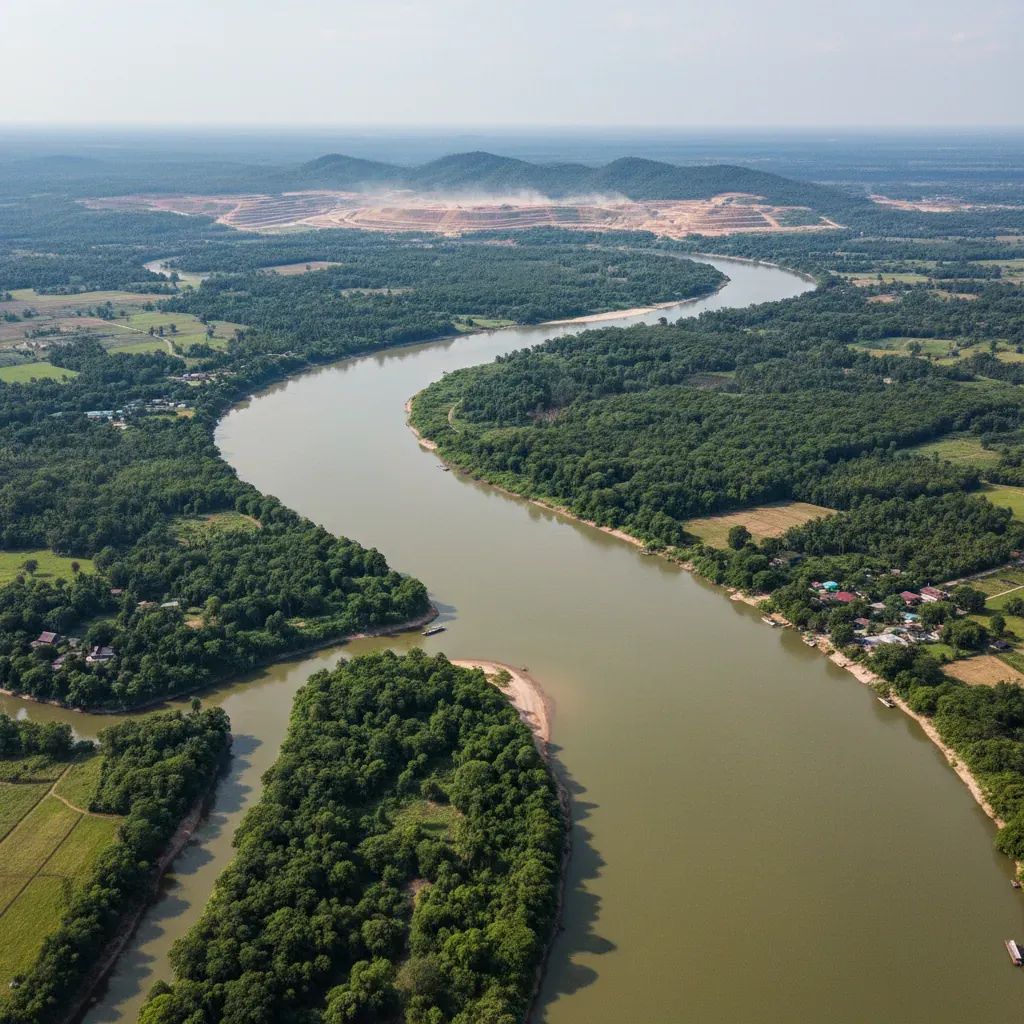
A 322,789-cubic-meter stockpile of dredged Mekong River sediment has entered the commercial marketplace across northern Thailand, but government agencies and environmental researchers have confirmed the material carries measurable concentrations of arsenic and other heavy metals—raising immediate questions about whether buyers face contamination risks when using it for construction, agriculture, or landfill projects.
Why This Matters
• No mandatory testing required: Unlike other construction materials in Thailand, dredged sediment currently enters the market with no pre-sale environmental assessment, despite documented heavy metal risks.
• Buyers shoulder the burden: The Waterway Maintenance Office 7 has permitted inspections but does not conduct mandatory certification, leaving contractors and municipalities to request testing independently.
• Contamination levels documented: Arsenic concentrations in the same Mekong channel reach up to 296 mg/kg—nearly nine times the safe aquatic threshold of 33 mg/kg.
• Where disposal happens matters: Construction firms, agricultural buyers, and municipal authorities must now understand how this material disperses across residential zones, farmland, and public works.
How the Contamination Got Here
The toxic sediment flowing through the Mekong reflects a larger transboundary crisis. Since March 2026, the Thailand Pollution Control Department has detected dangerous arsenic concentrations in mainstream Mekong sediment samples, with measurements fluctuating between 73 and 296 mg/kg. Researchers from Chiang Mai University have independently confirmed these findings, particularly during testing across the Golden Triangle region and southward toward Chiang Saen District.
The contamination originates upstream in Myanmar's Shan state, where unregulated rare-earth and gold mining operations—many backed by Chinese investment—discharge toxic runoff directly into tributaries feeding the Mekong mainstream. The Kok, Sai, and Ruak rivers, all key water sources in Chiang Rai Province, show arsenic levels up to 57 mg/kg in their own sediment beds. During a May 2026 investigation, testing near Sop Ruak revealed concentrations exceeding 61 mg/kg, more than double the danger threshold for aquatic ecosystems.
The problem extends beyond sediment. Water samples from the region consistently measure approximately 0.03 mg/L of dissolved arsenic—triple the safe drinking standard of 0.01 mg/L. Local residents report observing the river turn murky and yellow, deterring traditional practices like bathing and laundry washing.
What This Means for Residents and Buyers
The sale announced by the Marine Department's Waterway Maintenance Office 7 on July 1 released approximately 322,000 cubic meters of dredged material into the commercial supply chain. Construction companies, agricultural buyers, and municipal authorities now face a practical dilemma: the sediment can serve legitimate purposes—road base, landfill, soil amendment—but no regulatory framework guarantees it has been tested for contamination before purchase.
Following social media alarm on July 9, the Chiang Rai Regional Marine Office issued a clarification stating willingness to allow government agencies to inspect heavy metal content. However, this represents a reactive measure, not a safeguard. The burden of verification falls on buyers or concerned agencies rather than the seller. Thailand's regulations currently exempt sand and sediment sales from Environmental Impact Assessment requirements, even as the Ministry of Natural Resources and Environment updated EIA protocols in 2026 for other project categories, including climate, pollution disclosure, and wetlands initiatives.
For construction firms incorporating this material into housing developments, the risk becomes a long-term liability. Once contaminated sediment disperses into residential soil, tracking and remediation become economically unfeasible. Agricultural buyers purchasing the material as soil amendment face similar consequences—arsenic settles into paddy fields and irrigation systems, eventually entering the rice supply. Over 120,000 residents in Chiang Rai already depend on tap water drawn from tributaries showing contamination signals.
The Thailand Ministry of Public Health has issued explicit warnings against consuming shellfish from the Mekong or fish organs (bellies and heads) from contaminated zones due to cancer and neurological disorder risks. Arsenic bioaccumulates in aquatic food chains. Local fishermen report plummeting demand for their catches as consumers absorb contamination warnings, undermining livelihoods already threatened by ecosystem collapse.
Regulatory Gaps and International Standards
Thailand participates in the Mekong River Commission, which adopted Guidelines for Transboundary Environmental Impact Assessment in October 2022. The framework, however, lacks enforcement authority over upstream mining zones in Myanmar and China—the actual pollution sources. This jurisdictional limitation leaves Thailand in a reactive posture: agencies document contamination after it reaches territorial waters.
The kingdom is not a signatory to the London Protocol 1996, an international treaty establishing guidelines for sustainable dredging and assessment of dredged materials before project commencement. The protocol outlines an eight-step process specifically designed to control dredging impacts and mitigate risks to human health and ecosystems. Alignment with this standard would require Thailand to mandate pre-sale testing and contamination certification—a regulatory move currently absent.
A Thai Senate committee has pressed the government to accelerate a national action plan addressing cross-border contamination, partly to strengthen Thailand's application for OECD membership, which prioritizes robust environmental governance. This external pressure reflects recognition that current gaps invite both health risks and international credibility questions.
Documented Health Evidence in Exposed Populations
Medical investigation has already documented health markers in populations directly exposed to contaminated sediment and water. Doctors treating villagers in riverside communities have detected arsenic, lead, and manganese in patients' blood, urine, and fingernails. Cases of organ failure, neurological damage, impaired cognition, and kidney dysfunction cluster in areas with highest exposure to contaminated fish and water consumption.
Experts caution that cumulative exposure to multiple heavy metals creates synergistic toxicity—the combined effect exceeds what individual contaminants alone would produce. Even when isolated measurements fall within "acceptable" ranges, the presence of arsenic, lead, mercury, cadmium, chromium, copper, nickel, and zinc simultaneously constitutes what researchers describe as a "ticking time bomb." Bioaccumulation through the food chain and immune system suppression affect both fish and human populations over years and decades.
The Dredging Contradiction
The sediment sale occurs alongside separate municipal plans to dredge sections of the Kok River—a Chiang Rai tributary—to deepen the channel and improve water flow following a devastating 2024 flood. Environmental groups have raised objections, fearing that dredging operations could disturb already-settled contaminated sediment on the riverbed, redistributing toxins and creating new exposure pathways for downstream populations.
The question of where to safely dispose of contaminated dredged material remains unresolved in Thailand's current framework. Without mandatory testing protocols or designated hazardous-sediment disposal sites, dredging risks transforming a localized contamination problem into a dispersed regional crisis—exactly the outcome the current sediment sale appears poised to accelerate.
The Marine Department's willingness to permit inspections represents a response to public pressure, yet it underscores systemic weaknesses in how Thailand manages contaminated riverine resources. As the kingdom modernizes environmental law and pursues international alignment, the Mekong sediment sale exposes urgent gaps: material carrying documented health risks enters commercial supply chains with no mandatory pre-distribution safety certification, no EIA requirement, and no regulatory guarantee of testing. Closing these gaps requires updated national protocols aligned with international dredging standards—a step that becomes more pressing as contamination intensifies.


