
Why This Matters
Electronic dance music enthusiasts planning to visit Thailand in December 2026 should act quickly—the inaugural Tomorrowland Asia is arriving in Pattaya, and infrastructure constraints mean limited capacity for hotel bundles and a logistical reality that differs sharply from the festival's flagship European event.
Key Takeaways:
• Dates set: December 11-13, 2026 at Wisdom Valley in Chonburi Province—expect 50,000 daily visitors, with over 60% from abroad
• Hotel packages sold out: Bundled accommodation-plus-ticket deals disappeared within days; general ticket sales begin March 7
• Economic stakes: The Thailand Tourism Authority projects 5.3 billion THB (roughly 170 million USD) in direct spending, with potential regional ripple effects totaling 30 billion THB over five years
• No DreamVille camping: Unlike Tomorrowland Belgium, there is no on-site accommodation—attendees must book Pattaya hotels and use shuttle buses
A Strategic Bet on Thailand's Festival Future
The Tourism Authority of Thailand, partnering with Belgian promoter TL International and domestic operator One Asia Ventures, has secured a five-year partnership that positions Pattaya as Southeast Asia's premier outdoor music destination. This is not a side-stage venture or regional adaptation. It is the festival's first complete Asian edition—meaning the same production scale, stage architecture, and creative ambition that define Tomorrowland Belgium and Tomorrowland Brazil are being transplanted to the Thai coast.
The Thailand Board of Investment has greenlit the project with formal investment promotion status, signaling government confidence in both the economic returns and the diplomatic value of hosting a globally recognized Belgian cultural export. Combined public and private funding totals 1.65 billion THB, a substantial commitment underscoring Pattaya's repositioning from a leisure-and-nightlife brand into a year-round cultural tourism hub.
For context, this represents a deliberate departure from Thailand's traditional tourism formula. Rather than compete on beaches and temples alone, the TAT is now competing for high-spending, globally mobile travelers who follow major entertainment events. Those attending Tomorrowland typically spend freely on accommodations, food, transport, and ancillary experiences—precisely the visitor profile that Pattaya has struggled to attract in recent years.
The Logistics Reality: Capacity, Transport, and Disruption
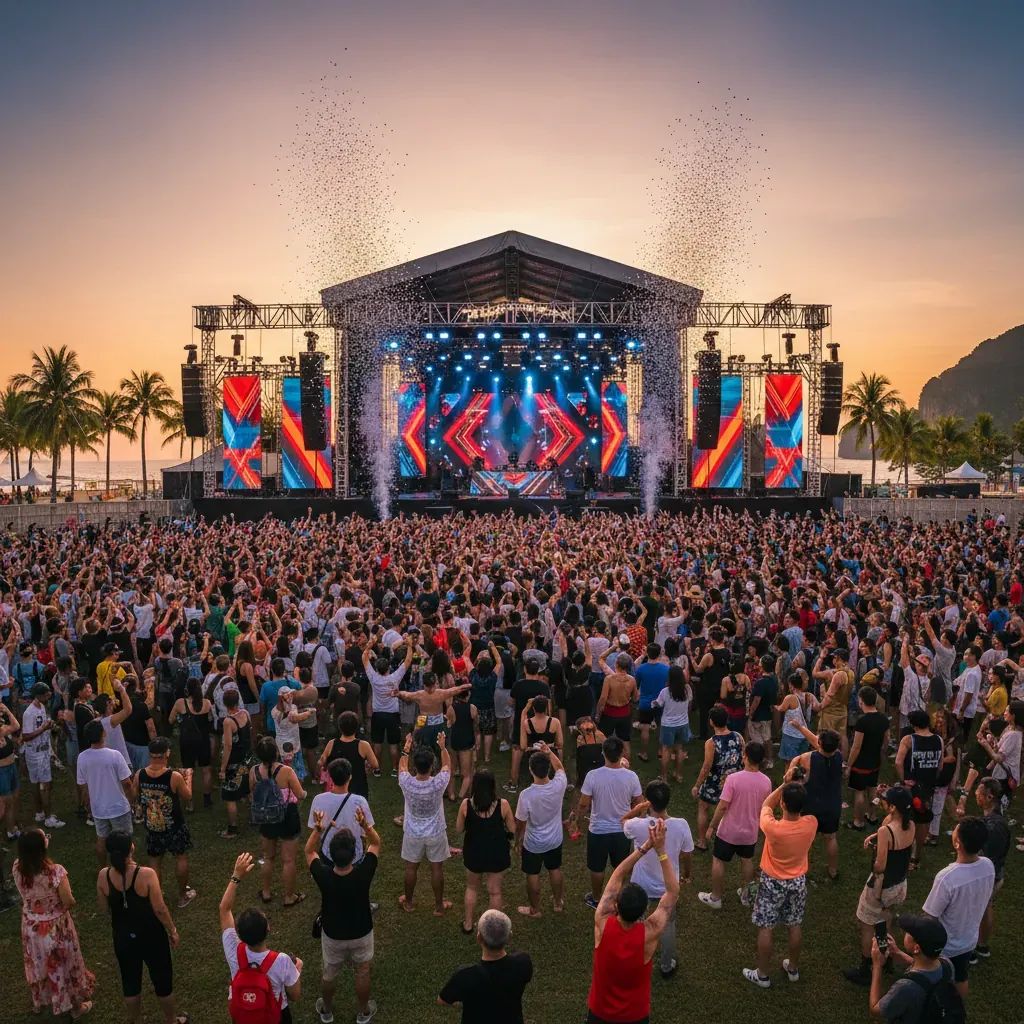
The Wisdom Valley venue will accommodate six large stages—the iconic Mainstage, the CORE and Freedom stages, and a new Thailand-only stage among them—plus supporting infrastructure. Unlike Tomorrowland Belgium's adjacent camping village, there will be no overnight accommodation on-site. Festival-goers must secure their own lodging within reasonable distance and rely on dedicated shuttle buses running from partner hotels.
This constraint has already proven consequential. Hotel packages bundled with three-day passes and shuttle access—released February 28—sold out within days, creating frustration among attendees who hoped for convenience. That rapid sellout reflects two realities: genuine demand and genuine scarcity. Pattaya, while well-served by hospitality infrastructure, does not have unlimited capacity at the mid-to-premium tier that festival attendees typically prefer. Budget options will absorb overflow demand, but comfort and proximity will command premium pricing.
The Chonburi Provincial Government and organizers have committed to shuttle operations to mitigate road congestion. Shuttle route details and pickup schedules will be announced closer to the event date. Festival-goers should confirm shuttle pickup locations, frequency, and estimated travel times once details become public to plan transport logistics accordingly.
Residents should prepare for noticeable disruption during December 11-13. Transportation corridors serving the festival grounds will carry thousands daily during those three days. Ride-hailing services like Grab will likely experience surge pricing. Restaurants and cafes in central Pattaya could become overcrowded. This represents manageable but noticeable disruption that locals should anticipate.
What the Numbers Reveal About the Economy
The projected spending carries three layers of significance. First, direct outlays by festivalgoers are estimated at 1.4–1.5 billion THB—roughly equivalent to a year's rent on mid-market apartments across Bangkok's central business districts. Second, indirect economic effects (hotel occupancy, restaurant revenue, taxi and shuttle income, retail spending) are expected to push annual impact to 5.3 billion THB. Third, across five years, cumulative economic value is pegged at 30 billion THB, contingent on the festival becoming an annual fixture and establishing institutional momentum.
The more revealing metric is employment. Organizers project 1,900 jobs created in year one—positions spanning hospitality, security, logistics, technical support, and service roles. Many will be seasonal or temporary, but they represent genuine income for Thai workers and demonstrate how large-scale tourism events create cascading employment beyond the event itself. Shuttle drivers, hotel staff, cleaning crews, security personnel, and vendor workers will all benefit.
Beyond raw numbers, Tomorrowland Thailand is designed to catalyze longer-term institutional development. The planned DJ Academy and Festival Academy will transfer music production and event management knowledge to Thai creatives, building local expertise and potentially creating a pipeline of talent for future events. This knowledge-transfer dimension distinguishes the festival from one-off spectacles and suggests genuine investment in Thailand's creative economy.
The Regional Festival Context
Southeast Asia has become a mature market for large-scale music festivals. Wonderfruit (in Thailand), Djakarta Warehouse Project (in Bali), and We The Fest (in Jakarta) have each demonstrated regional capacity to handle tens of thousands of daily attendees, complex logistics, and international coordination. These precedents provide both a template and a competitive benchmark.
What distinguishes Tomorrowland is brand prestige and production sophistication. While regional festivals emphasize sustainability, local culture, or boutique experience, Tomorrowland is synonymous with immersive stage design, pyrotechnic spectacle, and carefully curated electronic music lineups. The artistic strategy also matters: the festival's "Consciencia" theme ties together the Belgian, Thai, and Brazilian editions through a shared narrative centered on six human emotions—wonder, love, anger, joy, desire, and sadness. This thematic coherence across geographies signals that Tomorrowland Thailand is not a franchise transplant but an intentional creative continuation.
The artist lineup remains unannounced as of now, with organizers indicating revelations will come in early 2026. For attendees accustomed to Tomorrowland's reputation for securing top-tier electronic music talent, expectations are predictably high.
Impact on Residents and Practical Attendance
For Pattaya residents, the festival presents both economic opportunity and temporary disruption. The economic stimulus is genuine, but so is the operational challenge. December 11-13 will bring congestion, increased noise levels, and crowds. Hotels will raise rates. Restaurants will be busy. Utilities may experience minor strain.
Guidance for Local Residents:
• Alternative routes: Main thoroughfares including Highway 7 and routes to Wisdom Valley will experience elevated traffic during festival days. Consider using secondary roads or adjusting travel schedules outside peak hours (typically 4–8 PM on festival days). Municipal traffic advisories will be issued closer to December 2026.
• Business operations: Retailers, restaurants, and service providers in central Pattaya should anticipate increased demand for extended hours. Tourism-facing businesses may benefit from additional staffing during December 11-13. The Pattaya City Administration is expected to issue formal guidance for merchants.
• Municipal monitoring: Residents should check announcements from the Chonburi Provincial Government and Pattaya City Administration for noise ordinances, parking restrictions, and emergency contact information. These will be communicated through official channels and local news outlets.
For those planning to attend, preparation begins now. Ticket sales open March 7 via official Tomorrowland Thailand channels, with single-day and three-day options available. Since hotel packages sold out immediately, new attendees should book Pattaya lodging independently as soon as possible—preferably near shuttle pick-up points to minimize transit time and cost. Once shuttle details are announced, confirm pickup locations and schedules to avoid last-minute complications.
Weather conditions favor attendees. December in Chonburi Province typically brings lower humidity and cooler temperatures than the hot season, though sun exposure during daytime sets will be intense. Bring sunscreen, hydration packs, and comfortable footwear; outdoor events in tropical environments reward preparation.
International visitors should verify visa status well ahead. Thailand offers visa-exempt entry for most nationalities and visa-on-arrival for many others, but confirming eligibility eliminates border friction.
The Deeper Significance
Tomorrowland Thailand is ultimately a test case—not just for the festival's commercial viability in Asia, but for Thailand's positioning in the global cultural economy. Success would signal that the country can execute complex international entertainment partnerships, manage visitor logistics at scale, and attract affluent, culturally engaged travelers seeking experiences beyond conventional tourism. Failure or operational stumbles would dampen appetite for similar mega-events.
The festival also reflects a deliberate strategy by the Thai government to diversify revenue sources beyond mass-market beach tourism. By hosting recognized international brands, Thailand aims to create repeatable demand from high-spending visitors who will return or recommend the destination to peers. That compounds into brand equity and sustained economic benefit.
For residents and visitors alike, the event represents a moment where Thailand's ambitions as a global cultural destination become tangible. The December 2026 days will bring temporary disruption, genuine opportunity, and a clear signal that the country's tourism and entertainment landscape is shifting in real time.


