Thailand ASEAN watchers and regional investors now have a new neighbor at the table: Timor-Leste formally secured its seat as the 11th member state of the Association of Southeast Asian Nations in October 2025. This matters directly for Thai businesses, expats, and investors—opening a market of 1.4 million people and creating immediate trade and investment opportunities through preferential tariff access and simplified customs procedures.
Why This Matters for Thailand
Timor-Leste's accession opens concrete opportunities for Thai entrepreneurs and professionals:
• Regional trade expansion: Thailand exporters and investors gain preferential access to a nascent market with growing demand for construction materials, processed foods, and logistics services.
• ASEAN cohesion test: Timor-Leste's 2029 chairmanship will stress-test the bloc's ability to support a fragile economy, setting precedents for future integration challenges.
• Infrastructure opportunities: Thai construction firms and telecom providers are eyeing contracts as Dili races to modernize ports, roads, and digital connectivity before hosting dozens of high-level summits.
• Diplomatic balancing: Timor-Leste's entry adds a pro-Western voice to ASEAN debates, potentially shifting consensus dynamics on regional security and trade policy.
From Observer to Full Member: The 23-Year Journey
The Thailand Ministry of Foreign Affairs has tracked Timor-Leste's accession path since 2002, when the newly independent nation received ASEAN observer status. The formal application arrived in 2011, but momentum stalled until 2022, when ASEAN leaders meeting in Phnom Penh granted Timor-Leste "in-principle" membership and elevated its observer privileges. A year later, member states adopted a Roadmap for Full Membership, a checklist requiring legal, economic, and administrative alignment with the bloc's three pillars: political-security, economic integration, and socio-cultural cooperation.
By September 2025, Timor-Leste's National Parliament had unanimously ratified 22 resolutions spanning trade agreements, security frameworks, and cultural protocols. The Council of Ministers approved adherence to the ASEAN Agreement on Trade in Goods (ATIGA) and the ASEAN Framework Agreement on Services (AFAS), clearing the final bureaucratic hurdles. On October 26, 2025, during the 47th ASEAN Summit in Kuala Lumpur, leaders signed the Declaration on the Admission of Timor-Leste, formalizing the entry.
Malaysia, as the rotating chair, played a pivotal role—not only hosting the signing ceremony but also dispatching technical advisors to Dili and launching direct Batik Air flights from Kuala Lumpur to accelerate connectivity.
Economic Reality: A $19B Fund Masking Fragility
Timor-Leste's economy presents a paradox: a sovereign wealth fund valued at nearly ten times GDP coexisting with 42% poverty rates and 20% unemployment. To provide context for Thai residents: Timor-Leste's $2.17 billion economy is roughly equivalent to Thailand's Eastern Economic Corridor, making it a modest but strategically positioned market. The Petroleum Fund, established in 2005, absorbed windfalls from the Bayu-Undan offshore field, which ceased production in mid-2025. Government projections show the fund sustaining current fiscal deficits only until the late 2030s, unless alternative revenue streams materialize.
Non-oil GDP growth is projected at 3.8% in 2025 and 3.4% in 2026, driven by public infrastructure spending and modest private consumption, according to the Asian Development Bank. Yet the Thailand Board of Investment and Bangkok-based consultancies note that Timor-Leste's narrow export base—petroleum and coffee—and minimal manufacturing capacity limit its ability to plug into regional supply chains. Over 65% of foreign direct investment in 2023 came from ASEAN partners, with Thai contractors winning bids for road upgrades and port expansions at Tibar Bay, the country's first modern container terminal.
Infrastructure Rush: Roads, Cables, and Runways
The Thailand Trade Representative Office in Dili reports accelerating infrastructure projects aimed at ASEAN-standard connectivity:
• President Nicolau Lobato International Airport is undergoing runway extension, terminal upgrades, and modern lighting systems to handle regional traffic.
• A long-delayed undersea fiber-optic cable is slated to go live by late 2025, potentially slashing internet costs and boosting speeds. The Timor-Leste government created a new state enterprise to manage wholesale pricing and service provision to telecom operators.
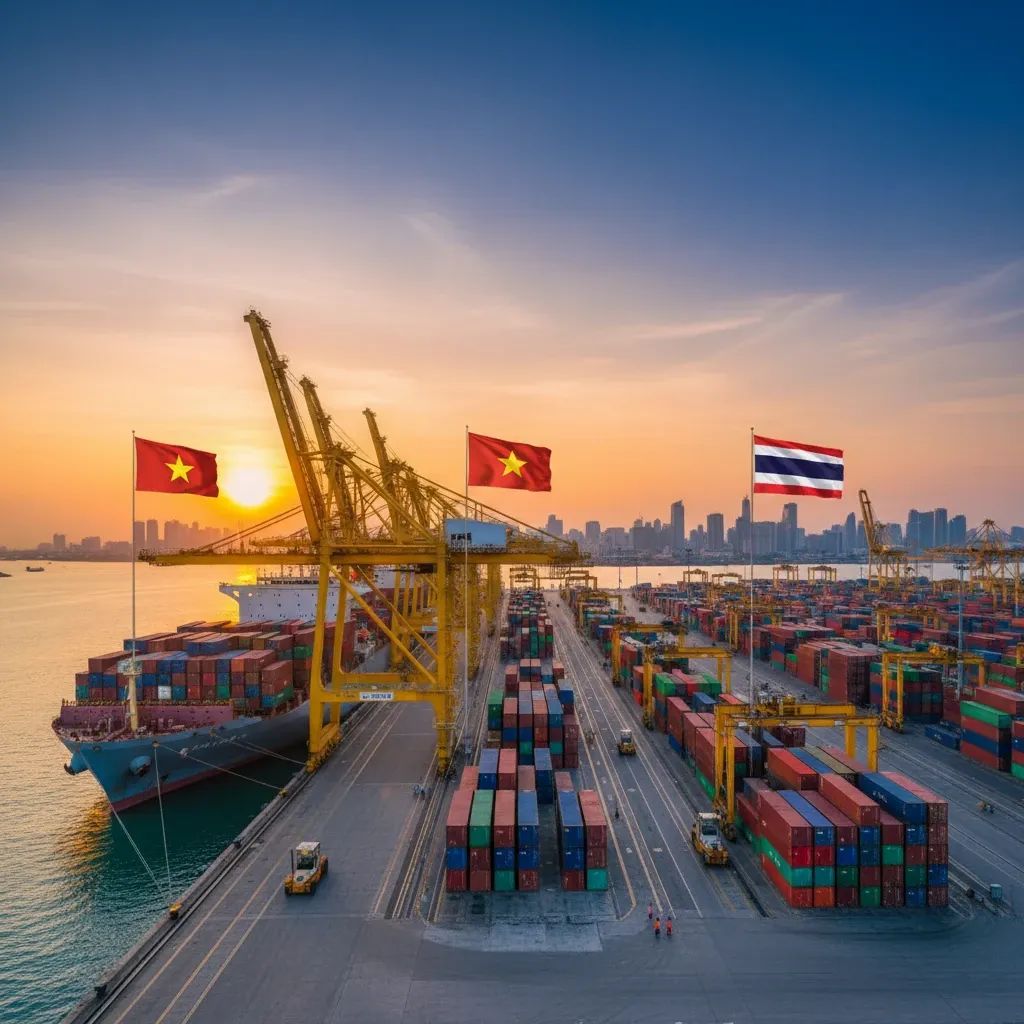
• Tibar Bay Port, a deep-water facility developed with Chinese backing, is operational and targeting transshipment traffic between Australia and Southeast Asia.
• The Tasi Mane development zone on the southern coast envisions an LNG processing plant tied to the Greater Sunrise gas field, a project fraught with delays and cost overruns but critical to long-term fiscal sustainability.
Thai engineering firms—particularly those with experience in Laos and Cambodia—are positioning for contracts in irrigation, rural electrification, and telecom tower installations, sectors where Timor-Leste lags well behind ASEAN benchmarks.
Diversification Push: Coffee, Tourism, and Carbon Capture
Aware that petroleum revenues are finite, Timor-Leste's Council of Ministers is steering investment toward agriculture, tourism, and niche industrial plays:
• Coffee and cocoa exports are being scaled, targeting premium markets in Australia and Southeast Asia. The government is upgrading irrigation systems to support mango and livestock farming.
• Ecotourism along the northern coast is attracting Singaporean hotel operators and dive resorts catering to Australians seeking alternatives to Bali.
• A pioneering carbon capture and storage (CCS) hub is planned at the depleted Bayu-Undan field, aiming to monetize regional decarbonization efforts. If viable, the project could position Timor-Leste as a carbon credit supplier for industries in Thailand, Indonesia, and Vietnam.
• Small-scale textiles, ceramics, and timber processing are being incubated to supply the domestic construction boom and, eventually, ASEAN buyers.
The 2029 Chairmanship: Ambition Meets Capacity Constraints
Timor-Leste is slated to assume the ASEAN chairmanship in 2029, a ceremonial but operationally demanding role requiring the host to convene dozens of ministerial meetings, summits, and working groups. The Thailand ASEAN Secretariat and diplomatic circles in Bangkok express cautious optimism mixed with concern: Dili's administrative capacity, English proficiency among officials, and logistical infrastructure remain underdeveloped.
A National Organizing Council (ACNOC) has been established in Dili, coordinating a "whole-of-government, whole-of-nation" mobilization. But analysts at the ASEAN Studies Centre in Bangkok note that hosting the chairmanship is a "stress test of state capacity," demanding inter-ministerial discipline, secure IT systems, and facilities capable of accommodating hundreds of delegates—luxuries Timor-Leste currently lacks.
Thailand's Ministry of Foreign Affairs is expected to provide technical assistance, including training on ASEAN procedures, summit logistics, and cybersecurity protocols. Malaysian and Singaporean diplomats are also offering mentorship, aware that a stumbling chairmanship could disrupt the bloc's rhythm at a time of intensifying U.S.-China rivalry and regional trade negotiations.
What This Means for Thai Businesses and Expats
For Thailand-based companies, Timor-Leste's accession translates to tariff reductions on exports under ATIGA, simplified customs procedures, and preferential treatment in government procurement as Dili seeks to diversify suppliers. Sectors to watch:
• Construction materials: Cement, steel, ceramics, and prefab housing components are in high demand as Dili expands urban infrastructure.
• Processed foods and beverages: Thailand's competitive food industry can supply hotels, restaurants, and retail chains catering to a growing middle class and expatriate workforce.
• Telecommunications and IT services: Thai telcos and software providers have opportunities in digital government, e-commerce platforms, and mobile banking infrastructure.
• Tourism services: Thai hospitality groups can partner with Timorese operators to develop resorts, training programs, and regional flight packages.
For Thai expatriates and investors, Timor-Leste presents a frontier market with minimal bureaucratic friction compared to more mature ASEAN economies, but also higher political and operational risks. English is widely spoken, the legal system is Portuguese-influenced, and the U.S. dollar is the official currency, simplifying transactions.
Practical Next Steps: How Thai Businesses and Expats Can Get Started
For Thai entrepreneurs and companies interested in exploring Timor-Leste opportunities:
• Board of Investment (BOI) Engagement: Thailand's Board of Investment has established a dedicated desk for Timor-Leste opportunities. Contact the BOI office in Bangkok for market briefings, tax incentive information, and partnership facilitator services.
• Ministry of Commerce Resources: The Thai Embassy in Dili and the Thailand Trade Representative Office provide market research, potential partner databases, and ongoing regulatory updates. Monthly newsletters summarizing trade developments are available on the Thai Ministry of Commerce website.
• ASEAN Business Council: Access to the ASEAN Business Council's Timor-Leste working group for networking with Thai and regional investors already operating in Dili.
• Visa and Work Permit Requirements: Thai nationals can obtain single-entry business visas valid for 30 days through the Timor-Leste embassy in Canberra or Jakarta. For longer-term residency and work permits, investors typically need to establish a local registered entity, a process taking 2-4 weeks. No visa run is required for ASEAN members on tourist visas.
• Currency and Banking: Transactions are conducted in U.S. dollars; major Thai banks (Kasikornbank, Bangkok Bank) offer remittance and currency services. Dili has limited ATM coverage, so advance planning is essential.
• Regulatory Contact Points:
• Timor-Leste Ministry of Commerce, Industry & Environment: Coordinates investment approvals and trade agreements
• Tibar Bay Port Authority: For logistics and port-related inquiries
• Timor-Leste Chamber of Commerce & Industry: Primary liaison for business partnerships
Comparable Market Context: For perspective, Timor-Leste's population of 1.4 million is slightly larger than Thailand's Khon Kaen province, with growth potential but infrastructure challenges similar to Thailand 15-20 years ago. Early movers in construction, food, and telecom may enjoy first-mover advantages.
For Thai expats considering relocation:
• Employment typically requires a sponsoring employer registered in Timor-Leste; direct job placement for foreign workers is limited outside international organizations and NGOs.
• Cost of living in Dili is moderate (slightly cheaper than Bangkok for middle-class accommodation, but imported goods are expensive).
• Healthcare and education services are developing; many expat families utilize regional hubs like Singapore for serious medical needs.
Geopolitical Ripples: A Pro-Western Voice in ASEAN
Timor-Leste's entry subtly shifts ASEAN's diplomatic balance. The nation maintains warm ties with Australia, Portugal, and the United States, and is less economically tethered to China than Cambodia, Laos, or Myanmar. Bangkok-based diplomats note that Timor-Leste is likely to support positions aligned with Australia's Indo-Pacific strategy and may bolster calls for stronger human rights clauses in ASEAN agreements—a stance that could complicate consensus-building on sensitive issues.
Thailand, as a longstanding ASEAN anchor, will need to navigate these dynamics, balancing support for the bloc's newest and most vulnerable member while managing relationships with Beijing and ensuring economic integration proceeds without friction.
Long Road Ahead: Can Diversification Outpace Depletion?
The International Monetary Fund and World Bank both project modest growth for Timor-Leste through 2027, but warn that fiscal discipline and productive public investment are non-negotiable. The country's ability to leverage ASEAN membership hinges on three variables: accelerating non-oil exports, attracting sustained FDI, and building human capital through education and vocational training.
For Thailand ASEAN observers, Timor-Leste's trajectory offers a real-time case study in post-conflict state-building, resource curse mitigation, and regional integration. Success would validate ASEAN's capacity to uplift fragile economies; failure could expose the limits of solidarity in a bloc already stretched by economic disparities and competing strategic interests.
The next four years—leading to Timor-Leste's 2029 chairmanship—will determine whether the country's hard-won ASEAN seat becomes a platform for sustainable development or a reminder that membership alone cannot substitute for institutional strength and economic diversification.