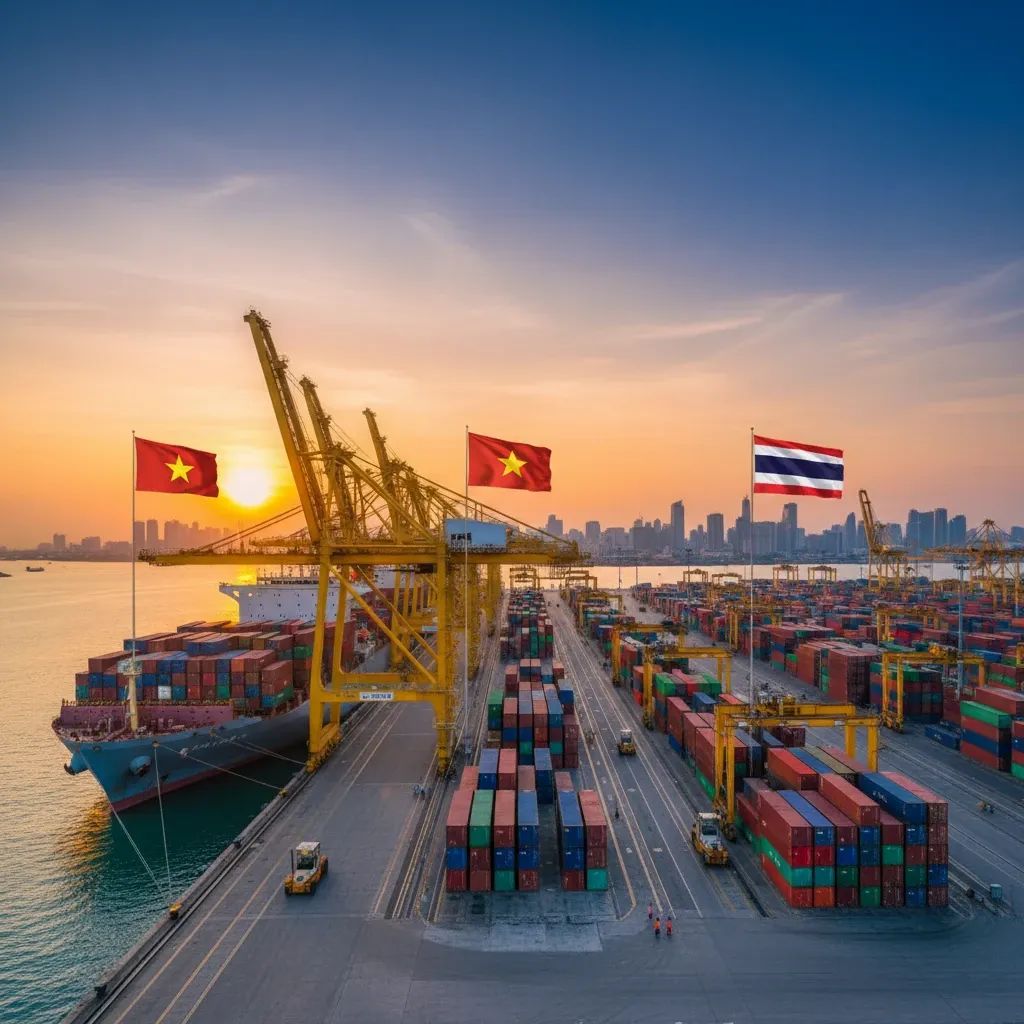
Thailand and Kazakhstan held high-level bilateral talks in Shanghai on July 17, 2026, with Prime Minister Charnvirakul and President Tokayev discussing potential areas for expanded trade cooperation and regional partnership.
What Was Discussed
During the meeting, both governments explored opportunities for deeper bilateral engagement across several sectors. Thai officials highlighted Thailand's position as a gateway to Southeast Asia's 600 million consumers, while Kazakhstani representatives outlined their country's role in Central Asian trade networks. Key discussion areas included:
• Trade facilitation and regulatory cooperation
• Potential partnerships in healthcare, tourism, and food security
• Technology and digital cooperation initiatives
• Infrastructure and logistics connectivity
• Supply chain diversification opportunities
Officials indicated both sides expressed interest in pursuing a potential Free Trade Agreement with the Eurasian Economic Union, though negotiations are still in early phases with an estimated timeline of 18-24 months.
Current Trade Context
Thailand-Kazakhstan bilateral trade reached $255 million in 2025. Thai exports have focused on agricultural machinery, rubber products, and automotive components, while Kazakhstani shipments to Thailand include ferrous metals, wheat, and energy-related products. Early 2026 data suggests growth momentum, though specific figures are still being finalized.
Strategic Importance for Thailand
Thailand's position as Southeast Asia's second-largest economy gives it diplomatic convening power and established trade relationships across the region. For Kazakhstan's leadership seeking ASEAN access, Thailand offers regulatory frameworks, professional networks, and established trade infrastructure that could facilitate future business partnerships.
Several sectors emerged as potential areas for future cooperation:
Healthcare and Wellness Tourism: Officials discussed medical sector partnerships and wellness tourism initiatives. Thailand's private hospital network serves over one million international patients annually and could explore expanded services for Kazakhstani visitors. Reciprocally, Thai healthcare professionals may find opportunities in Central Asian markets experiencing healthcare infrastructure expansion.
Food Security: Kazakhstan's agricultural capacity—particularly wheat, halal meat, and dairy products—aligns with ASEAN food import needs. Thai special economic zones could potentially serve as distribution hubs for Central Asian agricultural products targeting Southeast Asian markets, though specific arrangements remain under discussion.
Critical Minerals and Supply Chains: Officials acknowledged Kazakhstan's significant lithium, cobalt, and graphite reserves and their potential relevance to Thailand's growing electric vehicle manufacturing sector. Any future supply partnerships would require formal negotiations and long-term agreements.
Digital Cooperation: Both nations expressed interest in a Southeast Asia–Central Asia digital corridor, with potential applications in fintech, smart logistics, and cross-border e-commerce, though details are still being developed.
Future Steps
President Tokayev extended an invitation for PM Charnvirakul to visit Kazakhstan in 2027, marking the 35th anniversary of diplomatic relations. A reciprocal Thai visit by President Tokayev was also proposed for late 2027. Both foreign ministries committed to quarterly progress reviews on trade facilitation, air connectivity, and negotiation timelines.
Officials indicated discussions would continue through Thailand's Department of Trade Negotiations and Kazakhstan's Ministry of Trade and Integration, with focus on regulatory harmonization and non-tariff barrier reduction.
What This Means for Thailand Residents
For most Thais, concrete changes from this meeting will take time to materialize. Any substantial economic benefits depend on successful negotiations of formal trade agreements and infrastructure partnerships over the coming months and years. Immediate impacts are likely to be minimal, though expansion of air routes between Thailand and Kazakhstan could eventually offer Thai travelers more flight options to Central Asia.
Job creation in logistics, healthcare, and related sectors could develop if proposed partnerships advance, but this remains contingent on the conclusion of formal negotiations and investment frameworks.
The broader strategic significance lies in Thailand's continued efforts to diversify its trade partnerships away from heavy China-centric dependency, positioning itself as a neutral hub connecting Southeast Asia with Central Asia, the Middle East, and beyond.