
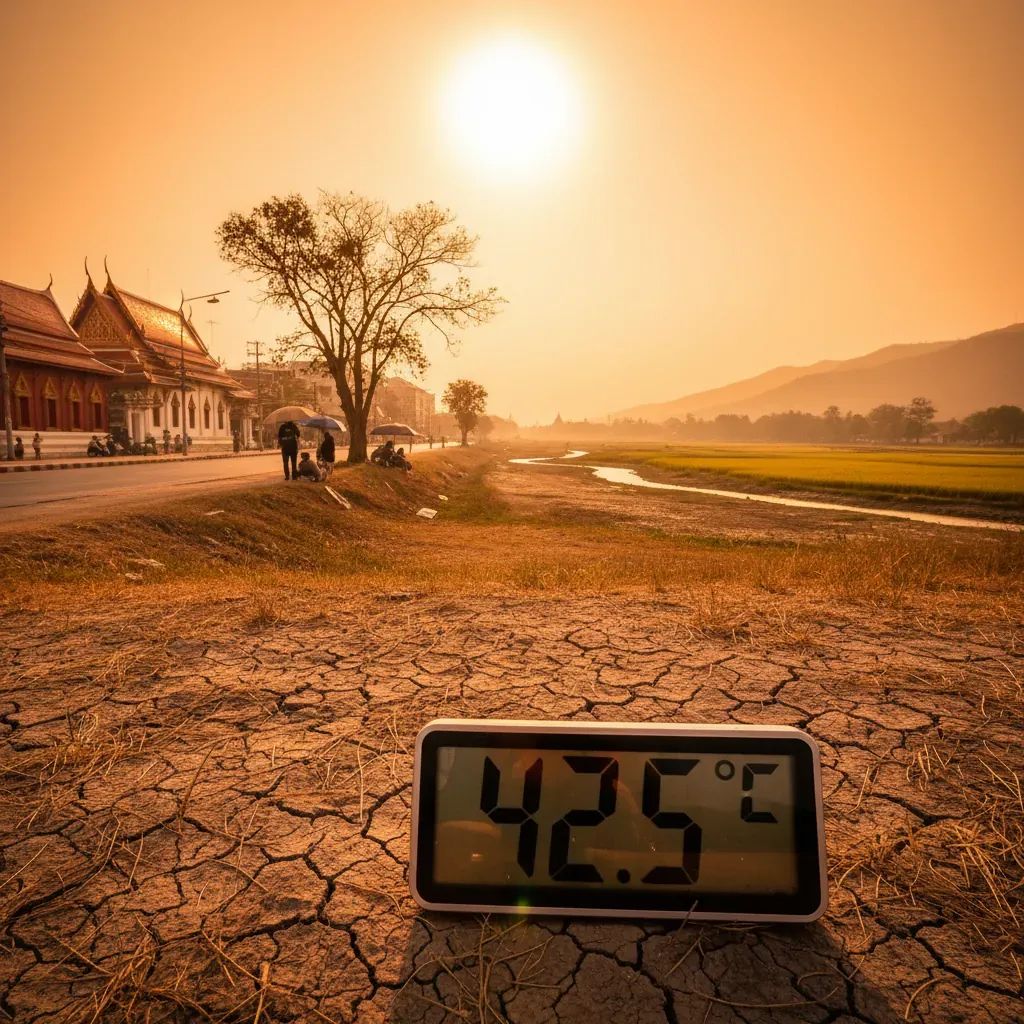
The Thai Meteorological Department has issued an extreme heat advisory as a thermal low-pressure system settles over the upper regions, pushing temperatures to scorching 42°C in northern provinces while coastal cities like Pattaya contend with high-30s readings amplified by oppressive humidity. The heatwave arrives just as the country prepares for Songkran festivities, raising concerns about heat-related illness among residents and tourists unprepared for prolonged tropical exposure.
Why This Matters:
• Record-breaking heat: Northern Thailand is experiencing its hottest temperatures of the year at 37–42°C, making outdoor activities dangerous during midday hours.
• Pattaya humidity factor: Mid-30s°C temperatures combined with high moisture levels create "feels-like" conditions far above actual readings.
• Songkran timing: The annual water festival coincides with peak heat, requiring extra precautions for street celebrations.
• Limited relief: Isolated thunderstorms may bring brief rain and gusty winds, but offer only temporary cooling.
Regional Breakdown: Where the Heat Hits Hardest
The thermal pressure zone dominating upper Thailand has created clear regional differences in weather conditions. Northern provinces bear the brunt, with the Thai Meteorological Department recording maximum temperatures between 37°C and 42°C across multiple districts. These readings represent the highest in the nation and pose serious health risks for agricultural workers, street vendors, and anyone without access to air conditioning.
Pattaya and Thailand's eastern coastal belt face a different challenge. While absolute temperatures hover in the mid-30s°C range, the coastal humidity amplifies the heat near the surface. This creates a heat index—the temperature your body actually experiences—that can exceed official readings by several degrees. The combination makes even short walks feel draining, particularly for expatriates and tourists accustomed to temperate climates.
Southern regions present the most volatile weather pattern. Thunderstorms with gusty winds are sweeping through intermittently, creating hazardous conditions for small boats and beach activities. Wave heights remain generally below one meter in open water, but surge above that threshold in storm cells, making maritime navigation unpredictable.
What This Means for Residents and Visitors
For anyone living in or traveling through Thailand right now, the heatwave demands immediate behavioral adjustments. The Thai Meteorological Department and local health authorities have issued specific guidance:
Afternoon avoidance is critical. The sun reaches maximum intensity between 12 p.m. and 3 p.m., when ultraviolet radiation and ambient temperature combine to create dangerous conditions. Non-essential outdoor errands should be rescheduled to early morning or evening hours.
Hydration protocols go beyond casual water consumption. Medical professionals recommend drinking fluids before feeling thirsty, as thirst indicates dehydration has already begun. Alcohol and caffeinated beverages exacerbate fluid loss, making plain water or electrolyte solutions the safest choices.
Those unaccustomed to tropical heat face heightened vulnerability. Heat exhaustion symptoms—dizziness, nausea, rapid heartbeat, confusion—can escalate to life-threatening heat stroke within minutes. Foreign nationals, particularly those from cooler climates, should recognize their bodies need weeks to acclimatize to extreme temperatures.
The Songkran festival window adds complexity. Traditional water-throwing celebrations typically involve hours of outdoor activity during peak heat. Participants should balance festivities with rest breaks in shaded or air-conditioned spaces, and monitor children and elderly participants closely for signs of distress.
Meteorological Mechanics: Why Thailand Heats Up in April
The current heatwave stems from a thermal low-pressure system—a weather pattern where intense surface heating causes air to rise, creating a zone of reduced atmospheric pressure. Unlike storm-driven low-pressure systems that bring wind and rain, thermal lows act like atmospheric blankets, trapping heat near the ground and suppressing cloud formation.
This phenomenon occurs annually in Thailand during the hot season transition between the cool northeast monsoon and the coming southwest monsoon. April typically marks the peak, when the sun passes nearly overhead and hours of daylight stretch longest. The haze component results from a combination of natural evaporation, agricultural burning, and urban pollution particles suspended in stable air masses.
The isolated thunderstorms mentioned in forecasts develop through a different mechanism. Localized areas where ground heating becomes extreme can punch through the stable atmospheric layer, triggering convective storms. These produce brief downpours and wind gusts but dissipate quickly, providing only fleeting temperature drops before conditions revert to oppressive heat.
Marine Conditions and Coastal Safety
Thailand's coastal waters remain generally navigable, but the storm activity in southern regions introduces variable conditions. Small craft operators should monitor real-time weather updates, as thunderstorms can spawn sudden wind shifts and choppy seas. The one-meter wave threshold represents a safety margin for inexperienced swimmers and kayakers, who may struggle in surge conditions near rocky headlands or pier structures.
Pattaya's beaches, while calmer than southern zones, still warrant caution. The combination of heat-induced fatigue and ocean swimming creates a risky physiological mix. Overheated bodies entering cooler water can experience shock or cramping, and exhaustion reduces swimming stamina. Lifeguards report increased rescue calls during heatwaves as tourists misjudge their endurance.
Historical Context and Climate Patterns
While extreme, the current temperatures fall within Thailand's documented seasonal range. Northern provinces have recorded April maximums exceeding 42°C in past years, though such readings remain exceptional rather than routine. Climate monitoring data suggests hot-season peaks are becoming slightly more frequent and intense over recent decades, consistent with broader regional warming trends.
The timing coinciding with Songkran is not accidental—Thai culture developed the water festival partly as a heat-coping mechanism. Traditional practices of splashing water, seeking temple shade, and family gatherings during the hottest annual period reflect generations of adaptation to tropical extremes.
Practical Preparedness Steps
Residents and short-term visitors can implement several concrete protective measures:
• Adjust schedules to concentrate outdoor tasks before 10 a.m. or after 4 p.m.
• Wear lightweight, light-colored, loose-fitting clothing that facilitates evaporative cooling
• Apply broad-spectrum sunscreen rated SPF 30 or higher every two hours during sun exposure
• Recognize that air-conditioned environments create a false sense of security—stepping outside produces immediate thermal shock
• Keep emergency supplies accessible: oral rehydration salts, portable fans, cooling towels
• Monitor vulnerable household members, including elderly relatives and pets unable to regulate body temperature effectively
For those planning Songkran participation, consider modified celebration approaches: shorter outdoor sessions, designated cooling zones, and transportation that minimizes heat exposure between activity locations.
Outlook and Duration
The Thai Meteorological Department has not specified when the thermal low-pressure system will dissipate. Typically, these patterns persist for several days to two weeks before atmospheric circulation patterns shift. The onset of the southwest monsoon, usually in mid-to-late May, will eventually break the heat cycle with sustained rainfall and cloud cover.
Until then, Thailand's residents and visitors face an extended period requiring sustained vigilance—continuous monitoring and adaptive planning rather than one-day precautions. The combination of record northern temperatures, Pattaya's humidity challenge, and unpredictable southern storms requires flexible responses and consistent awareness.
Understanding that this represents a predictable seasonal pattern rather than a freak occurrence helps frame appropriate responses. Thailand's infrastructure, from ubiquitous 7-Eleven air conditioning to shaded walkways in urban areas, evolved specifically to cope with these annual extremes. Leveraging that infrastructure while respecting the heat's dangers provides the balance needed to navigate the hottest weeks safely.


