
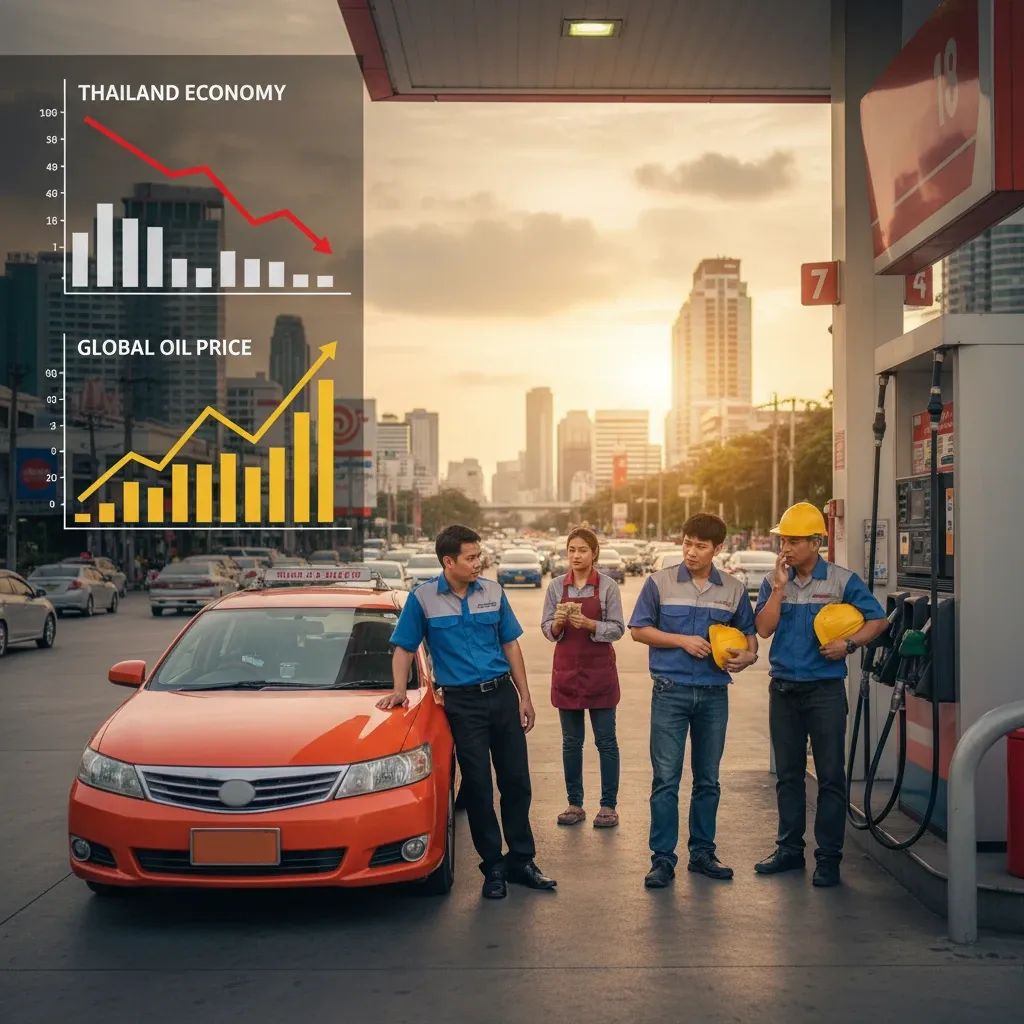
The Thailand Commerce Ministry has raised its 2026 headline inflation forecast to a range of 1.5–2.5%, with a midpoint of 2.0%—a significant upward revision from the previous 0.0–1.0% projection. This shift, coupled with an 8–12% surge in Bangkok rental prices in early 2026 and medical costs compounding at over 14% annually, is forcing foreign residents to reconsider budgets, relocations, and even whether Thailand remains the Southeast Asian value proposition it once was.
Why This Matters:
• Most recently, April 2026 saw inflation spike to 2.89%—the highest spike in 38 months—driven by energy and transportation costs, marking a significant acceleration from the first quarter's -0.54%.
• Over 55% of expatriates are now reconsidering long-term plans in Thailand due to rising living costs and tax policy uncertainty.
• Bangkok and Phuket remain the most expensive hubs, with Phuket's general living costs running 8% higher than Bangkok and restaurant prices 42% pricier.
• Budget-conscious residents are exploring Vietnam, Cambodia, and Laos, where costs undercut Thailand by 10–25% in most categories.
Energy and Food Prices Drive the Squeeze
Global crude oil prices, amplified by geopolitical conflicts, are pushing up domestic fuel costs across Thailand. The ripple effect is immediate: higher jet fuel costs are inflating both domestic and international airfares, while transport expenses are driving up the price of everything from fresh produce to packaged goods.
The Thailand Commerce Ministry anticipates continued pressure on fresh vegetables and eggs due to extreme heat affecting agricultural output. Pork and chicken prices are also climbing as farmers face higher feed and transport bills. These pass-through costs are increasingly visible on supermarket shelves and restaurant menus, particularly in expat-heavy neighborhoods where imported goods and Western-style dining are in demand.
The first quarter of 2026 recorded deflation at -0.54%, but the sharp pivot to 2.89% in April signals a structural shift. Economists expect inflation to settle around 1.90% by the end of the current quarter and potentially climb toward 2.50% in 2027—offering little relief for expats already stretching budgets.
What This Means for Residents
For foreign residents, the practical impact varies dramatically by location and lifestyle. Bangkok remains the most expensive city, with a comfortable monthly budget for a single expat now ranging from $1,300 to $2,000. A modern one-bedroom apartment in central areas like Sukhumvit or Silom costs between $500 and $1,000 per month, though rental prices have jumped 8–12% in early 2026 alone.
Those seeking better value within Bangkok should explore neighborhoods like Ari or Ratchada, where one-bedroom rentals range from $500–$900 compared to $1,000–$1,800 in polished high-rises along Sukhumvit. While further from the central business district, these areas still offer reasonable access to the BTS or MRT, making commutes manageable. Khlong Toei and Pratunam present even more affordable options for budget-conscious residents willing to sacrifice some Western amenities.
Phuket demands even steeper budgets. A comfortable expat lifestyle on the island now requires $2,500 to $4,000 per month, with one-bedroom rentals ranging from $400 to $900 during high season. General living costs in Phuket are nearly 8% higher than Bangkok, with rent costs 17% more expensive and restaurant prices 42% pricier. Seasonality remains a major factor—long-term leases can help smooth out volatility, but the island's appeal as a tropical destination continues to push prices upward.
Chiang Mai offers a more affordable alternative, with monthly budgets estimated at $1,500 to $2,200. One-bedroom condos in central locations like Nimman or the Old City range from $250 to $450, roughly 30–40% less than Bangkok for a similar lifestyle. This affordability has made Chiang Mai a digital nomad hub, though even northern cities are feeling inflationary pressure.
Healthcare Costs Compound at 14% Annually
One of the most significant—and least predictable—expenses for foreign residents is healthcare. While Thailand's private hospital network is world-class, medical costs are compounding at over 14% annually, and most foreigners do not have access to subsidized public care. Private hospitals often require substantial upfront deposits for treatment, and a single night in a Bangkok facility can cost $800 to $1,500 before seeing a specialist.
To manage these rising costs, savvy expats are exploring practical alternatives. Government hospitals like Ramathibodi and Bumrungrad offer quality care at substantially lower prices than private facilities, though language barriers and longer wait times can be challenging. Many expats find success through group insurance plans offered by expat associations, which provide better rates than individual policies. Dental tourism clinics in Bangkok also attract residents seeking procedures at 40–60% below Western prices.
Expat health insurance premiums vary widely, from around $60 to $300+ per month for comprehensive plans for a healthy person under 40. However, premiums increase sharply with age and pre-existing conditions, making healthcare one of the most volatile line items in a resident's budget. For families, the addition of international school fees—ranging from $8,000 to $20,000 per year—can rival or exceed tuition costs in Western countries.
Lifestyle Creep: The Silent Multiplier
Beyond housing and healthcare, lifestyle creep is a significant driver of rising expenses. Foreign residents in attractive locations like Phuket often find themselves dining out more frequently, socializing more, and traveling to nearby islands. While local street food remains very affordable—around $1.50–$3 per meal in Bangkok—opting for Western food and imported groceries significantly increases food bills due to taxes on imported items.
Consider this monthly food budget comparison for a single expat in central Bangkok:
Local Lifestyle: Eating primarily at local markets and street stalls, occasional Thai restaurant dinners: $150–$250Western Lifestyle: Mix of Western restaurants, imported groceries, some local meals: $400–$600
Electricity bills are another notable expense, particularly during hot months when air conditioning runs constantly. Some condominiums add a markup to government-regulated electricity rates, further inflating utility costs. Transportation choices also matter: while Bangkok's BTS Skytrain and MRT offer cost-effective options at around $30–$40 per month with a Rabbit Card, relying on taxis or ride-hailing apps for daily commutes can accumulate costs quickly, especially in the capital's congested traffic.
Internal Relocation and Shifting Priorities
Many expats are responding to rising costs by relocating within Thailand. Smaller towns like Pai or Udon Thani offer expenses 30–40% lower than Bangkok for a similar lifestyle. In Bangkok, residents are increasingly prioritizing proximity to the BTS or MRT lines for predictable commutes, even if it means slightly higher rent. Areas further from transit lines, like Ari or Ratchada, offer more space for $500–$900 compared to $1,000–$1,800 in polished high-rises in Sukhumvit.
Stricter enforcement of immigration rules, including checks on proof of funds and onward flights, is also contributing to residents reconsidering long-term stays. The combination of rising costs and increasing uncertainty regarding tax policies—particularly the treatment of foreign-sourced income—has led over 55% of expatriates to reconsider their long-term plans in Thailand.
Regional Alternatives Gain Traction
Neighboring countries are emerging as strong alternatives for budget-conscious residents, though each involves practical trade-offs beyond just cost.
Vietnam consistently undercuts Thailand on price, often by 10–25% in most categories. A one-bedroom apartment in central Ho Chi Minh City or Hanoi might cost $400–$800, and Da Nang offers even cheaper options. However, healthcare quality and English-language services lag behind Thailand, and visa requirements are more restrictive. Recent expat relocations to Da Nang have highlighted affordability but also noted challenges with Internet stability and fewer Western conveniences.
Cambodia offers an "insanely cheap" cost of living and affordable condo purchasing, with friendly people and easy visa extensions, including one-year work visas and retirement visas. The trade-off: healthcare infrastructure is significantly less developed than Thailand, and business transactions can be unpredictable.
The Philippines provides great beaches, friendly people, and one of the best price points in the region, with visa extensions relatively easy for up to three years without leaving the country. However, infrastructure outside major cities can be inconsistent, and healthcare quality varies widely by location.
Laos is described as the "most relaxed and cheapest country in Southeast Asia," with guesthouses for $5–$10 per night and local meals under $2. The depreciation of the Lao kip also means greater value for those with stronger currencies. The significant trade-off: visa policies are unpredictable, and long-term residency remains unclear.
Indonesia (outside Bali) offers exceptionally cheap options on islands like Java, Sumatra, and Lombok, with guesthouses costing $8–$15 per night and meals for $1–$3. Yet healthcare and visa stability require careful research, and security considerations vary by region.
The Value Proposition Recalibrates
Despite these pressures, Thailand still offers significant value compared to many Western countries. As of February 2026, Bangkok's cost of living was reported to be 68% cheaper than New York and 62% cheaper than London. The challenge is no longer whether Thailand is affordable in absolute terms—it is—but whether it remains the best value proposition in Southeast Asia for budget-conscious residents.
For those willing to embrace local markets, cook at home, use motorbikes for transport, and minimize entertainment expenses, a single expat can still live comfortably in Chiang Mai on $900 per month. In contrast, the same lifestyle in central Bangkok could require $1,800. The key is careful budgeting and a willingness to adapt to rising costs by making strategic lifestyle choices.
Before your next lease renewal or visa run, consider these practical steps: Set up a Thai bank account for better exchange rates on regular transfers, explore government hospital services for routine healthcare, and connect with expat groups who can share real-time neighborhood intelligence and money-management strategies. The golden era of rock-bottom living costs may be over, but Thailand's vibrant communities, quality healthcare infrastructure, and overall quality of life continue to attract foreign residents. The question is no longer whether to stay, but where—and how—to make it work.


