
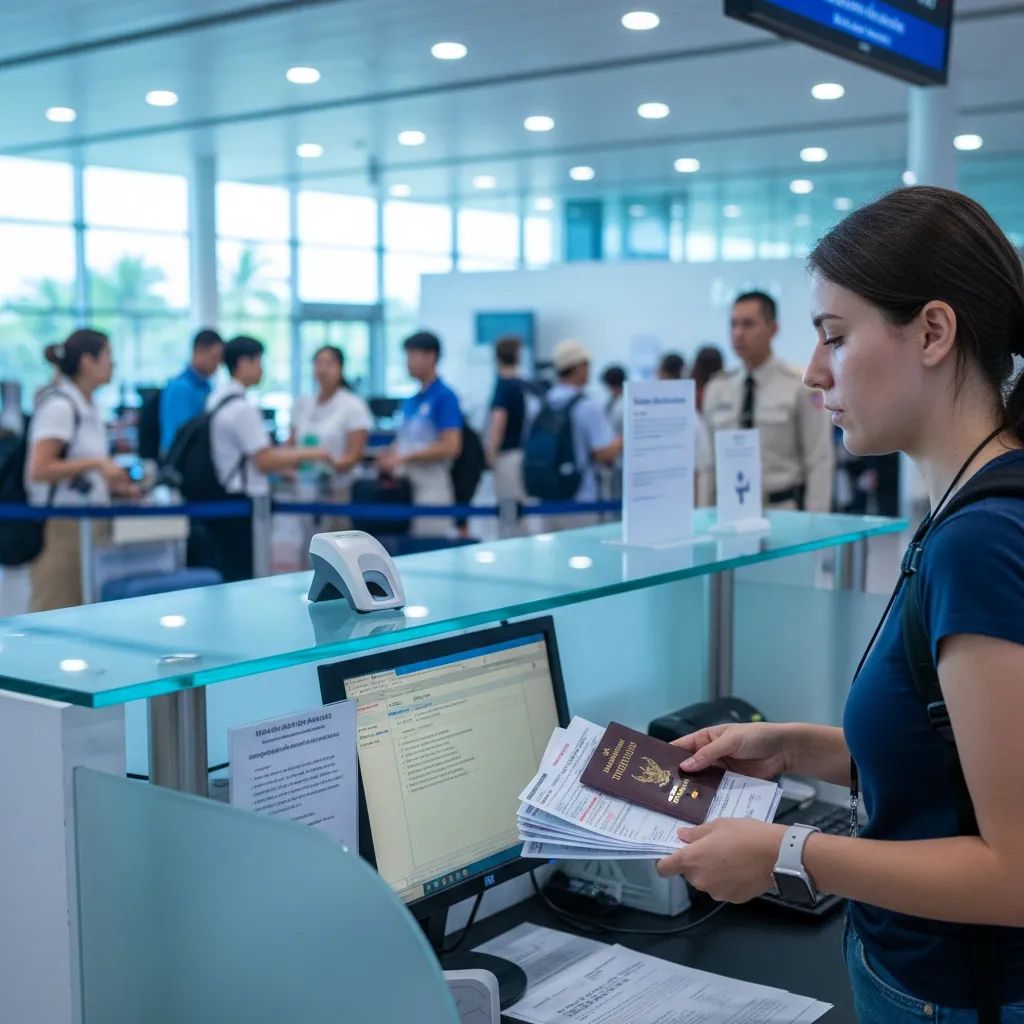
The Thailand Ministry of Public Health is pressing the government to require all international visitors to carry accident insurance before entering the country, a policy shift driven by a mounting crisis in unpaid medical bills that now exceeds 100 million baht annually. While the regulation has yet to pass into law, the proposal has gained traction in early 2026 amid rising concerns over the financial toll that uninsured foreign tourists are placing on the nation's public healthcare system.
Why This Matters:
• Financial exposure: Thai hospitals, especially in Phuket and Chiang Mai, are absorbing millions in unpaid emergency costs from foreign patients—many injured in motorcycle accidents.
• Voluntary vs. mandatory: Currently, short-term tourists are not legally required to hold travel insurance, but that may soon change.
• Low cost, high coverage: A two-week policy typically costs around 1,100 baht and provides medical coverage ranging from 3.6M to 9M baht.
• Regulatory momentum: The Public Health Minister has signaled readiness to advance the measure, though no formal implementation date has been set.
The Cost of the Open Road
Thailand's allure for budget travelers often includes the freedom of a rented scooter and scenic coastal highways. For the nation's healthcare infrastructure, however, that freedom comes at a steep price. Motorcycle accidents remain the dominant source of emergency admissions among foreign visitors, accounting for the majority of serious injuries and unpaid treatment costs. During the recent 2025-2026 New Year period alone, motorcycles were implicated in 72% to 83% of all road accidents, resulting in 272 deaths and 1,464 injuries over just seven days.
Between 2020 and 2024, a staggering 84% of motorcyclists hospitalized after crashes were found not to have been wearing helmets. The consequences are both tragic and expensive: severe spinal injuries or head trauma can generate hospital bills exceeding 1 million baht. One Russian tourist's emergency treatment, for example, reached that threshold and went entirely unpaid. Medical costs for motorcycle-related injuries typically range from 200,000 to 2 million baht (approximately $6,000 to $60,000), depending on the severity and length of care required.
Who Bears the Burden
The fiscal strain falls disproportionately on facilities in high-traffic tourist zones. Vachira Phuket Hospital alone absorbs around 10 million baht annually in uncollected expenses for foreign patients lacking insurance. Across the country, the aggregate figure sits at a minimum of 100 million baht per year, a sum that diverts resources from Thai nationals and places pressure on already stretched budgets.
Public Health officials attribute the problem to three converging factors: the popularity of motorcycle rentals among inexperienced riders, high rates of alcohol consumption, and the relatively low uptake of travel insurance despite its modest cost. Emergency medical claims globally averaged about 60,000 baht in 2025, yet many visitors still arrive uninsured, either unaware of the risks or underestimating the cost of treatment in a foreign healthcare system.
What This Means for Residents
If the proposal becomes law, it will mark a significant regulatory shift with implications for both expatriates and Thai nationals working in the tourism sector. The policy would likely be enforced at ports of entry, with visitors required to present proof of accident or comprehensive travel insurance before clearing immigration. This mirrors systems already in place in Cuba, where minimum coverage of $50,000 is mandatory, and the Schengen Area, which requires €30,000 (roughly $39,488) in medical insurance for visa applicants.
For expatriates living in Thailand on long-term visas—such as the Non-Immigrant O-A, O-X, or Long-Term Resident (LTR) visas—mandatory health insurance is already a reality. These visa categories require proof of coverage with at least 400,000 baht for inpatient treatment and 40,000 baht for outpatient care, or a minimum of $100,000 (approximately 3.1M baht) per policy year, including COVID-19 treatment. The new tourist insurance requirement would extend similar logic to short-term visitors.
From a practical standpoint, the measure could ease the financial burden on public hospitals, allowing them to redirect resources to Thai residents. It may also prompt a shift in traveler behavior, encouraging more cautious engagement with high-risk activities like motorcycle riding. For the tourism industry, the impact will depend on how the requirement is communicated and enforced. If integrated smoothly into visa and arrival procedures, it may be seen as a reasonable cost of entry. If implemented abruptly, it could create bottlenecks and deter budget travelers.
Global Context and Precedents
Thailand would be joining a growing roster of nations that mandate travel insurance for visitors. Singapore introduced a S$30,000 (about $22,000) minimum coverage requirement in January 2023 for all foreign arrivals. Argentina enacted a similar policy in July 2025, requiring proof of medical insurance covering hospitalization, emergency care, and repatriation. The United Arab Emirates has required 150,000 dirhams (roughly $40,000) in coverage since 2018, with proof presented at visa issuance or upon arrival.
Other examples include Ecuador, which mandates insurance for emergency care and repatriation; Qatar, where travelers must hold policies covering emergency medical treatment and transport; and Myanmar, which requires accident insurance with COVID-19 coverage purchased from the state insurer. Zanzibar goes further, requiring all non-residents to purchase insurance directly from the national provider before arrival.
In Europe, the Schengen Zone remains the most prominent example of mandatory insurance, covering medical expenses, repatriation, and death-related costs for stays longer than 90 days. This framework has been in place for years and is broadly accepted by international travelers as a standard cost of visiting the region.
Current Rules and Enforcement Gaps
As of April 2026, travel insurance is not yet mandatory for most short-term tourists entering Thailand. However, there are exceptions. Visitors transiting onward to a country that requires a negative COVID-19 test must present proof of travel medical insurance covering COVID-19, a rule that took effect on January 9, 2023. Immigration officers retain discretionary authority to request proof of insurance at entry, though enforcement is inconsistent.
A separate proposal—an entry fee of 300 baht for air arrivals that would include basic emergency medical insurance—remains under cabinet review. The Public Health Ministry's push for compulsory accident insurance represents a more direct approach, one that sidesteps the administrative complexity of a bundled entry fee and places responsibility squarely on the traveler.
Despite the lack of a formal mandate, the government's position is clear: travel insurance is strongly recommended for all visitors. Thai hospitals do not generally accept foreign health insurance, and out-of-pocket costs can be prohibitive. For a two-week stay, a standard policy costs around 1,100 baht and provides coverage of 3.6 million to 9 million baht—far exceeding the typical cost of emergency treatment. The math is straightforward, yet many travelers continue to arrive unprotected.
What Comes Next
The timeline for implementation remains uncertain. The Public Health Minister has publicly stated readiness to move forward with the regulation, but the final decision rests with the cabinet. Key questions remain unresolved, including the minimum coverage amount, acceptable providers, and whether the requirement will be enforced through visa applications or at immigration checkpoints.
For now, the policy exists in a state of regulatory limbo: widely discussed, actively promoted by health authorities, but not yet codified into law. Travelers planning visits in the coming months should monitor official announcements from the Thailand Ministry of Public Health and the Immigration Bureau. Even in the absence of a legal mandate, the financial and medical risks of arriving uninsured are significant—and increasingly visible to Thai policymakers determined to protect the nation's healthcare system from absorbing the cost of preventable emergencies.


