
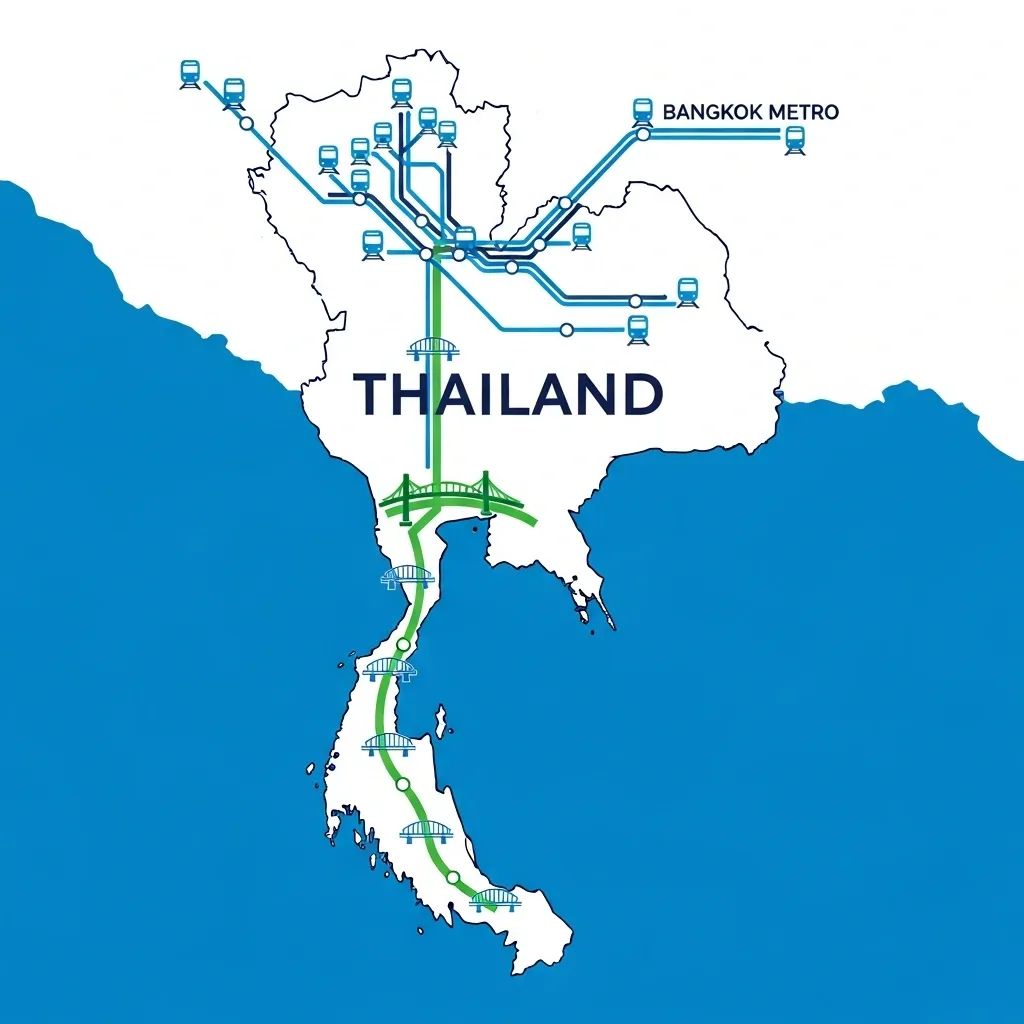
Thailand’s national vote is barely a month away and the campaign trail is shifting into overdrive. From promises of cheaper commutes in Bangkok to a contentious ฿1 trillion Land Bridge on the Andaman coast, parties are competing to convince households that their wallets—and their regions—will gain the most on 8 February.
Snapshot of the week ahead
• Transport fares in the capital could fall to subway-ride prices if Pheu Thai returns to power.
• Bhumjaithai is pushing a co-payment reboot and the long-debated Land Bridge; Palang Pracharath wants bigger cash transfers.
• Allegations of poster vandalism and vote-buying are rising, and the Election Commission is under pressure to act fast.
Bangkok Battleground: Cheap Commutes and Debt Relief
Election strategists have long viewed Bang Kho Laem–Yannawa as a bellwether for the capital, not least because the district’s multicultural canalside community usually splits its vote. Pheu Thai chief Julapun Amornvivat showed up before dawn, weaving through Charoen Krung 103 market stalls to sell what he called “relief you can feel on your daily ride.”
Among the headline pledges: a 20-baht rail fare across all electric-train lines, 10-baht air-con buses, and an electricity tariff ceiling of 3.70 baht per unit. Julapun dangled two yet-unrevealed “surprise packages,” hinting they may tackle the party’s wider debt wipe-out measures and its ambition for 5 % average GDP growth.
Voters in the area—home to many Muslim-owned shophouses and heritage warehouses—told the Bangkok Post they are weighing lower utility bills against long-term plans for job creation. “Cheap fares are nice,” rice dealer Somchai Wattu said, “but I want to see how the party handles rent and small-business credit.”
Pocketbook Promises beyond the Capital
While Bangkok listens for fare cuts, rural and secondary-city voters are hearing a different pitch. Bhumjaithai leader Anutin Charnvirakul rolled into the rain-swept streets of Ranong, bundling two signature ideas: an expanded Khon La Khrung Plus co-payment scheme and the party’s crown jewel, the Southern Corridor Land Bridge. He argues the dual tactic will funnel grass-roots spending and export revenue into an Andaman economy that rarely tops the national charts. “Back candidates who deliver,” he told dockworkers, stressing results-driven leadership over party colors.
Not to be outdone, Palang Pracharath’s sole female PM hopeful, Treenuch Thienthong, pledged a leap from 300 → 700-baht monthly top-up under a revamped Pracharath Extra Card for low-income households. Her swing through outer-ring provinces doubled as a reminder that cash plays well where inflation has bitten hardest.
Land Bridge: Opportunity or Oversell?
The 1-trillion-baht project linking Ranong on the Andaman with Chumphon on the Gulf has morphed into this election’s most polarizing gambit. Supporters point to twin deep-sea ports and an 89-kilometre logistics corridor of motorway, rail and pipelines that could sidestep the Strait of Malacca, shaving four days off East-West shipping.
Yet the promise of jobs collides with EHIA scrutiny, accusations of environmental flashpoints, and warnings that container lines may balk at double-handling costs. Locals fret over mangrove loss and land grabs, while critics question whether a special economic law can safeguard transparency. Anutin’s camp insists parliamentary passage can come this year, but analysts say election maths—rather than engineering—will decide the timetable.
Campaign Heat and the Rulebook
With billboards sprouting on every soi, allegations of poster vandalism and shadowy vote-buying complaints have been filed in Bangkok, Pathum Thani and Lampang. Candidates now urge supporters to submit digital evidence straight to the Election Commission hotline, citing the watchdog’s pledge of 48-hour response times.
Activists note that clean and fair vote rhetoric gained teeth after the 2023 poll, when 2019 vs 2023 case numbers dropped once offences were quickly livestreamed. Whether the pattern holds in 2026 will depend on community vigilance during the final month and the February 8 deadline itself.
Small Parties, Big Streets
Far from the moneyed caravans, People’s Party leader Natthaphong Ruengpanyawut hopped a saleng motor-trike tour through Khon Kaen markets on bustling Rat Khanueng Road. The party’s grass-roots charm offensive leans on face-to-face chats, arguing that fresh faces deliver faster than grand alliances. Northeastern farmers at the rally nodded to concerns over drought relief and fertiliser costs, issues often drowned out in capital-centric debates over mega-projects. For Natthaphong, the region remains a northeastern stronghold he hopes to leverage into more than local issues.
What to Watch Next
The campaign calendar is dense:
• A final manifesto drop is expected from all major parties within 10 days.
• Televised debate schedules kick off on 15 January, with economy-only formats gaining traction.
• Advance voting registration closes on 18 January; provincial governors have asked for extra booths.
• Week-by-week opinion polls will test whether undecided urbanites shift after subway commuters begin receiving trial fare rebates.
• Analysts warn that a 75 % turnout threshold is required for credible mandate.
• Civic groups will publish initial policy costing scorecards on 20 January.
• Domestic and international watchdog reports are due the morning after the vote.
• Parties will stage a final rally weekend on 3-4 February, when undecided numbers have historically dropped by half.
For now, the only certainty is that every baht pledged—and every poster torn—shapes the race for Thailand’s next government.


