
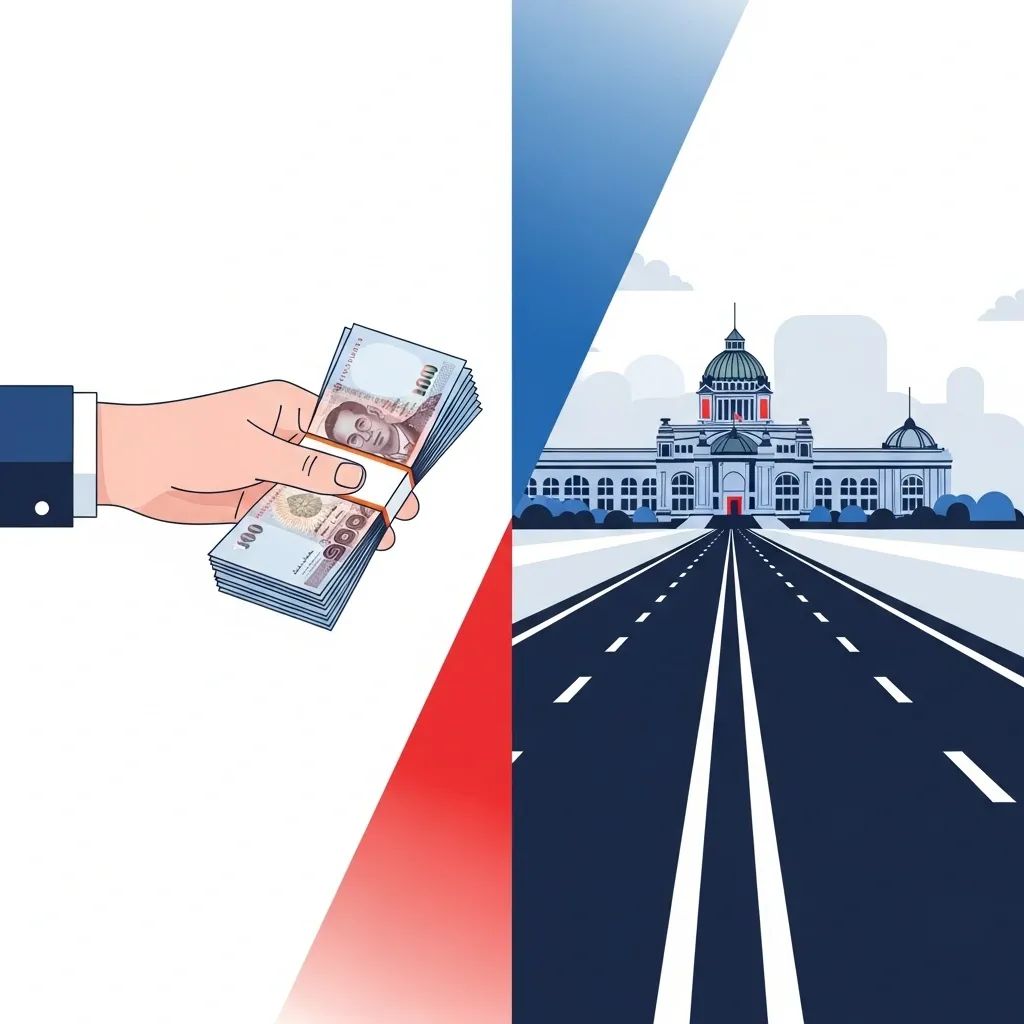
Talk of free money still grabs headlines, yet a new nationwide survey suggests the old giveaway playbook is running out of road. Two thirds of voters say promises of digital wallets, subsidies or one-off cheques will not sway their choice when they enter the booth on 8 February.
Snapshot in a Hurry
• 67% dismiss cash-handout pledges as irrelevant to their choice
• Skepticism jumps to 80% in the South, but dips to 55% in Bangkok
• All education brackets now question short-term populism; postgraduate voters lead the charge
• Economists warn of a heavier debt load if giveaways continue
• Parties aiming for office are being pushed toward long-horizon policies on jobs, graft and public services
Shift in Voter Priorities
Pollsters at King Prajadhipok’s Institute (KPI) quizzed 2 000 adults nationwide in late December. The headline figure—67 % rejecting “free cash” as a voting cue—marks a step change from the 2023 campaign, when a 10 000-baht digital-wallet idea dominated rallies.
Analysts say the mood swing is driven by four factors. First, households still face high debt-to-income ratios, so one-time stipends feel too small. Second, the pandemic years taught voters the limits of short-burst stimulus. Third, a rising middle class is demanding quality public services, not just transfers. Finally, social media amplified watchdog accounts of vote-buying schemes, eroding trust in quick giveaways.
Why the Deep South Leads the Sceptics
The South, long viewed as fiscally conservative, posted the strongest push-back: 80 % of respondents there refuse to let cash promises guide their choice. Traders in Hat Yai told our newsroom they want “harbour upgrades, not handouts”, while rubber growers in Nakhon Si Thammarat cited the need for price-stabilisation funds over one-off top-ups.
Political researchers also point to the region’s network of civic groups, many tied to susah satthien community banks, that promote micro-credit discipline. These networks have campaigned against what they call “sugar-high budgets”, arguing the country needs long-range investment in irrigation, logistics and bilingual schooling to remain competitive with Malaysia.
Bangkok: Fatigue or Flexible Pragmatism?
Capital-city voters appear more divided. KPI data show 44.7 % in Bangkok would still weigh cash pledges, lower skepticism than any other region. Urban professionals coping with soaring rents and child-care costs say an extra 10 000 baht could soften immediate pressure.
Yet even here, the tone is changing. Start-ups clustered around the Phra Ram 9 tech strip told us they prefer tax breaks for R&D and a clear digital-assets rulebook over blanket transfers. Civil-society groups such as iLaw add that money politics tends to entrench patronage rather than encourage transparent procurement.
Scholars Read the Mood
Political scientist Assoc. Prof. Isara Sereewattanawut argues the data reflect a maturing electorate. “We see an appetite for evidence-based policy, not catchy slogans,” he noted at a KPI briefing. His colleague, economist Dr. Benjamas Wachiraphan, warns the giveaways carry a fiscal multiplier below 1, meaning every baht spent returns less than a baht in GDP.
Other academics highlight equity concerns. Blanket transfers send most of the budget to urban centres, they say, whereas targeted welfare could do more for elderly farmers and disabled workers. A Chulalongkorn study estimates that redirecting half the proposed wallet outlay into primary-school nutrition would cut stunting by 8 % in four years.
Money Politics Versus Fiscal Reality
Thailand’s public debt sits near 62 % of GDP. Sustained handouts would push the ratio toward the statutory ceiling of 70 %, forcing higher sovereign-bond yields and squeezing room for infrastructure spending.
Business lobbies from the Federation of Thai Industries add that recurring transfers may inflate domestic demand without boosting productive capacity, risking import-led inflation. Conversely, advocates such as the Thai Poor Network argue that direct cash is the fastest way to revive slumping rural commerce.
What Campaigns Must Rethink Before 8 February
Parties still touting blanket giveaways now face a skeptical audience. Strategists close to Phak Prachachon say they are pivoting toward anti-corruption drives, farm-gate pricing safeguards and AI-enabled education. Rival blocs are polishing packages on SME credit lines, green-energy jobs and rice-resilience insurance.
For voters, the next three weeks will test whether manifestos embrace long-term competitiveness or revert to quick-fix populism. For Thailand’s fiscal stewards, the numbers suggest one lesson: the era when a cash splash could clinch an election is quickly fading from view.


